
A dental assistant runs out of EPA-registered surface disinfectant wipes in the radiography alcove and suggests using 70% isopropyl alcohol on paper towels to disinfect the uncovered X-ray tubehead arm between patients. According to CDC dental infection control guidelines, why is this substitution inappropriate?
Select an answer to reveal the explanation.
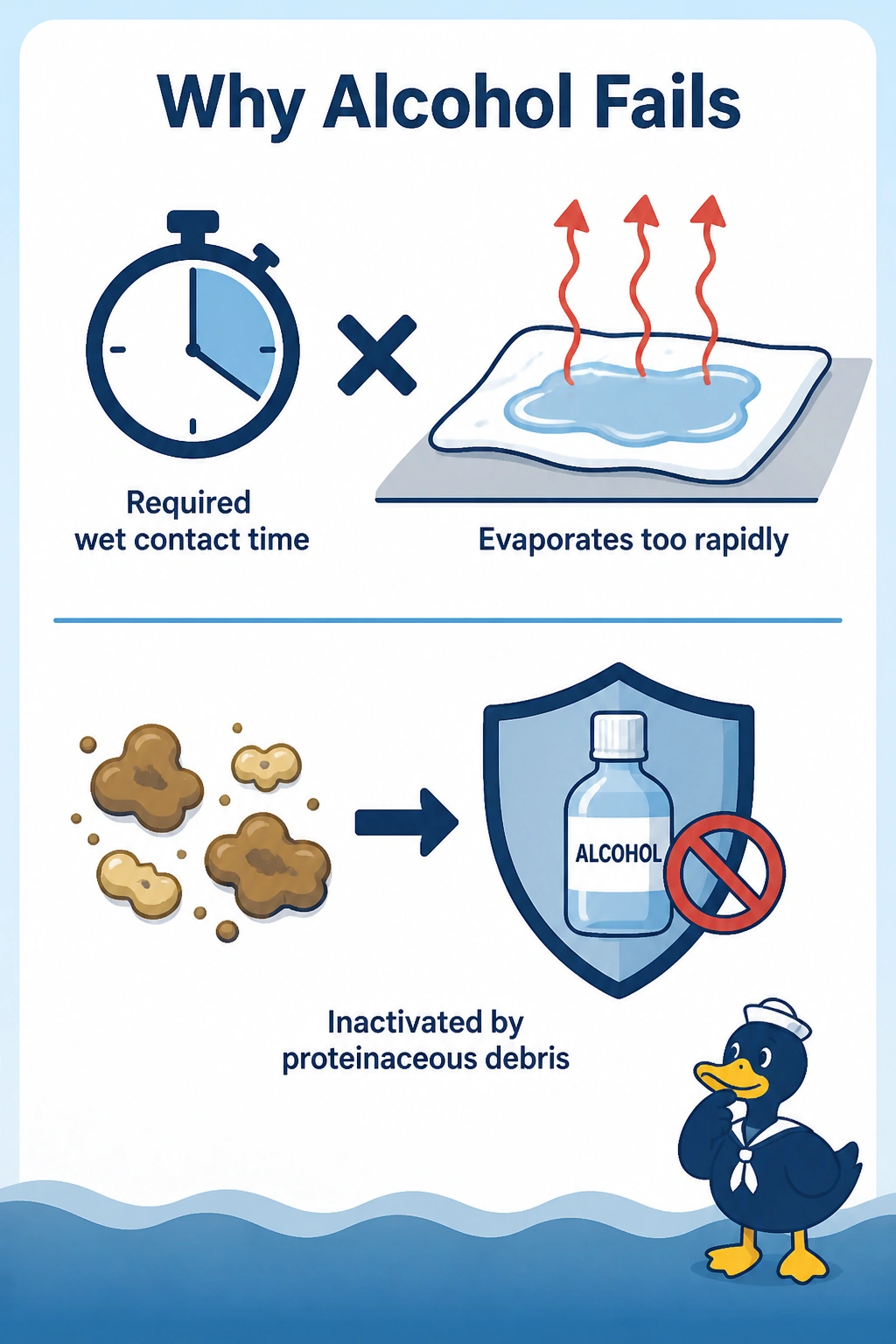
Short Explanation
Reaching for plain rubbing alcohol on an X-ray arm is like trying to wash a greasy pan with mist—it vanishes before you can get the required contact time and quits working if saliva is present. The trap is assuming that because alcohol preps your skin, it works just as well on operatory surfaces.
Full Explanation
CDC dental infection control guidelines specify that uncovered clinical contact surfaces must be cleaned and disinfected using an EPA-registered hospital disinfectant (with a tuberculocidal claim if visibly contaminated with blood). Substituting plain 70% isopropyl alcohol is inappropriate because Alcohol evaporates too rapidly to maintain required wet contact time and is inactivated by proteinaceous debris, leaving pathogens viable on the tubehead arm. Choosing Alcohol cannot inactivate mycobacteria, so it is classified only as a low-level disinfectant is incorrect because alcohols are in fact tuberculocidal and are considered intermediate-level disinfectants, not low-level only; rapid evaporation and inactivation by organic matter are the reasons they are not recommended for clinical contact surfaces. Choosing Alcohol is classified as a high-level sterilant that is restricted solely to critical surgical instruments is false because alcohol is neither a sterilant nor a high-level disinfectant—it cannot destroy bacterial spores. Choosing Alcohol requires at least ten hours of immersion to inactivate nonenveloped viruses on clinical contact surfaces confuses alcohol with chemical liquid sterilants used for heat-sensitive semicritical or critical items, not surface wiping. As a caveat, alcohol can also dry out and crack vinyl or rubber parts on radiographic equipment over time. As an operational check, verify the EPA registration number and required wet contact time on the disinfectant label before wiping any uncovered radiographic surface.
Prefer to study offline? Printable PDF study book + test engine ($7.50, unofficial). These questions stay free here.