
When performing the weekly biological spore test for a steam autoclave that sterilizes reusable digital sensor holders, a dental assistant places one processed biological indicator vial into the incubator. According to CDC dental infection control guidelines, what additional step is required to validate the test result?
Select an answer to reveal the explanation.
Short Explanation
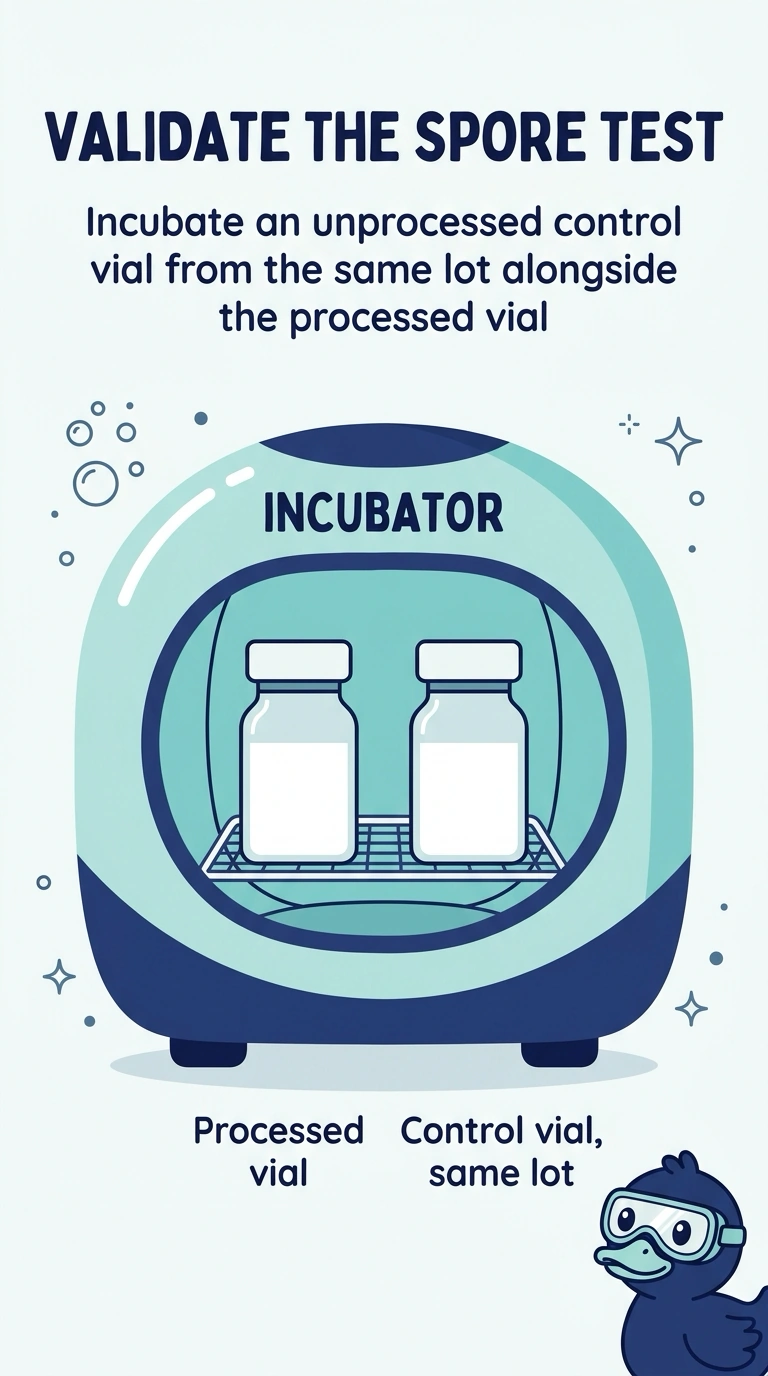
You need an unprocessed control vial from the same lot to show that the spores were alive before testing; otherwise, a negative result proves nothing. Incubating the control alongside the processed vial gives you that baseline and helps you interpret the result correctly.
Full Explanation
A biological spore test confirms sterilization only if the autoclave destroys the test spores while identical spores that skipped the cycle grow normally in the incubator. To establish that baseline, CDC guidelines require you to incubate an unprocessed control vial from the same lot alongside the processed vial. If the control fails to grow, the spores may have expired or the incubator may be malfunctioning, invalidating the test. Autoclaving a second indicator vial for half the normal cycle time does not test baseline spore viability and is not a recognized CDC control procedure. Soaking a duplicate indicator vial in high-level chemical disinfectant would chemically kill the control spores and defeat the purpose of verifying viability. Submerging the processed indicator vial in sterile distilled water for 24 hours before reading the color change is an invented step that could contaminate or dilute the indicator medium. As a caveat, never use a control vial from a different manufacturer lot, because storage conditions and expiration dates vary by lot. As an operational check, log the lot number, sterilization date, processed result (negative), and control result (positive) in the clinic's sterilization log.
Prefer to study offline? Printable PDF study book + test engine ($7.50, unofficial). These questions stay free here.