
After completing a full-mouth digital series, a dental assistant needs to remove dried saliva and debris from reusable plastic aiming rings and bite blocks before packaging them for steam sterilization. Which pre-cleaning method does the CDC recommend to minimize percutaneous injury and spatter risk?
Select an answer to reveal the explanation.
Short Explanation
Reaching into a sink to scrub contaminated plastic holders is like juggling wet glass—one slip causes a puncture or sprays droplets across your face. CDC guidelines favor automated cleaning so you keep your hands out of contaminated debris while still getting the holders spotless for sterilization.
Full Explanation
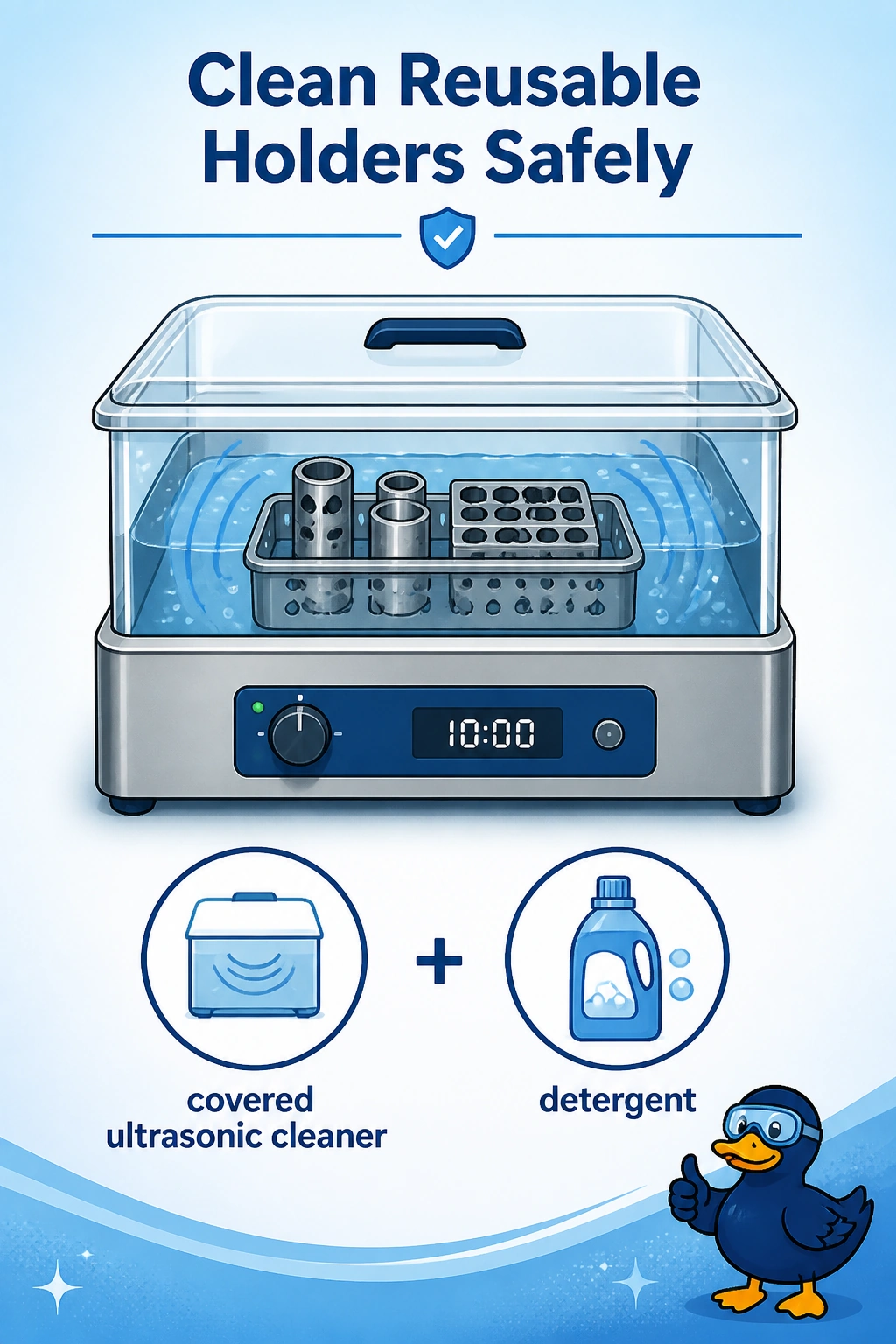
Processing the holders in a covered ultrasonic cleaner with detergent uses cavitation bubbles to dislodge dried saliva and organic debris from crevices without direct manual contact, while the closed lid contains aerosols and spatter. CDC dental infection control guidelines recommend automated cleaning equipment whenever possible to reduce percutaneous injuries and droplet exposure prior to heat sterilization. Hand-scrubbing the holders under running tap water with a stiff brush increases the risk of splashes, aerosols, and accidental skin punctures, making it a less safe choice when automated equipment is available. Soaking the holders overnight in a high-level chemical sterilant solution does not replace mechanical pre-cleaning, wastes time, and exposes staff to toxic fumes without removing baked-on organic soil. Wiping the holders thoroughly with alcohol-saturated gauze before autoclaving fails to reach tight bite-block grooves and can actually fix proteinaceous debris onto the plastic surface, shielding microbes from steam. As an important caveat, always verify with the holder manufacturer that the plastic components are compatible with ultrasonic detergent solutions before immersion. As a concrete operational check, confirm the ultrasonic cleaner lid is securely closed before starting the cycle and inspect each holder under good lighting afterward to ensure no visible debris remains.
Prefer to study offline? Printable PDF study book + test engine ($7.50, unofficial). These questions stay free here.