
A dental assistant is loading 18 sealed paper-plastic sterilization pouches containing reusable sensor aiming rings and bite blocks into a tabletop steam autoclave. Which loading practice is required by CDC infection control guidelines to achieve effective sterilization?
Select an answer to reveal the explanation.
Short Explanation
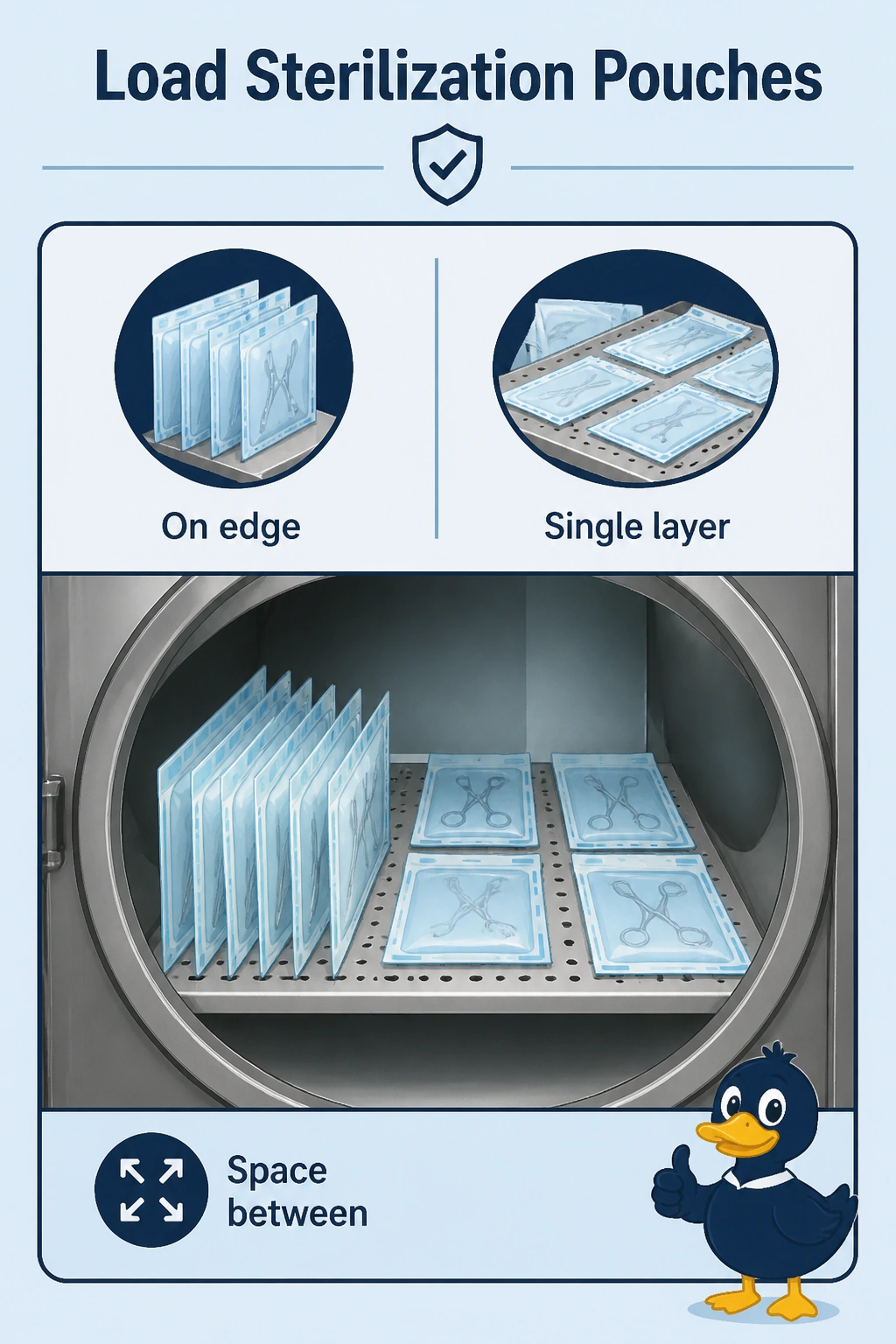
Think of loading your autoclave like packing a dryer: tightly packed pouches can leave the center untouched while the outside gets hot. Give your pouches breathing room so steam can circulate around your holders instead of trapping cool air pockets.
Full Explanation
Arrange the pouches on edge or in a single layer with space between them so pressurized steam can contact every surface of each package and displace trapped air. CDC dental infection control guidelines emphasize proper chamber loading because steam sterilization requires direct steam penetration, adequate temperature, and full exposure time across all items. Stacking pouches flat in tight, overlapping piles blocks steam circulation, creates cool air pockets, and prevents proper drying at the end of the cycle. Sealing pouches with standard masking tape is improper because household tape lacks sterilization-grade adhesive and can melt or leave residue rather than maintaining a sterile barrier. Pre-wetting the paper side with distilled water weakens the paper fibers, promotes tearing, and causes wet packs that compromise sterility through wicking. As an exam caveat, overfilling the chamber can also prevent pouches from drying completely, requiring the entire load to be repackaged and resterilized. For a practical check, use a perforated metal rack to hold pouches upright, paper-to-plastic, and run two smaller cycles rather than crowding a single load.
Prefer to study offline? Printable PDF study book + test engine ($7.50, unofficial). These questions stay free here.