
At the end of the workday, a dental assistant cleans the operatory floor and sink counter in the radiography area, neither of which has visible blood or patient contact. According to CDC dental infection control guidelines, how should these housekeeping surfaces be managed?
Select an answer to reveal the explanation.
Short Explanation
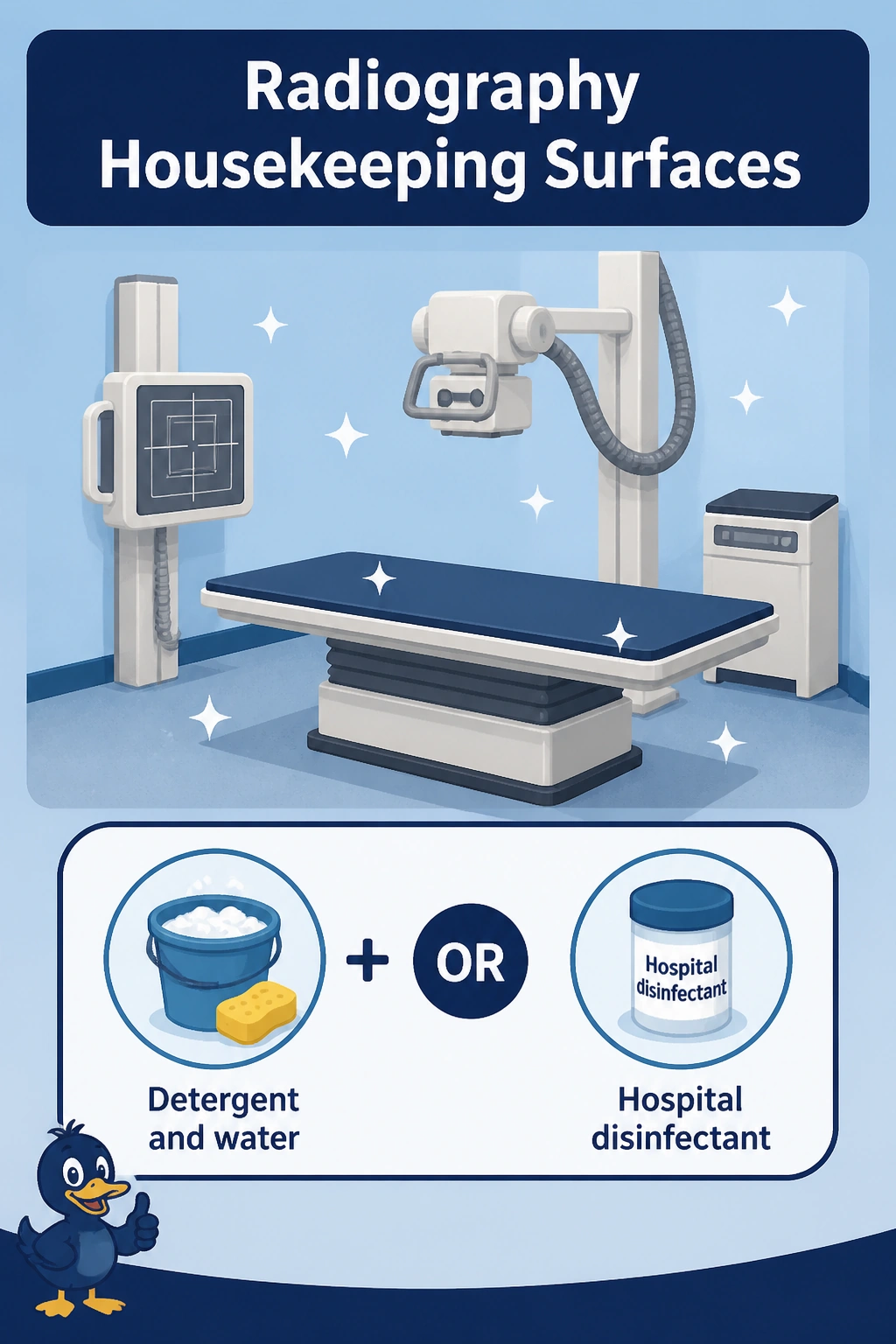
You can manage floors and sinks with routine detergent and water or a hospital disinfectant when they are not visibly contaminated with blood. These housekeeping surfaces do not need plastic barriers, disinfection after every patient, or a sporicidal disinfectant after every radiography patient.
Full Explanation
Cleaning routinely with detergent and water or a hospital disinfectant is appropriate for housekeeping surfaces such as floors and sinks, which carry minimal risk of disease transmission when they are not visibly contaminated with blood. Covering the operatory floor around the chair with impervious plastic barriers is unnecessary for these surfaces and can create slip hazards and excess waste; barriers are reserved for clinical contact surfaces that are difficult to clean. Spraying with an intermediate-level tuberculocidal disinfectant after every patient applies a protocol for blood-contaminated clinical contact surfaces, not routine housekeeping surfaces. Wiping the floor with an EPA-registered sporicidal disinfectant after every radiography patient is excessive for routine housekeeping surfaces; sporicidal disinfectants target spore-forming organisms for specific indications, not routine floors without visible blood. One caveat is that a floor or sink visibly contaminated with blood or body fluids must first be cleaned and then disinfected with an EPA-registered intermediate-level disinfectant. As a practical check, inspect floors and sinks at the end of each shift for visible spills before routine detergent cleaning.
Prefer to study offline? Printable PDF study book + test engine ($7.50, unofficial). These questions stay free here.