
Before taking an intraoral periapical series with a wired CMOS digital sensor, a dental assistant prepares the barrier protection. How should the disposable plastic sheath be positioned to prevent cross-contamination during the procedure?
Select an answer to reveal the explanation.
Short Explanation
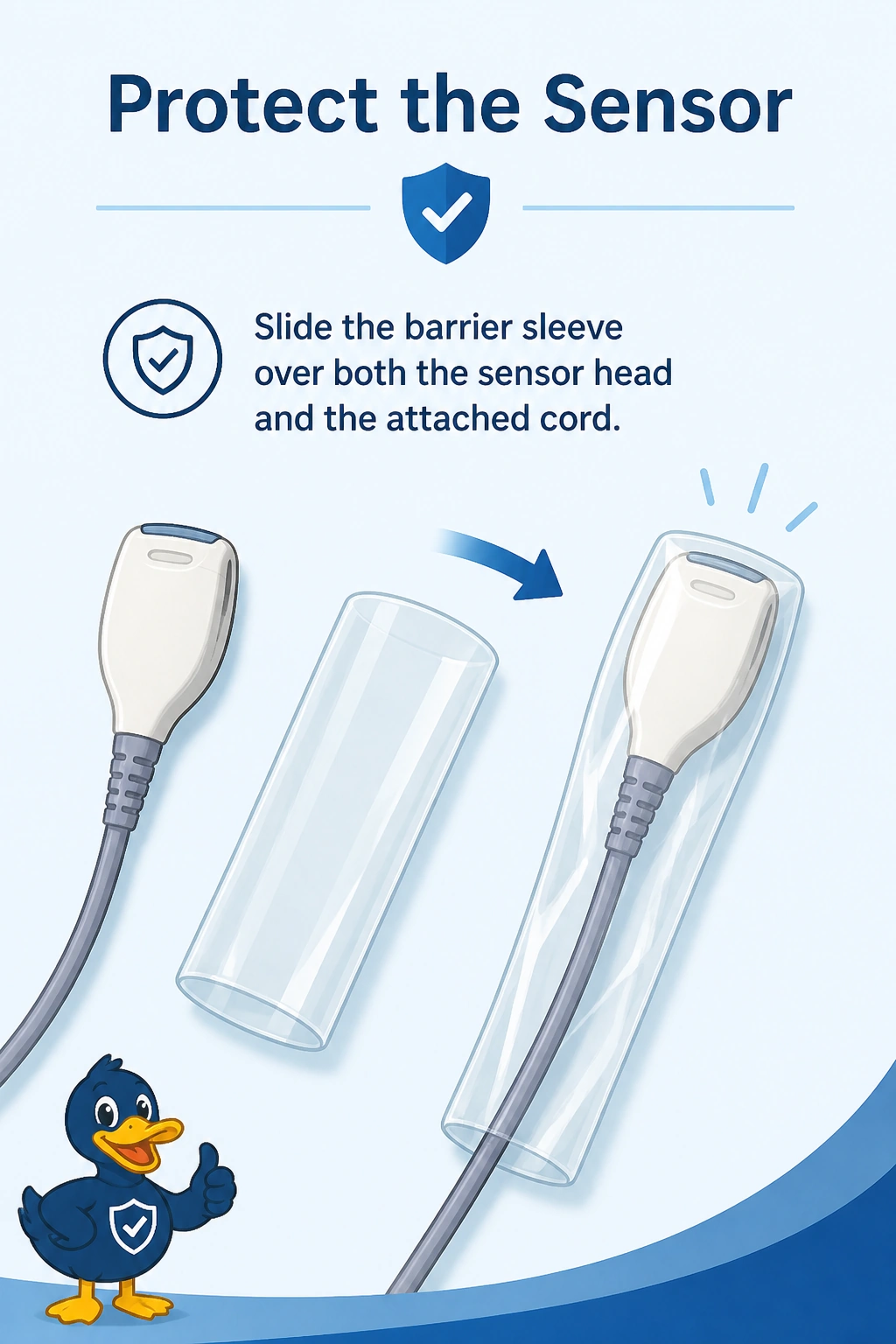
Covering only the sensor head is like putting on a raincoat with no sleeves—saliva still runs down the cord onto your gloves and the patient's chin. Make sure the plastic sheath extends down the attached cable so you do not turn the cord into a contamination highway.
Full Explanation
Slide the barrier sleeve over both the sensor head and the attached cord because during intraoral positioning, the proximal portion of the cable rests against the patient's lips, cheek, and the operator's contaminated gloves. Using a full-length impervious sheath prevents saliva and blood from contaminating the braided or rubberized cord, which is difficult to clean thoroughly. Cover only the rigid sensor head so the flexible cord can bend freely leaves the exposed cord vulnerable to oral fluids and cross-contamination between operator gloved hands and external surfaces. Wrap the sensor head in plastic film and wipe the cord with alcohol mid-series is ineffective because alcohol is a poor cleaner in the presence of organic soil and does not substitute for an impervious barrier during patient care. Submerge the entire sensor and cord in disinfectant before placing a bite tab risks damaging moisture-sensitive electronic connections and still fails to provide a barrier during oral contact. As an infection control caveat, even when a full-length barrier is used, the sensor and cord must still be cleaned and treated with an appropriate EPA-registered intermediate-level disinfectant after barrier removal. For a concrete operational check, tug gently on the sealed end of the sheath before seating the holder to confirm the sensor head is snug and the cord is covered well past the oral contact zone.
Prefer to study offline? Printable PDF study book + test engine ($7.50, unofficial). These questions stay free here.