
After completing a digital panoramic radiograph on an adult patient, a dental assistant prepares the machine for the next patient. Which infection control protocol properly addresses both the reusable bite-stick and the chin rest according to CDC dental infection control guidelines?
Select an answer to reveal the explanation.
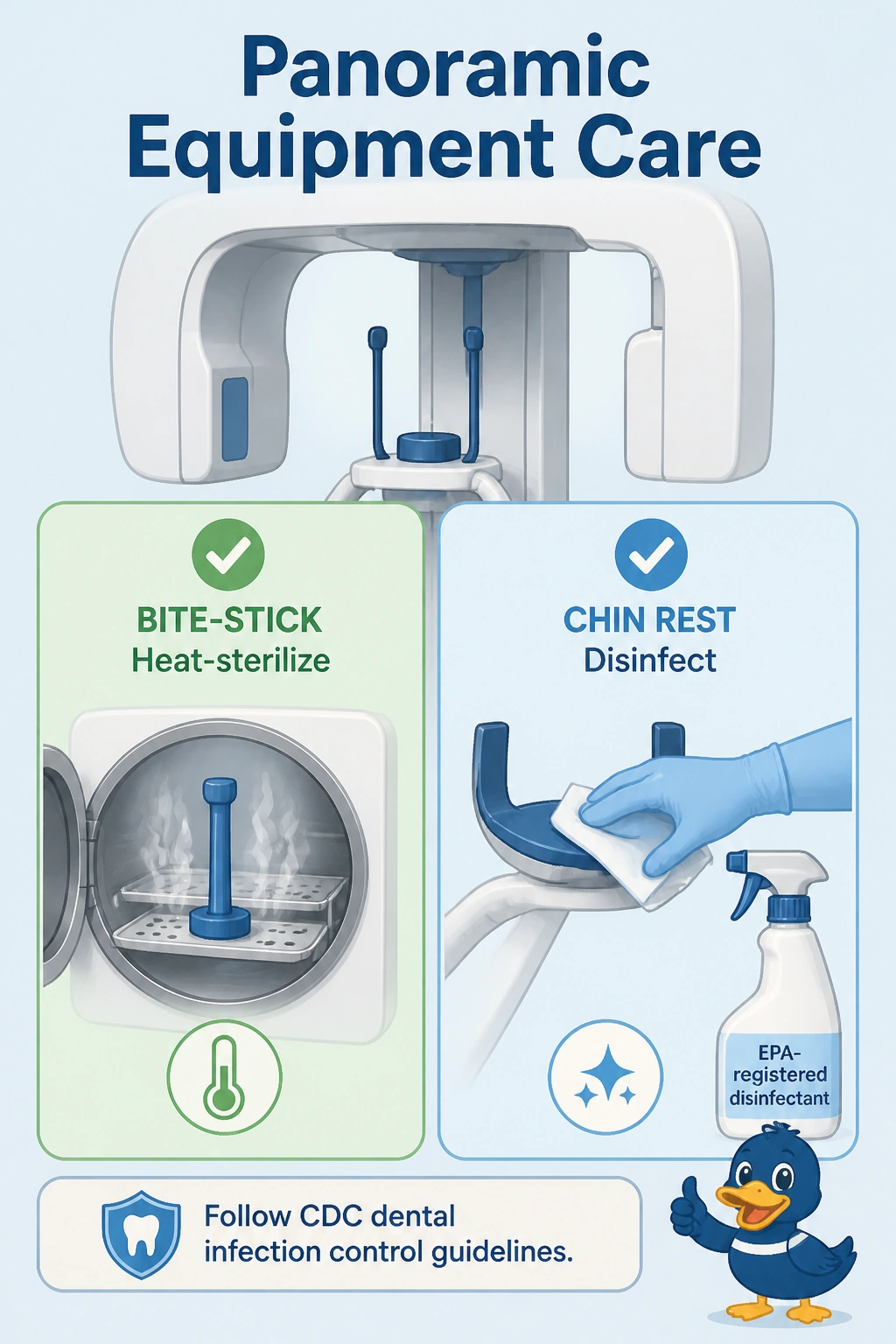
Short Explanation
You can use Spaulding’s rule to sort these items by contact: the bite-stick enters the mouth and needs sterilization, while the chin rest contacts intact skin and needs disinfection. Wiping both with disinfectant misses the deeper processing required for the bite-stick.
Full Explanation
Under CDC dental infection control guidelines, items that contact mucous membranes are semicritical, while surfaces that contact only intact skin are noncritical. Heat-sterilizing the bite-stick and disinfecting the chin rest with an EPA-registered disinfectant is appropriate: the bite-stick enters the mouth and requires sterilization, while the chin rest requires cleaning and disinfection. Heat-sterilizing both items in a steam autoclave is unnecessary for the noncritical chin rest and may damage machine components not designed for autoclaving. Wiping both with an EPA-registered intermediate-level disinfectant does not sterilize the semicritical bite-stick. Submerging the bite-stick in alcohol for ten minutes and wiping the chin rest with plain soap also fails: alcohol is not a high-level disinfectant or sterilant, and plain soap does not provide the antimicrobial kill claim required for clinical contact surfaces. As an exam caveat, check whether the manufacturer supplies single-use disposable bite-sticks; these must be discarded rather than reprocessed. Before seating the next patient, verify that a fresh barrier or sterilized bite-stick is in place and that the chin rest has remained wet for the disinfectant’s full contact time.
Prefer to study offline? Printable PDF study book + test engine ($7.50, unofficial). These questions stay free here.