
Before positioning a patient for a digital panoramic radiograph, the dental assistant asks the patient to remove a maxillary complete denture. Which handling practice best prevents cross-contamination in the imaging area?
Select an answer to reveal the explanation.
Short Explanation
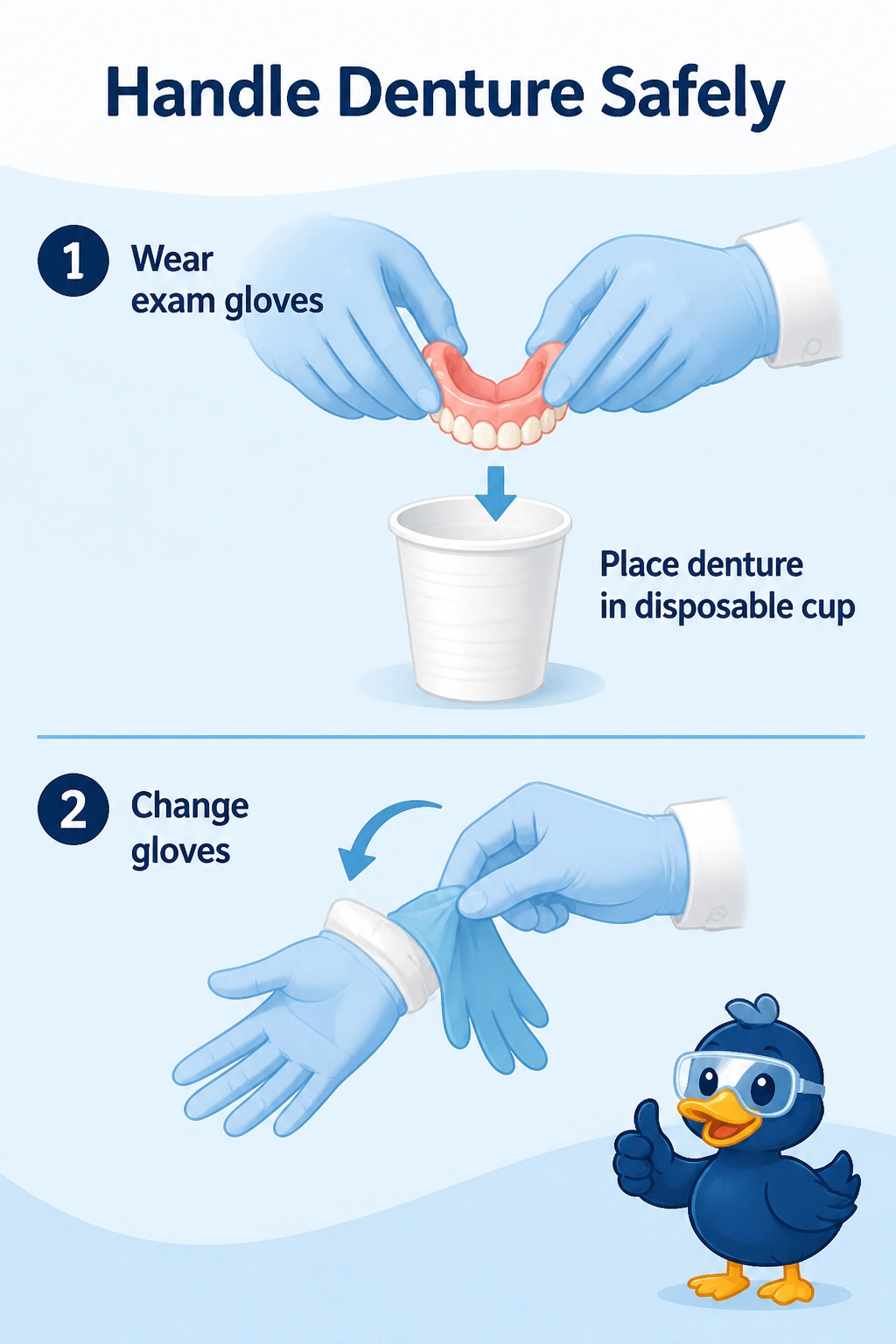
A denture coming straight from your patient’s mouth is coated in saliva, so placing it on the panoramic unit can spread microbes. You can contain it in a disposable cup with exam gloves, then change your gloves before touching the controls. That simple workflow helps keep the imaging area clean.
Full Explanation
A removable denture is wet with oral secretions, so the safest workflow under CDC dental infection control guidelines is to wear exam gloves while placing it in a disposable cup, then change gloves. The cup contains the saliva-contaminated appliance and keeps it from contacting environmental surfaces; removing the contaminated gloves and performing hand hygiene before touching the panoramic controls helps prevent cross-contamination. Setting the denture directly on the panoramic chin-rest shelf contaminates the area and risks knocking the prosthesis onto the floor during positioning. Asking the patient to hold it in a bare hand while gripping the handles can transfer saliva to the patient’s hands and the panoramic handgrips, as well as interfere with steady posture. Rinsing it under the operatory sink and drying it with a clean patient bib creates splash exposure and contaminates the sink area without isolating the appliance. As a caveat, keep the disposable cup clearly visible so the denture is not accidentally discarded with single-use trash. For a practical check, provide a clean disposable cup before positioning, perform hand hygiene after glove removal, and confirm the denture is returned to the patient before dismissal.
Prefer to study offline? Printable PDF study book + test engine ($7.50, unofficial). These questions stay free here.