
A busy clinic runs low on sterile plastic sensor aiming rings and bite blocks, and a coworker suggests soaking the used heat-tolerant holders in a high-level chemical disinfectant instead of autoclaving them. According to CDC dental infection control guidelines, how should you respond?
Select an answer to reveal the explanation.
Short Explanation
Just because a bottle says high-level disinfectant does not make it a shortcut for items you can safely put in the autoclave. The trap is thinking a busy schedule justifies skipping heat sterilization on your reusable holders.
Full Explanation
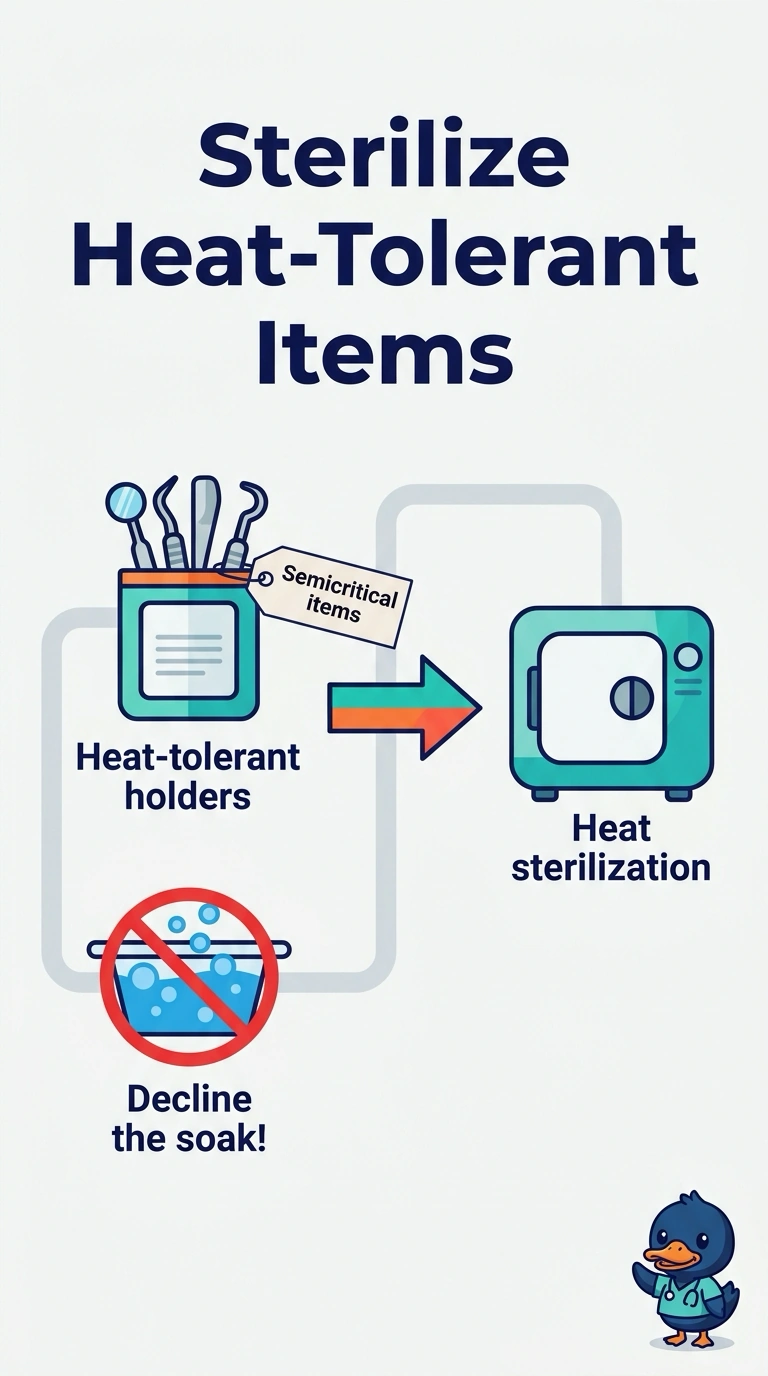
CDC dental infection control guidelines state that semicritical items contacting mucous membranes must be heat-sterilized whenever they can tolerate heat, so Decline the soak because heat-tolerant semicritical items must be heat-sterilized is the only compliant choice. Choosing Approve the chemical soak if the holders are scrubbed with detergent and rinsed first is wrong because high-level liquid germicides are reserved exclusively for heat-sensitive semicritical instruments, not as a convenience substitute. Selecting Approve the chemical soak only when the clinic's steam autoclave schedule is backed up violates standard precautions, as workflow volume never overrides sterilization requirements. Likewise, Use an intermediate-level surface wipe instead of soaking to save turnaround time fails twice: surface disinfectants cannot sterilize semicritical oral devices, and wiping leaves crevices unsterilized. As a clinical caveat, liquid chemical sterilants are toxic, difficult to monitor biologically, and require meticulous rinsing with sterile water. For an operational check, maintain enough pouched, heat-sterilized receptor holders in inventory so high patient volume never tempts the team to take shortcuts.
Prefer to study offline? Printable PDF study book + test engine ($7.50, unofficial). These questions stay free here.