
In an office that still uses a lead-equivalent protective apron and thyroid collar (for example, for a caregiver, patient comfort, or per state rule), after completing a digital full-mouth series on an adult patient with no visible blood or spatter, a dental assistant removes the apron and collar. How should the assistant reprocess and store these items before the next patient?
Select an answer to reveal the explanation.
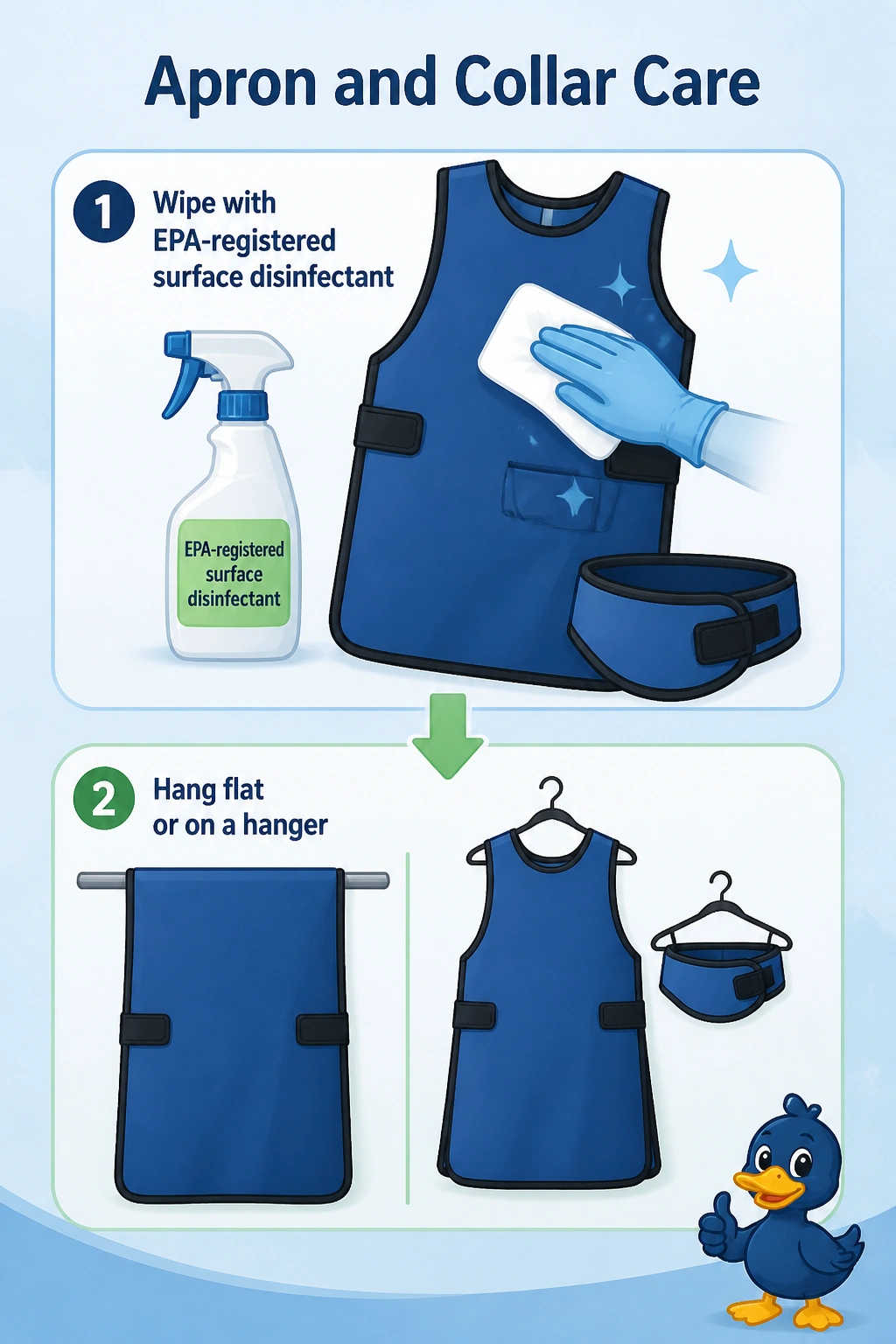
Short Explanation
Think of the apron like a heavy winter coat with a delicate lining — folding or soaking it ruins the inner layer. The trap is treating a noncritical barrier item like a surgical instrument or folding it to save space. You should wipe it with an EPA-registered disinfectant and hang it flat or on a wide hanger.
Full Explanation
Under CDC dental infection control guidelines, a lead-equivalent protective apron and thyroid collar are noncritical items that contact only intact skin, so you should Wipe both items with an EPA-registered surface disinfectant and hang them flat or on a hanger. ADA 2024 no longer recommends routine patient aprons and collars for dental imaging; where still used for a caregiver, comfort, or state rule, CDC noncritical wipe-and-hang remains correct. Wiping avoids saturating seams while keeping the required wet contact time, and hanging prevents creasing or cracking of the internal attenuating layer. Choosing to Spray both items with an EPA-registered hospital disinfectant, then fold them neatly into a closed drawer fails because folding creates sharp creases that fracture the lead-equivalent core and damage the inner layer. Choosing to Submerge both items in an enzymatic detergent solution, rinse thoroughly, and hang them to air-dry fails because immersion allows moisture to seep into stitched seams and degrade the inner material. Choosing to Place both items in a steam autoclave pouch and run a low-temperature plastic sterilization cycle fails because heat and steam destroy the vinyl exterior and inner shielding, and noncritical items do not require sterilization. Caveat: always check the manufacturer's instructions for approved disinfectants that will not crack the outer covering. Operational check: inspect the apron and collar visually and by palpation for cracks or folds before hanging them on a dedicated rack.
Prefer to study offline? Printable PDF study book + test engine ($7.50, unofficial). These questions stay free here.