
During a post-extraction digital periapical radiograph, a patient bites on gauze that becomes completely saturated and dripping with blood. According to OSHA Bloodborne Pathogens Standard (29 CFR 1910.1030), how must the dental assistant dispose of this gauze?
Select an answer to reveal the explanation.
Short Explanation
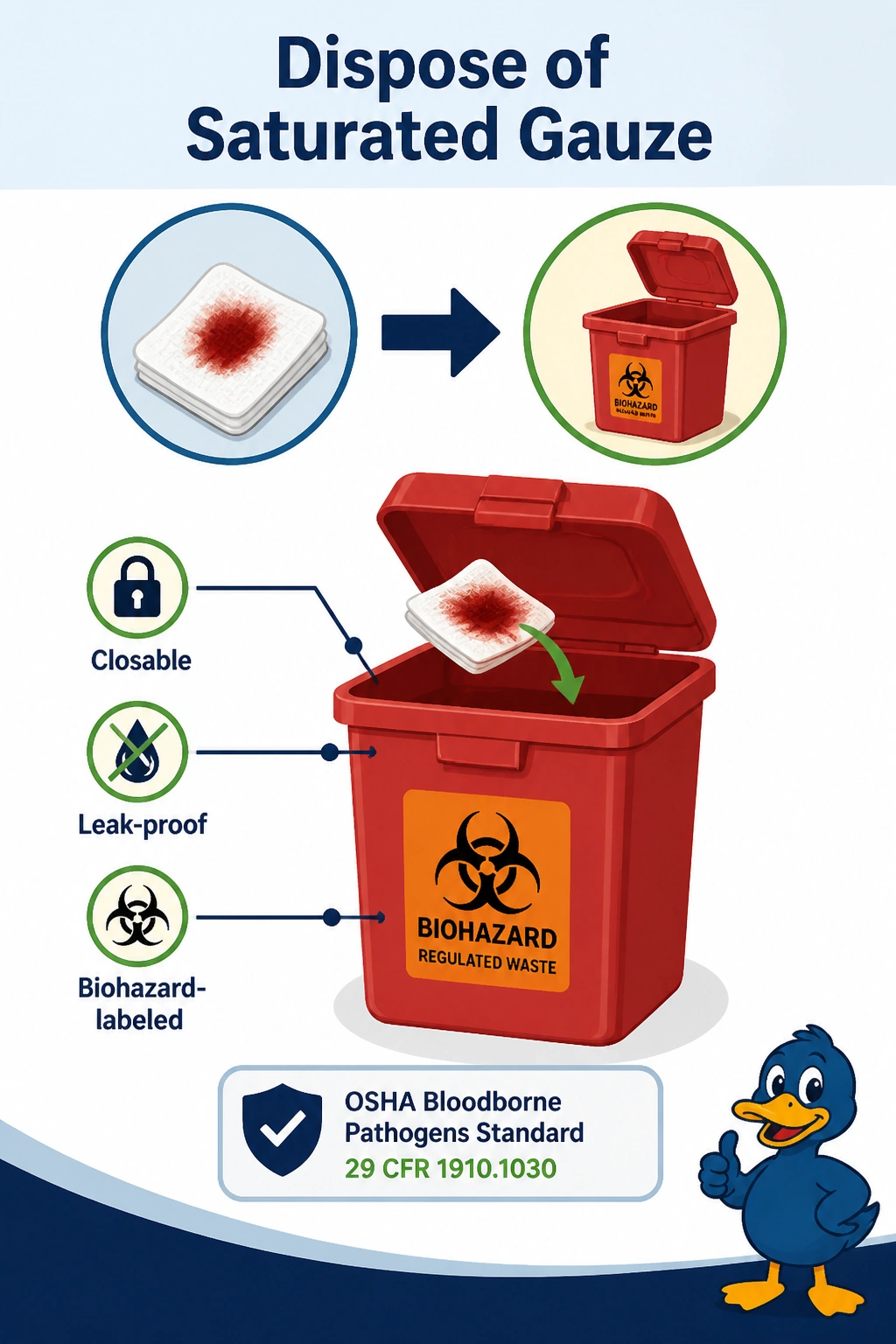
Rule of thumb for blood-soaked items: if you can squeeze it and it drips, regular trash is off-limits. The trap is treating dripping, saturated gauze the same as a barrier with a trace of saliva. Under OSHA rules, you must place blood-saturated gauze into a closable, leak-proof, biohazard-labeled regulated waste container.
Full Explanation
Under the OSHA Bloodborne Pathogens Standard (29 CFR 1910.1030), items saturated with liquid or semi-liquid blood that would release blood if compressed are regulated waste, so you must Discard it in a closable, leak-proof, biohazard-labeled regulated waste container. Containing saturated gauze prevents leakage and protects staff and waste handlers from bloodborne exposure. Choosing to Place it in the regular operatory trash lined with a standard plastic bag violates OSHA rules because regular trash is only for non-regulated items with trace saliva or dried, non-releasable spots. Choosing to Rinse the blood out in the clinical sink and discard the gauze in regular waste creates unnecessary splash and aerosol hazards while handling contaminated material. Choosing to Seal it inside a paper sterilization pouch and autoclave it with the sensor holders contaminates the instrument sterilizer and mixes waste with reusable patient-care items. Caveat: check state or local medical waste rules, which may define regulated waste even more strictly than federal OSHA. Operational check: keep a foot-operated, biohazard-labeled container accessible in the operatory and wear exam gloves when discarding saturated gauze.
Prefer to study offline? Printable PDF study book + test engine ($7.50, unofficial). These questions stay free here.