
After dismissing a patient, a dental assistant cleans the uncovered X-ray unit arm and sprays it with an EPA-registered surface disinfectant, then immediately wipes it dry with a paper towel. Why does this shortcut compromise infection control?
Select an answer to reveal the explanation.
Short Explanation
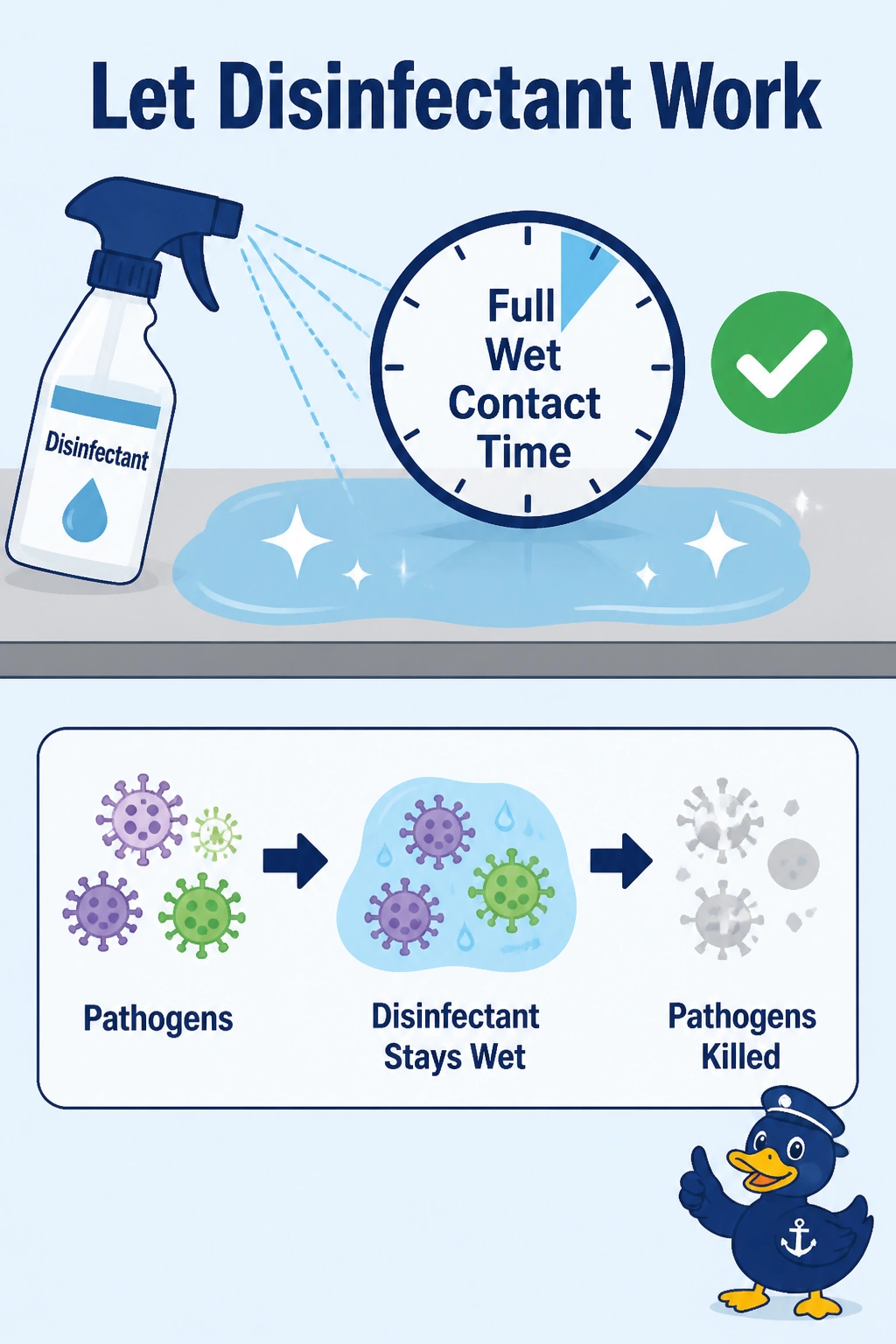
Think of surface disinfectant like oven cleaner: if you wipe it off the second it hits the metal, the grime stays behind. The trap here is assuming the spray works on instant contact, when in reality it needs time to stay wet. Check your bottle label so you never rush the clock between patients.
Full Explanation
Under CDC dental infection control guidelines, uncovered clinical contact surfaces must be cleaned and then disinfected with an EPA-registered hospital disinfectant. Because The disinfectant needs the full wet contact time to kill pathogens, wiping the X-ray arm dry immediately interrupts the chemical action needed to inactivate bacteria and viruses. Allowing the surface to remain visibly wet for the label-specified duration lets the active ingredients disrupt microbial membranes. Claiming that The chemical must be rinsed off with tap water before drying the surface confuses surface disinfection with detergent rinsing and can dilute the active agent. Saying Surface disinfectants only work when applied with a saturated cotton gauze is false because sprays and premoistened wipes are effective whenever the required wet time is met. Insisting that The surface must be scrubbed with isopropyl alcohol after the first spray is also wrong because alcohol evaporates too quickly and can degrade plastic housings. As a caveat, visible blood or saliva must be cleaned off first so organic debris does not block the disinfectant. For an operational check, read the bottle label and time how long the X-ray arm stays visibly wet before seating the next patient.
Prefer to study offline? Printable PDF study book + test engine ($7.50, unofficial). These questions stay free here.