
Before seating a patient for an intraoral digital radiographic series, why should a dental assistant cover the X-ray exposure button and tubehead control panel with disposable impervious barriers?
Select an answer to reveal the explanation.
Short Explanation
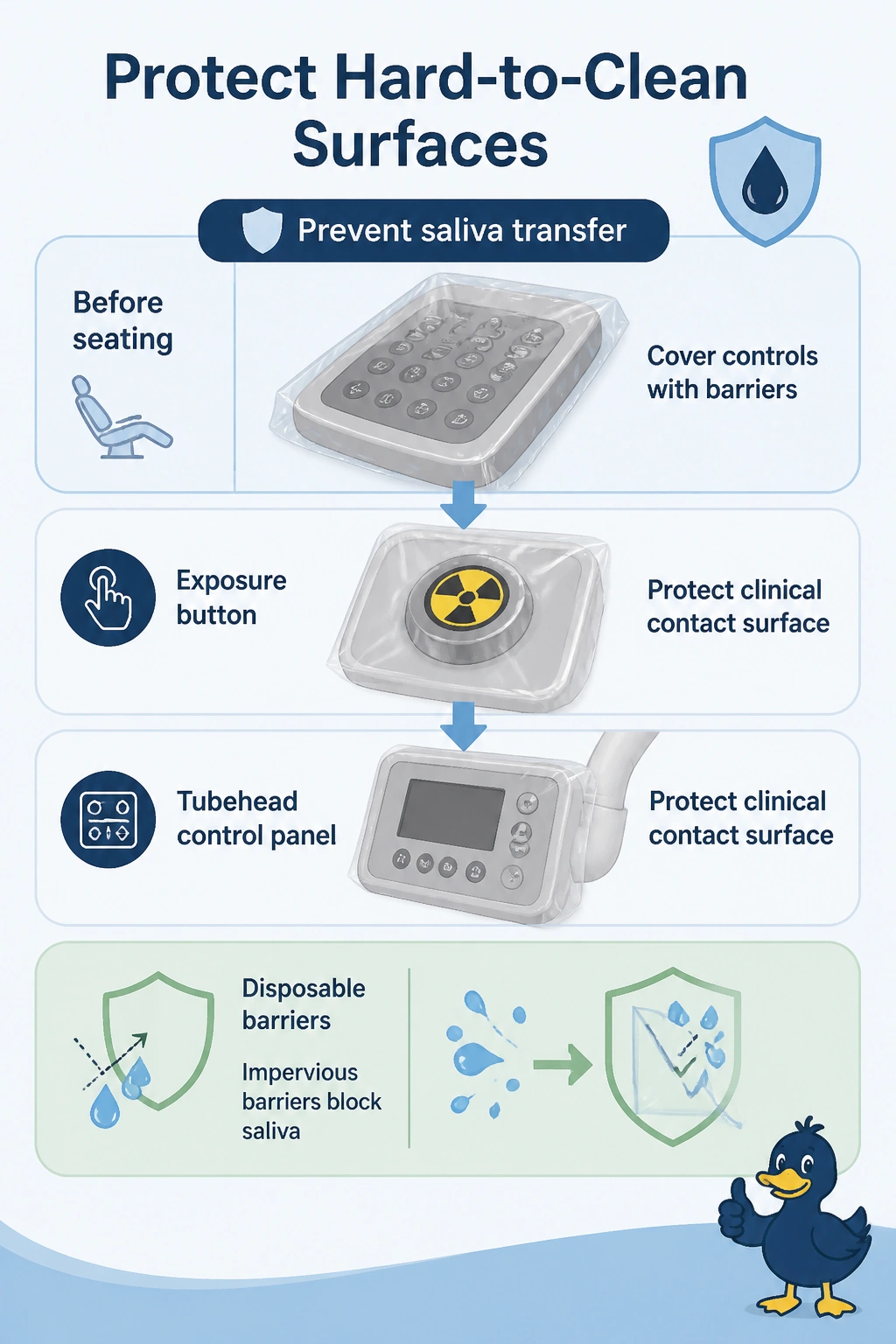
When you use gloved hands during an exposure sequence, saliva can reach the control surfaces. Disposable barriers protect hard-to-clean switches and controls from contamination, without replacing hand hygiene or disinfection when needed.
Full Explanation
Clinical contact surfaces in the radiography operatory may be touched repeatedly with contaminated gloves during an exposure sequence. The reason for covering the exposure button and tubehead control panel is to protect surfaces that are difficult to clean from saliva transfer. CDC dental infection control guidance recommends impervious barriers for equipment with complex switches, seams, or electronics that could be damaged by liquid disinfectants; changing the barrier between patients provides a clean surface without risking fluid entry into control housings. Preventing moisture from short-circuiting the electronic timer is not the primary purpose: the infection-control goal is preventing patient-to-patient pathogen transmission, not equipment waterproofing. Keeping saliva off the switch does not allow the same gloves to be used at the computer; contaminated gloves must still be removed with hand hygiene before touching clean work areas to avoid cross-contamination. Nor do they sterilize underlying switches; they shield surfaces from contamination but do not sterilize them. Exam caveat: if a barrier tears, leaks, or contamination is visible beneath it, clean and disinfect the surface with an EPA-registered hospital disinfectant before placing a fresh barrier. Practical check: at turnover, inspect the exposure button and tubehead controls to ensure old barriers are removed and new barriers are intact.
Prefer to study offline? Printable PDF study book + test engine ($7.50, unofficial). These questions stay free here.