
A dental clinic receives a laboratory report showing a positive biological spore test for the steam autoclave used to sterilize reusable digital sensor holders. According to CDC dental infection control guidelines, what should the team do immediately?
Select an answer to reveal the explanation.
Short Explanation
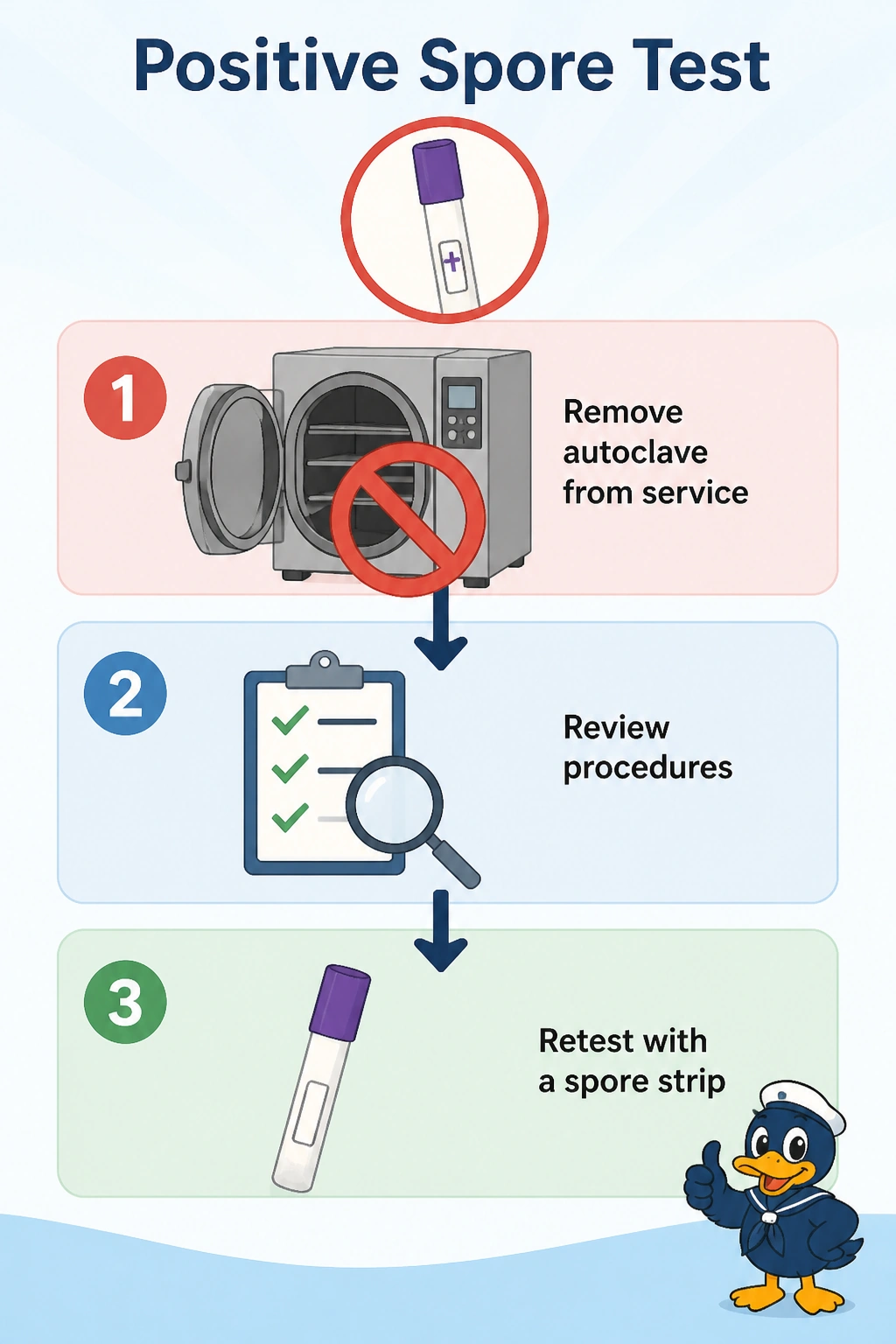
A positive spore test is your autoclave’s red warning light: it shows the cycle failed to kill highly resistant spores, so you can’t trust the sterilizer for patient care yet. Dark external tape only confirms heat exposure, not sterilization, so remove the autoclave from service, review procedures, and retest with a spore strip.
Full Explanation
Biological indicators (spore tests) provide the only direct verification that a steam autoclave kills resistant bacterial spores. Under CDC dental infection control guidelines, a positive result means you should remove the autoclave from service, review procedures, and retest with a spore strip. If mechanical failure or a repeat failure is identified, recall and reprocess instruments from suspect loads. Continuing to use the autoclave for unwrapped holders while scheduling routine maintenance risks transmitting pathogens through improperly sterilized semicritical items. Soaking holders in an EPA-registered intermediate-level disinfectant relies on surface disinfection rather than heat sterilization for heat-tolerant semicritical devices. Clearing previous loads because external chemical indicator tape stripes turned dark is unsafe: the tape confirms exposure to heat, not sterilization efficacy. An important exam caveat is that if the repeat spore test is also positive, the autoclave must remain out of service until repaired and verified by consecutive negative tests. As a practical check, log the positive result, corrective actions, and retest outcome in the clinic’s sterilization monitoring record.
Prefer to study offline? Printable PDF study book + test engine ($7.50, unofficial). These questions stay free here.