
Midway through a digital full-mouth series, a dental assistant realizes an extra disposable sensor barrier is needed from a closed supply drawer. Which action best prevents cross-contamination of the clean supply stock?
Select an answer to reveal the explanation.
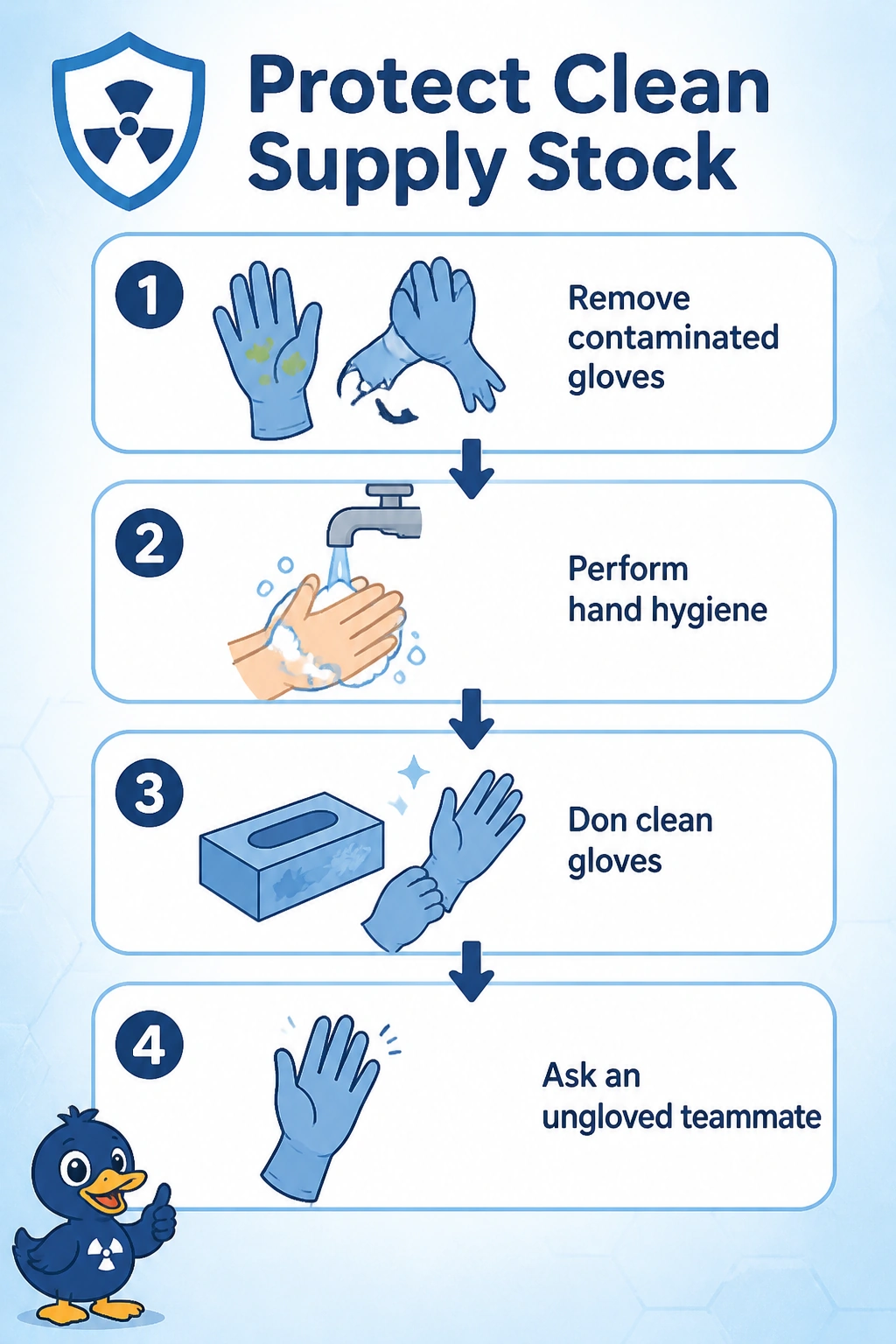
Short Explanation
You protect the clean supply stock by removing contaminated gloves and performing hand hygiene before reaching into the drawer, then donning clean gloves or asking an ungloved teammate for help. Even a quick reach can transfer saliva and microbes to the barriers left inside.
Full Explanation
Cross-contamination of stored dental supplies can turn a routine exposure into an infection-control failure across future appointments. The correct approach is to remove the contaminated gloves, perform hand hygiene, and don clean gloves or ask an ungloved teammate, because CDC guidance requires keeping clean supply areas separate from contaminated clinical items. Once gloves touch oral tissues or saliva-coated barriers, microorganisms can remain on their exterior and transfer to drawer handles and unused stock. Wiping contaminated exam gloves with alcohol-based hand rub fails because CDC guidance prohibits washing or disinfecting single-use exam gloves; chemicals can degrade glove integrity and do not reliably decontaminate them. Opening the drawer with the back of a forearm and pulling a barrier out by its edge still risks transferring contamination from gloved fingers to the clean supply stack. Using a sterile cotton plier held in the gloved hand also brings contaminated gloves over the open drawer, risking contact or droplet transfer to sterile instruments and unused barriers. Exam caveat: disinfecting single-use exam gloves is not a substitute for removing them and performing hand hygiene. Practical check: unit-dose barriers, holders, and bite blocks on a covered tray before seating the patient so drawers stay closed.
Prefer to study offline? Printable PDF study book + test engine ($7.50, unofficial). These questions stay free here.