
A dental assistant gathers reusable plastic and metal aiming rings, indicator arms, and bite blocks after a full-mouth digital series. Although these receptor-holding devices do not penetrate soft tissue, they contact mucous membranes and saliva. How must they be reprocessed before use on the next patient under CDC dental infection control guidelines?
Select an answer to reveal the explanation.
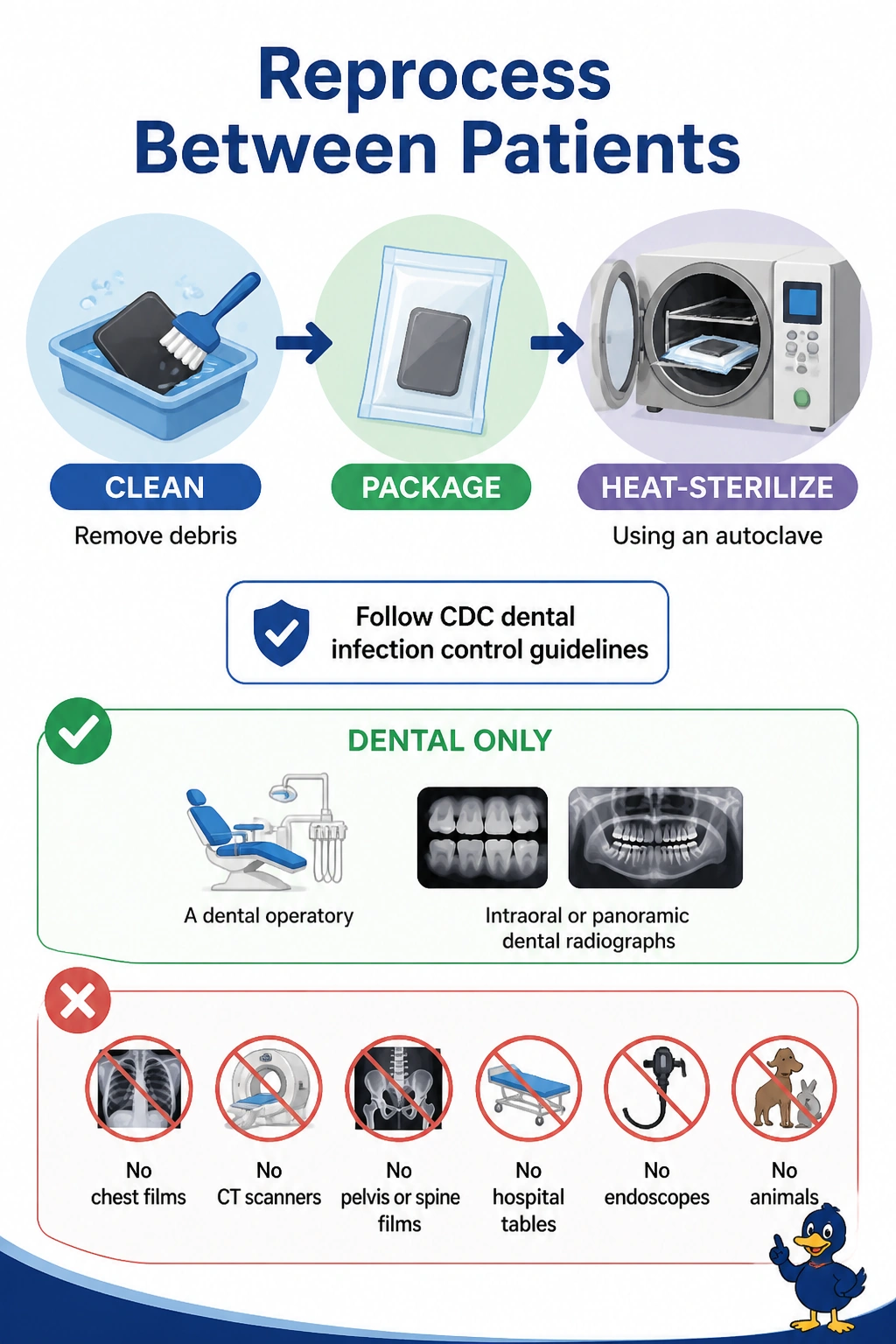
Short Explanation
Think of receptor holders like dental mirrors: even without breaking skin, they still ride inside the mouth. Because they touch mucous membranes, wiping them down like a countertop is a classic infection-control trap—your safest move is full heat sterilization.
Full Explanation
Under CDC guidelines for dental health-care settings, instruments that contact mucous membranes or nonintact skin without penetrating soft tissue are classified as semicritical items, and heat-tolerant semicritical devices must be cleaned and heat-sterilized between patients. Therefore, the correct protocol is to clean to remove debris, package, and heat-sterilize using an autoclave. Choosing to wipe with an EPA-registered intermediate-level tuberculocidal hospital disinfectant is reserved for noncritical clinical contact surfaces such as tubeheads or countertops, not intraoral holders. Choosing to soak in an FDA-cleared high-level chemical sterilant for the manufacturer's contact time is intended only for heat-sensitive semicritical items when heat-tolerant alternatives are unavailable. Choosing to clean with detergent and water, then store dry in a covered operatory drawer leaves viable microorganisms on a semicritical device. As a caveat, always verify that every component in the kit is labeled autoclavable by its manufacturer before processing. For an operational check, inspect the chemical indicator strip on the sterilization pouch before opening the kit at chairside.
Prefer to study offline? Printable PDF study book + test engine ($7.50, unofficial). These questions stay free here.