
A dental assistant uses reusable photostimulable phosphor (PSP) plates inside sealed disposable barrier envelopes for a patient's bitewings. After exposure, how should the assistant transfer the plates into the scanner to prevent cross-contamination?
Select an answer to reveal the explanation.
Short Explanation
Opening a contaminated PSP barrier is like peeling a dirty banana—you never want the outside skin touching the clean fruit inside. The trap is reaching in with contaminated gloves or spraying the plate, which can ruin your image receptor.
Full Explanation
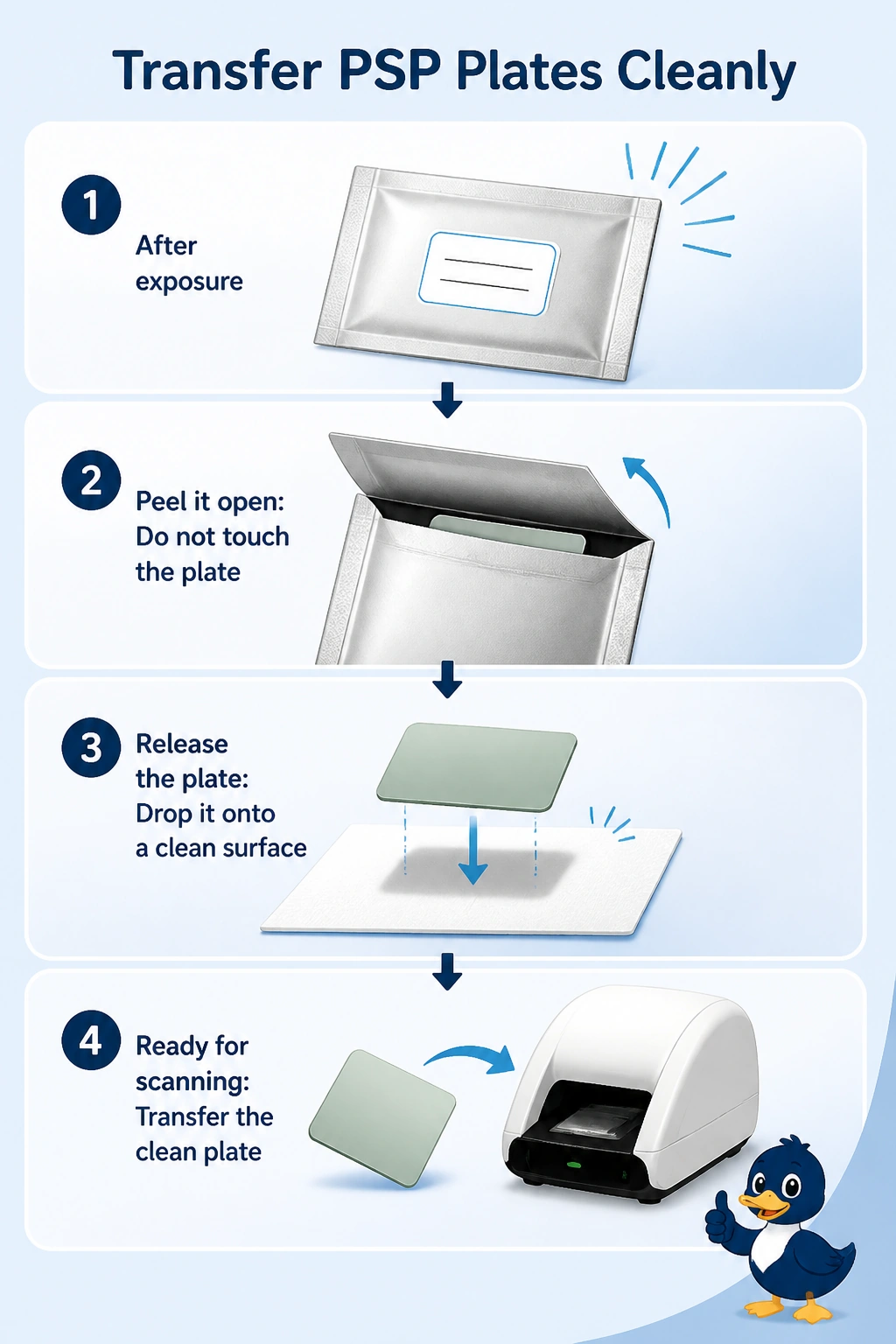
Reusable photostimulable phosphor (PSP) plates are light-sensitive and cannot be heat-sterilized or immersed in liquid disinfectants, so they rely on single-use barrier envelopes to remain uncontaminated during intraoral placement. After exposure, contaminated gloves touch only the outer envelope, and the correct workflow is to peel open each barrier without touching the plate, dropping it onto a clean surface, then remove contaminated gloves and perform hand hygiene before handling the clean plates with clean gloves or clean transfer tools. Choosing to wipe the outside of the sealed envelope with alcohol and feed it directly into the scanner fails because the opaque plastic barrier blocks the scanner laser from reading the plate. Choosing to remove the plates with gloved hands, spray them with disinfectant, and insert them contaminates the plate with saliva from the gloves and risks chemical damage to the phosphor coating. Choosing to place the unopened envelopes in an ultrasonic cleaner before opening them at the scanner risks water intrusion and ruined plates. As a caveat, dim ambient lighting around the transfer area helps prevent premature erasure of the latent image. As an operational check, inspect the opened barrier and plate edge for any moisture breach before placing the plate into the scanner.
Prefer to study offline? Printable PDF study book + test engine ($7.50, unofficial). These questions stay free here.