
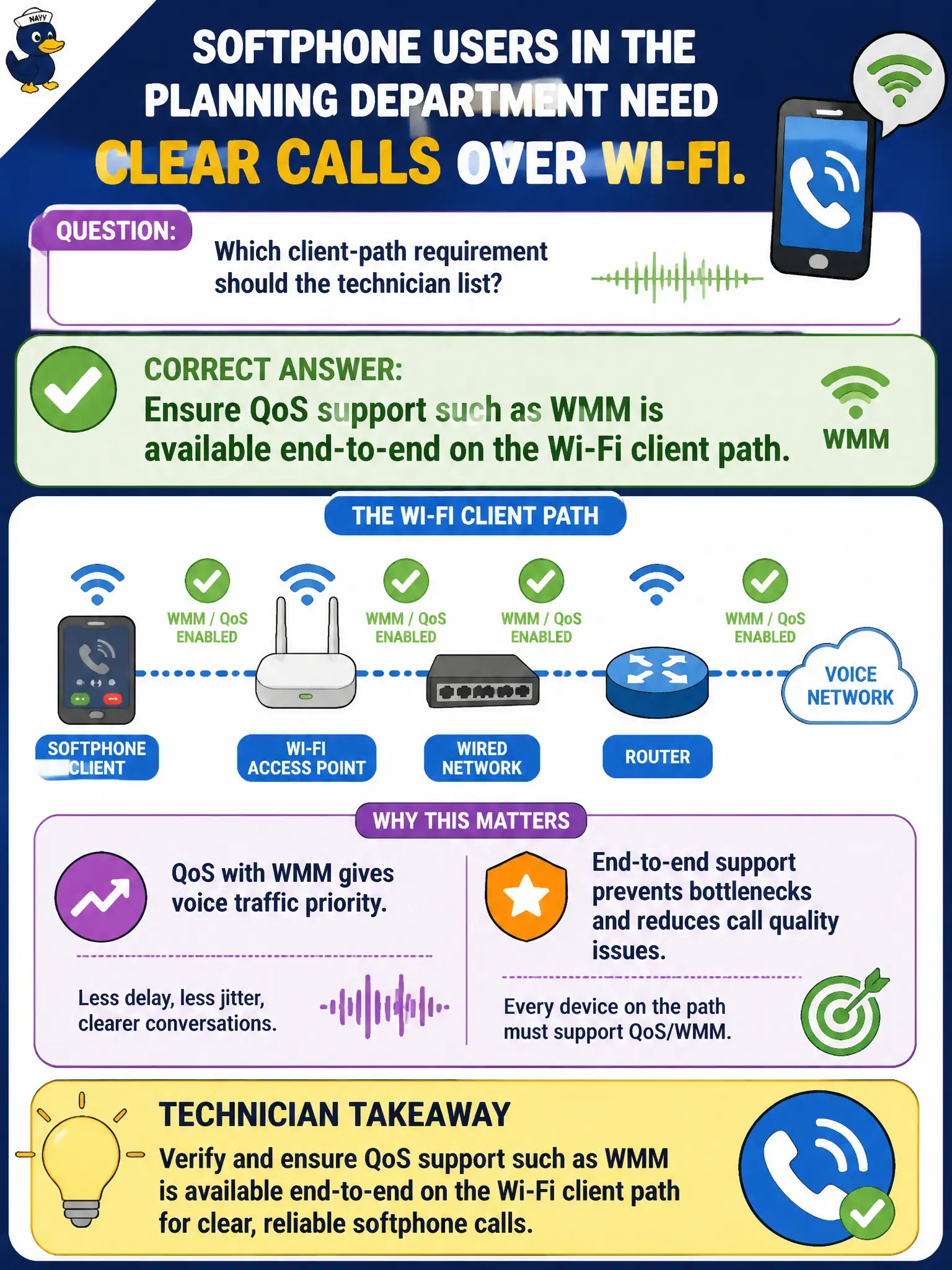
Softphone users in the planning department need clear calls over Wi-Fi. Which client-path requirement should the technician list?
Select an answer to reveal the explanation.
Short Explanation
Softphones hate waiting in the grocery-store line behind giant downloads. WMM/QoS is the express lane for voice when the path supports it. Put QoS on the voice/video checklist—not 'open and insecure.'
Full Explanation
Softphone users in the planning department need clear calls over Wi-Fi, so the technician should list QoS support such as WMM as available end-to-end on the Wi-Fi client path. WMM on the laptop and supporting AP infrastructure allows voice access categories to contend more effectively than bulk traffic on busy municipal channels. Without that QoS path, planning-department calls degrade during peak airtime even when RSSI bars look acceptable and association remains up.
Disabling all QoS markings so every packet shares a single best-effort queue forever contradicts softphone needs in civic offices. Forcing voice traffic onto an open SSID without encryption to reduce header size abandons confidentiality requirements for staff conversations. Removing 5 GHz radios so softphones only contend on crowded 2.4 GHz typically worsens contention rather than improving call clarity.
Exam caveat: voice quality over WLAN is a QoS and RF problem set—WMM is the primary client-side QoS feature to verify on the station path. Operational check: confirm WMM is enabled on planning laptops, confirm AP WMM support on the serving BSS, place test calls during peak load, and escalate channel utilization or coverage issues if QoS is already enabled and calls remain poor.