
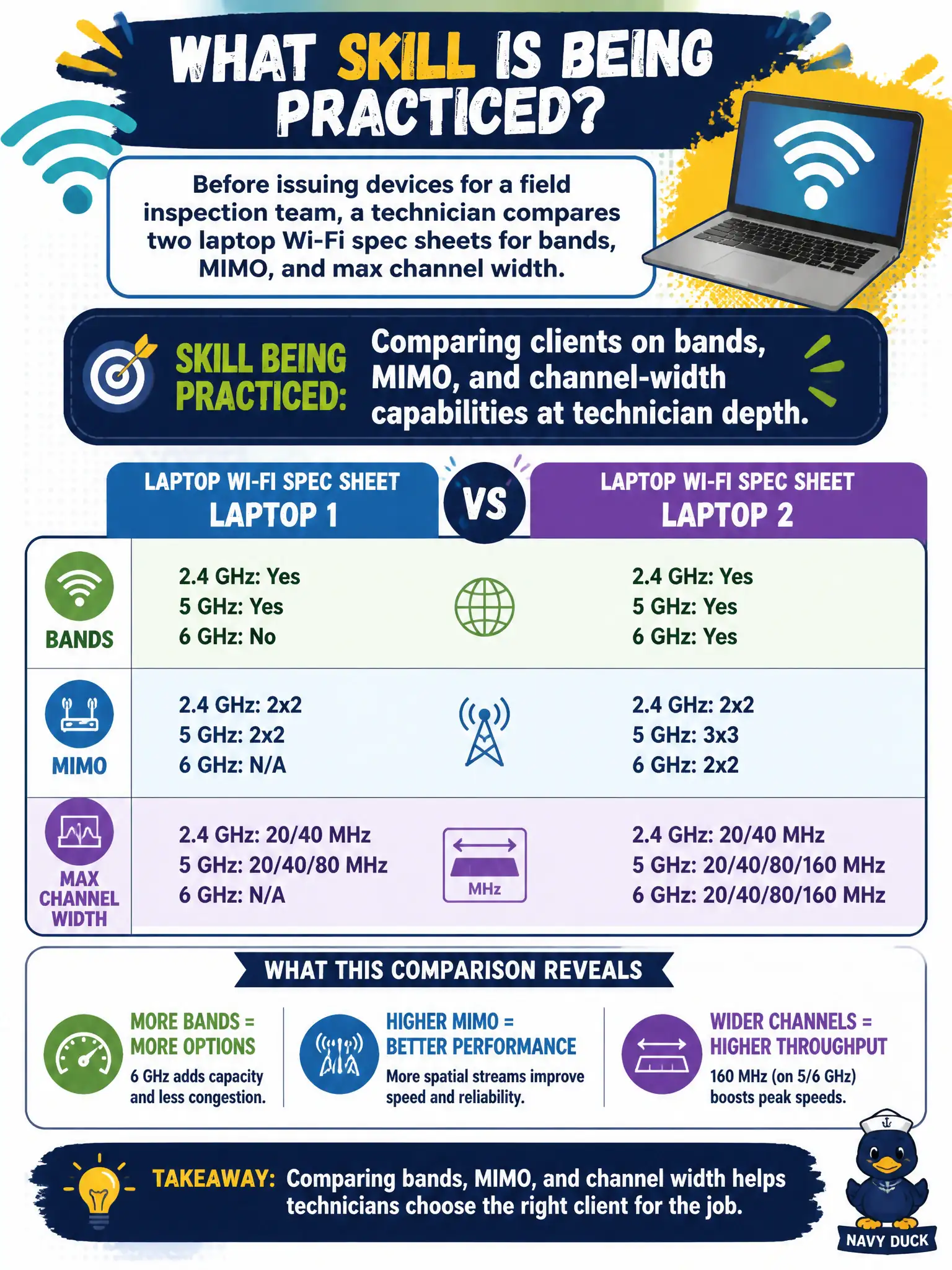
Before issuing devices for a field inspection team, a technician compares two laptop Wi-Fi spec sheets for bands, MIMO, and max channel width. What skill is being practiced?
Select an answer to reveal the explanation.
Short Explanation
Lining up bands, MIMO, and max width on two spec sheets is basic client triage—like comparing two toolbelts before a job. You are matching capability to the WLAN you already have, not redesigning the city RF plan. Spec literacy wins.
Full Explanation
Before issuing devices to a field inspection team, comparing laptop Wi-Fi spec sheets for bands, MIMO, and maximum channel width practices technician-depth client capability comparison. Those three classes predict which municipal SSIDs a device can join and what throughput and reliability potential it can deliver under the city's RF design. Capability comparison is a practical staging skill for civic field work, not a cosmetic preference for brand logos or chassis color.
Performing a full predictive heat-map redesign is an RF planning task beyond this comparison checklist and is not what the question describes. Building a WIPS policy hierarchy is a security-architecture activity, not client spec comparison. Selecting cellular carriers because Wi-Fi specs never affect WLAN planning contradicts the purpose of reading band and MIMO data for inspection laptops.
Exam caveat: CWT-level client comparison centers on bands, MIMO, and channel width (plus related features), not marketing names alone. Operational check: build a short matrix of candidate laptops listing supported bands, spatial streams, and max channel width; pick devices that match the inspection team's SSIDs and coverage bands; and verify a sample association and throughput check before mass imaging and issuance.