
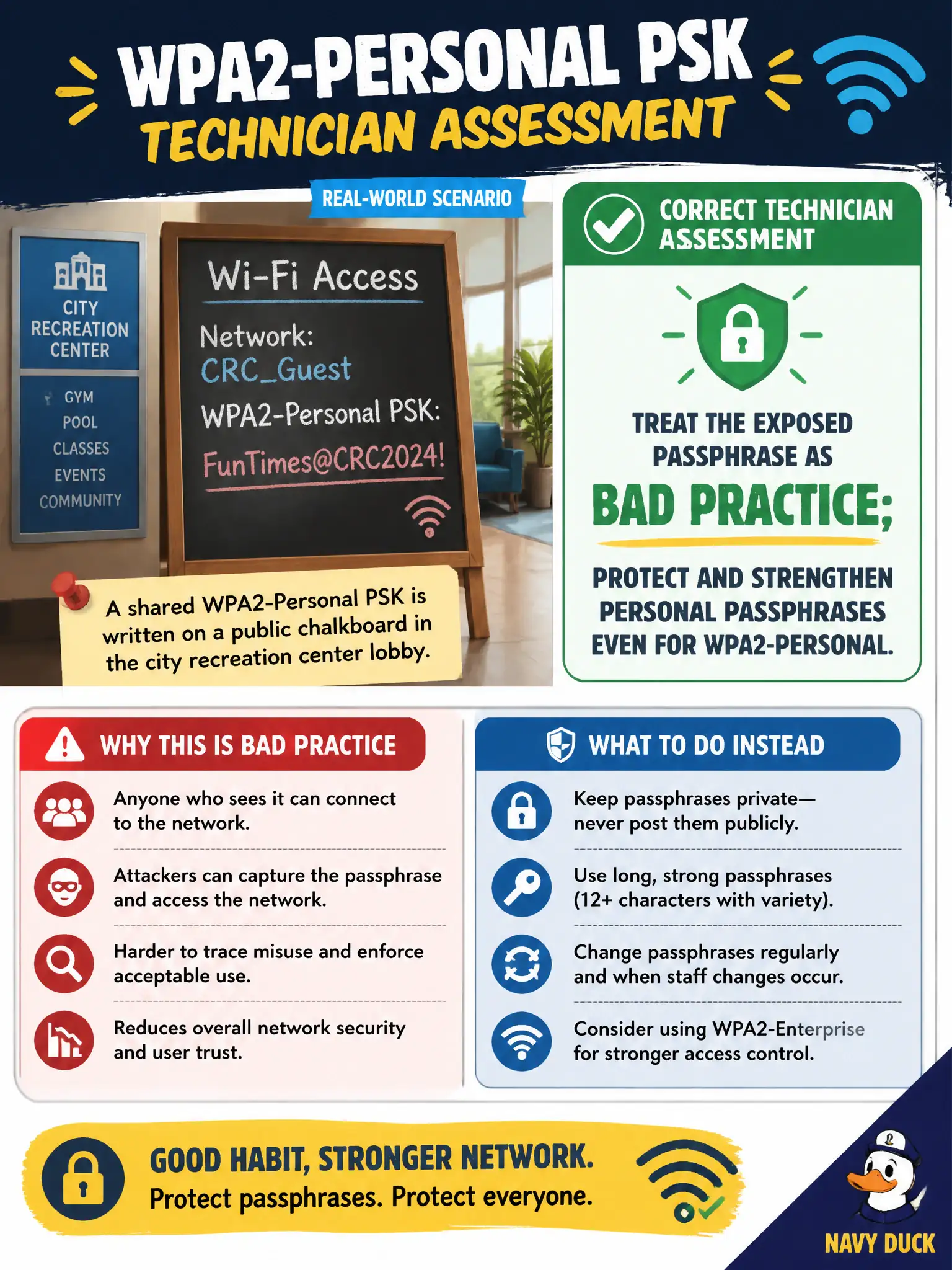
A shared WPA2-Personal PSK is written on a public chalkboard in the city recreation center lobby. What is the correct technician assessment?
Select an answer to reveal the explanation.
Short Explanation
A PSK on the lobby chalkboard is a spare key under the doormat—still bad even if the lock says WPA2-Personal. Encryption with a public password is theater. Hide-SSID and WEP don't fix a leaked passphrase.
Full Explanation
Writing a shared WPA2-Personal PSK on a public chalkboard in the city recreation center lobby is bad practice because Personal confidentiality depends on keeping the passphrase secret. Anyone who photographs the board can join the BSS and attack or misuse access derived from that PSK, so technicians must treat the exposure as a credential incident: rotate to a stronger passphrase and stop publishing it in public civic spaces.
Accepting chalkboard PSKs because WPA2-Personal 'still encrypts' confuses encryption presence with key secrecy; encryption with a public password is ineffective against lobby observers. Converting the chalkboard key into WEP worsens cryptography rather than fixing exposure. Leaving the PSK public while hiding the SSID does not provide confidentiality—SSID hiding is not an access-control substitute for a secret passphrase on recreation networks.
Exam caveat: Personal mode still requires protected, strong passphrases even on guest or recreation SSIDs when a shared key is used. Operational check: rotate the recreation-center PSK, update authorized devices during a brief outage window, scrub public postings and photos, and verify unauthorized phones can no longer associate with the old chalkboard string.