
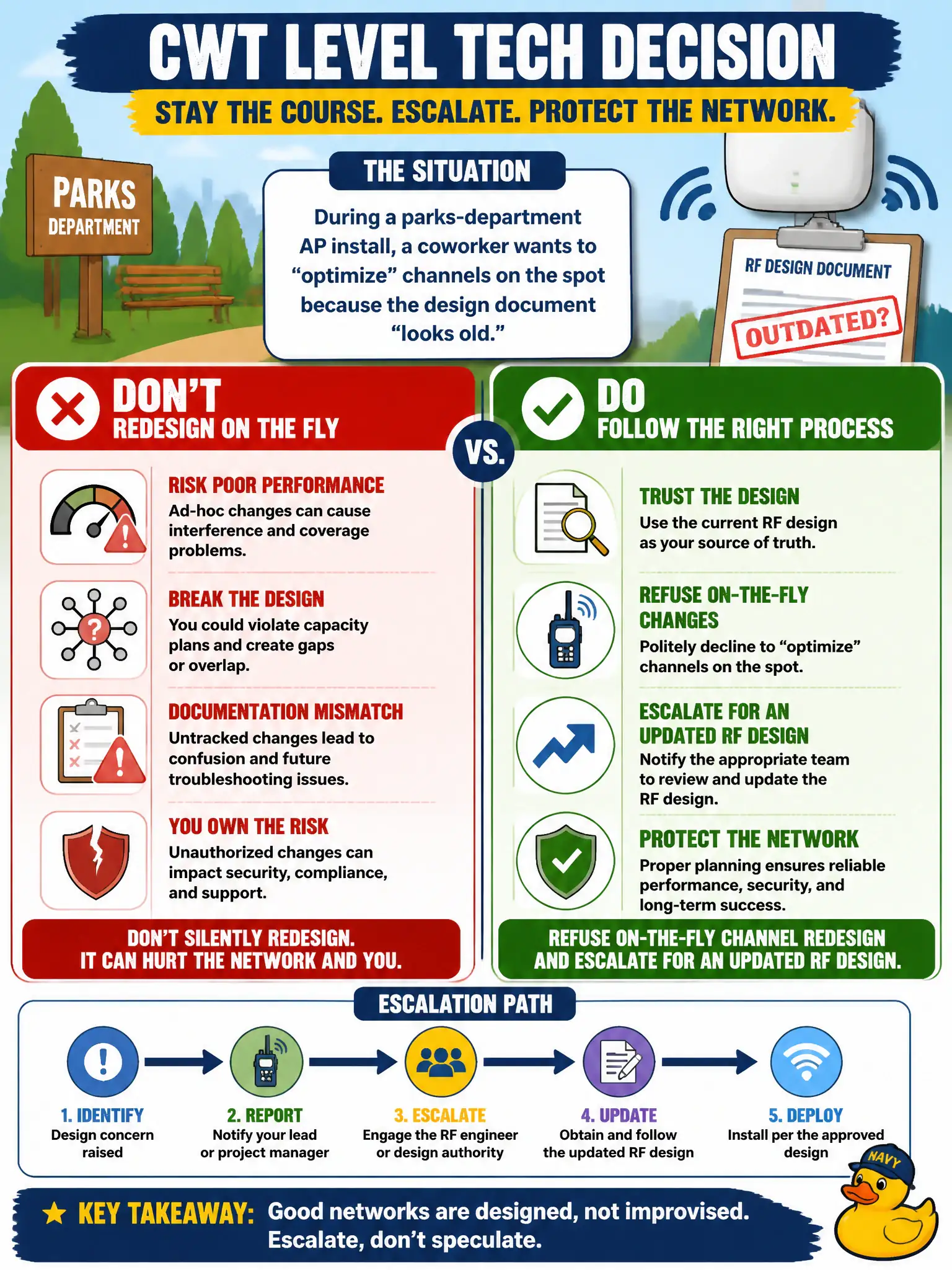
During a parks-department AP install, a coworker wants to 'optimize' channels on the spot because the design document 'looks old.' What should the CWT-level technician do?
Select an answer to reveal the explanation.
Short Explanation
The tech’s job is to install what the design says—not moonlight as the RF planner mid-ladder. If the plan feels stale, escalate for a real redesign instead of freestyle channel surfing. Silent 'optimizing' is how neighboring APs start fighting each other.
Full Explanation
During parks-department AP installs, coworkers sometimes want to “optimize” channels on the spot because a design document “looks old.” A CWT-level technician must refuse on-the-fly channel redesign and escalate for an updated RF design instead of silently redesigning. Channel plans embody CCI, capacity, and regulatory choices; improvising with a phone analyzer can create new municipal interference problems across neighboring parks APs.
Quietly changing channels to whatever a phone Wi-Fi analyzer suggests abandons change control and the approved design. Raising every AP to maximum TX power to cover weak spots worsens overcoverage and CCI rather than authorizing a redesign. Disabling all SSIDs until a full CWNE portfolio review finishes is an unnecessary service outage and overreacts beyond escalating for an updated design.
Exam caveat: CWTS scope is implementing and escalating design—not performing unauthorized predictive redesign during install. “Looks old” is a reason to request revision, not to freestyle channels.
Operational check: leave channels at documented values, open an escalation for RF design refresh with evidence of the concern, and only implement new channels after an updated design packet is issued to the parks install team.