
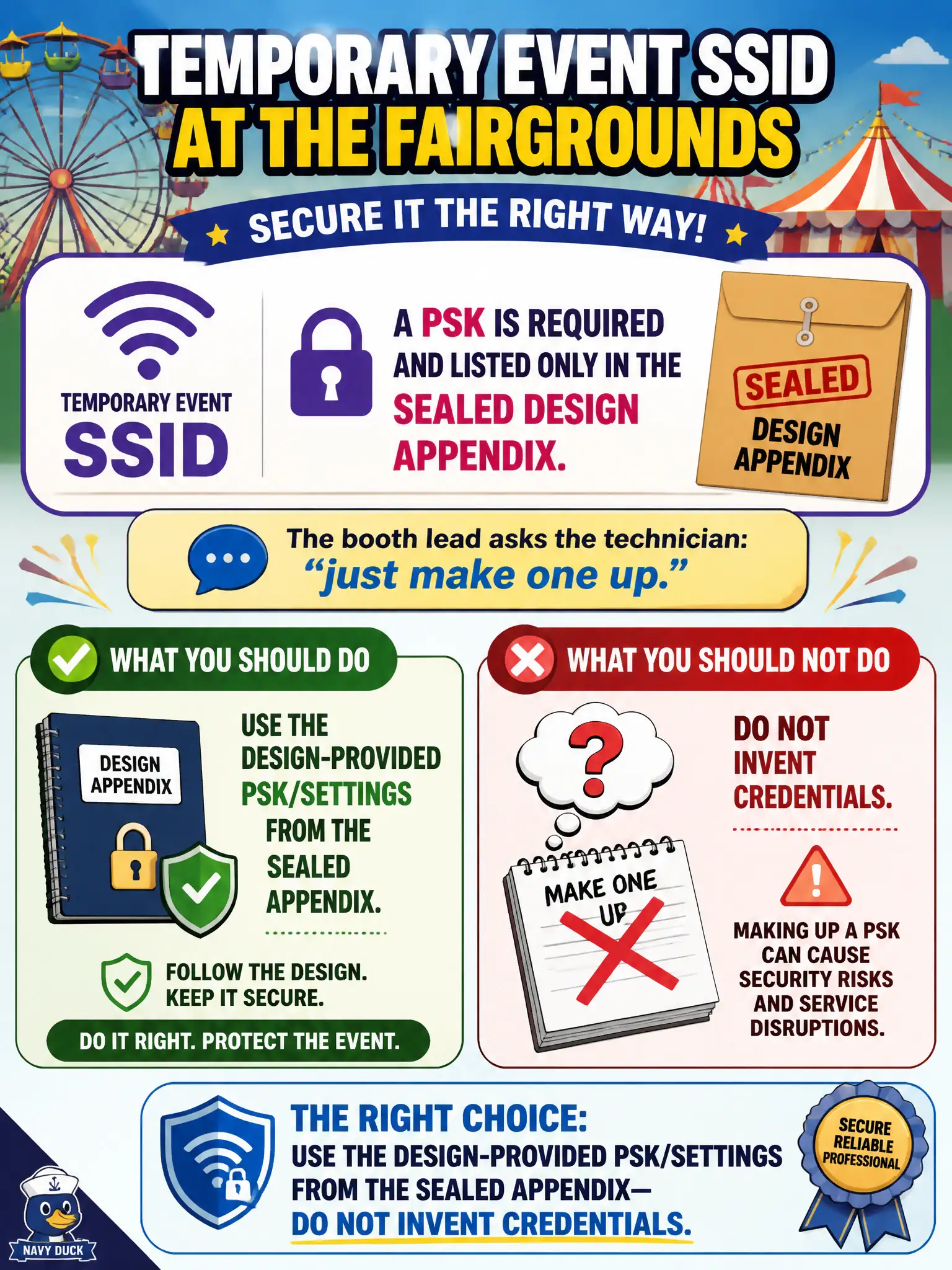
A temporary event SSID at the fairgrounds needs a PSK listed only in the sealed design appendix. The booth lead asks the technician to “just make one up.” What should the technician do?
Select an answer to reveal the explanation.
Short Explanation
Secrets come from the sealed appendix, not from booth improvisation. Invented PSKs break the design’s credential plan and leave auditors with nothing to match. Type what the packet gives you.
Full Explanation
Temporary event SSIDs at fairgrounds often carry a PSK listed only in a sealed design appendix for a reason: credentials remain controlled across booths and shifts. When a booth lead asks the technician to “just make one up,” the correct action is to use the design-provided PSK and settings from that appendix—do not invent credentials on the spot. Improvised secrets break auditability, printed runbooks, roaming between booths, and multi-vendor support consistency on the civic event network.
Reusing the default vendor password printed on the AP label for every temporary SSID publishes a well-known secret that anyone reading the chassis can abuse. Setting a blank passphrase so kiosks connect without support calls leaves the SSID effectively open to the crowd. Deriving the PSK from the AP serial number so it is unique per radio creates undocumented secrets that the next shift cannot support when tickets pile up.
Exam caveat: temporary does not mean unauthenticated improvisation. Event designs still bind installers to provided credentials and change control even under booth pressure.
Operational check: retrieve the sealed-appendix PSK through the approved channel, configure the event SSID exactly as specified, validate a kiosk association and Internet path, and avoid writing improvised passwords on whiteboards, chalkboards, or booth tents.