
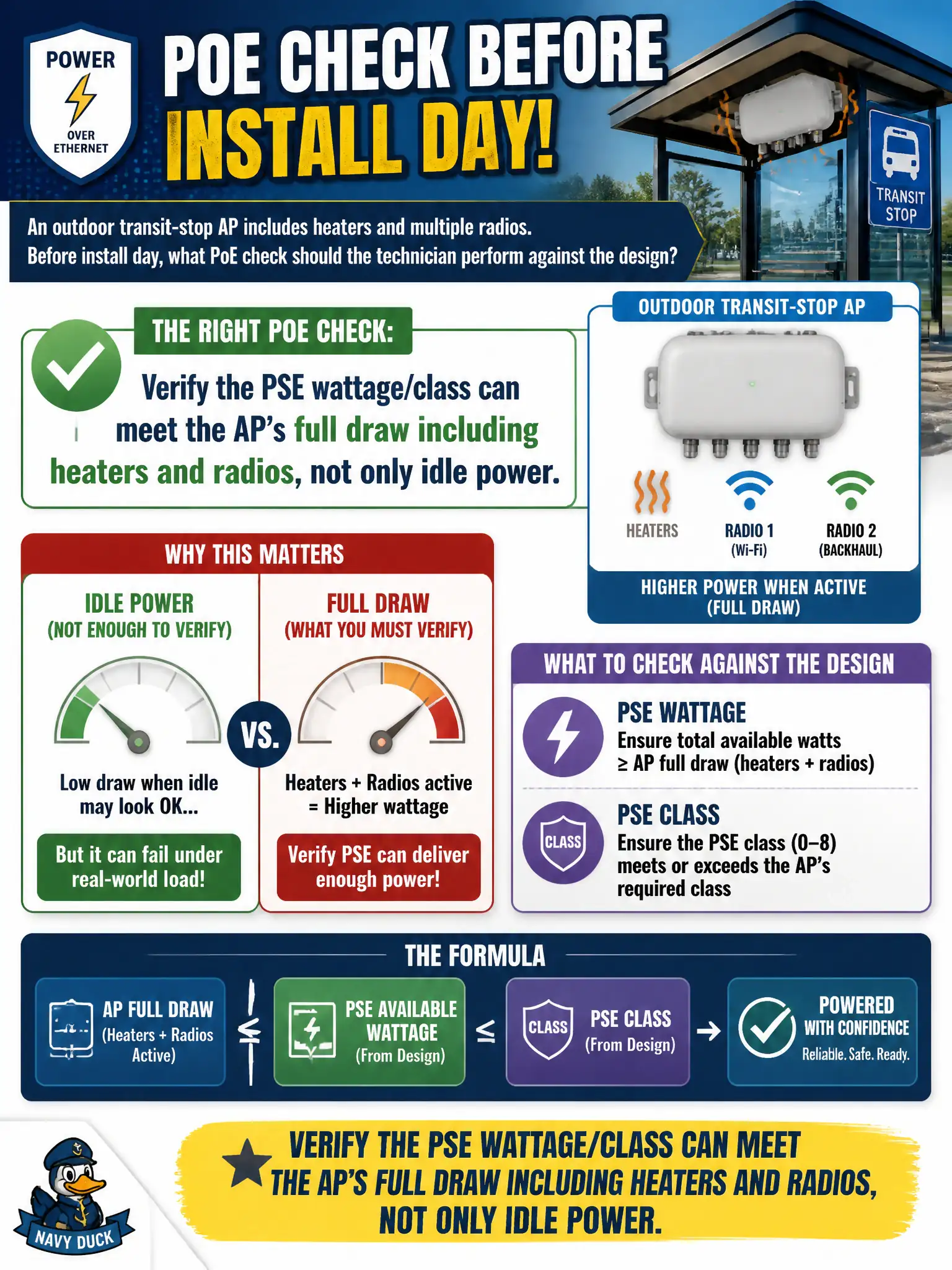
An outdoor transit-stop AP includes heaters and multiple radios. Before install day, what PoE check should the technician perform against the design?
Select an answer to reveal the explanation.
Short Explanation
Outdoor APs with heaters are power hogs. Match the PSE watts to the full loaded draw—not the sleepy idle number on the box. Short the budget and that heater AP will brown out on the first cold morning.
Full Explanation
Outdoor transit-stop APs often include heaters and multiple radios that raise power draw far above idle. Before install day, the technician should verify that the PSE wattage and class can meet the AP’s full draw including heaters and radios, not only idle chassis power. Designs that size only for boot will brown out when weather heaters and radios activate, causing reboot loops or failed service at the stop. Civic outdoor reliability depends on worst-case PoE math rather than a brief first LED blink on the bench.
Confirming captive-portal logo file size because logos determine PoE class fails: portal artwork is unrelated to PSE class selection. Setting switch MTU to 9000 so PoE negotiates at jumbo-frame speed mixes Ethernet frame size with DC power negotiation. Disabling Ethernet link LEDs to reserve watts for the heater is negligible theater and does not remediate an undersized PSE budget or class.
Exam caveat: outdoor heater draw is a classic PoE planning trap on municipal street furniture; idle bench tests are insufficient acceptance criteria for transit-stop APs that must survive cold-weather load.
Operational check: obtain the AP’s maximum power specification with heaters and all radios enabled, match injector or switch PoE class and budget with margin, validate under heater-on or equivalent full-draw conditions, and document the PSE choice on the transit-stop install sheet.