
A technician will enter the initial SSID and basic settings on a new town-hall AP using a browser. Which management interface approach is appropriate?
Select an answer to reveal the explanation.
Short Explanation
Browsers and APs meet at the web GUI—just make it HTTPS so the session is not a sidewalk conversation. Plain HTTP or guest-portal admin links are how strangers join your management party.
Full Explanation
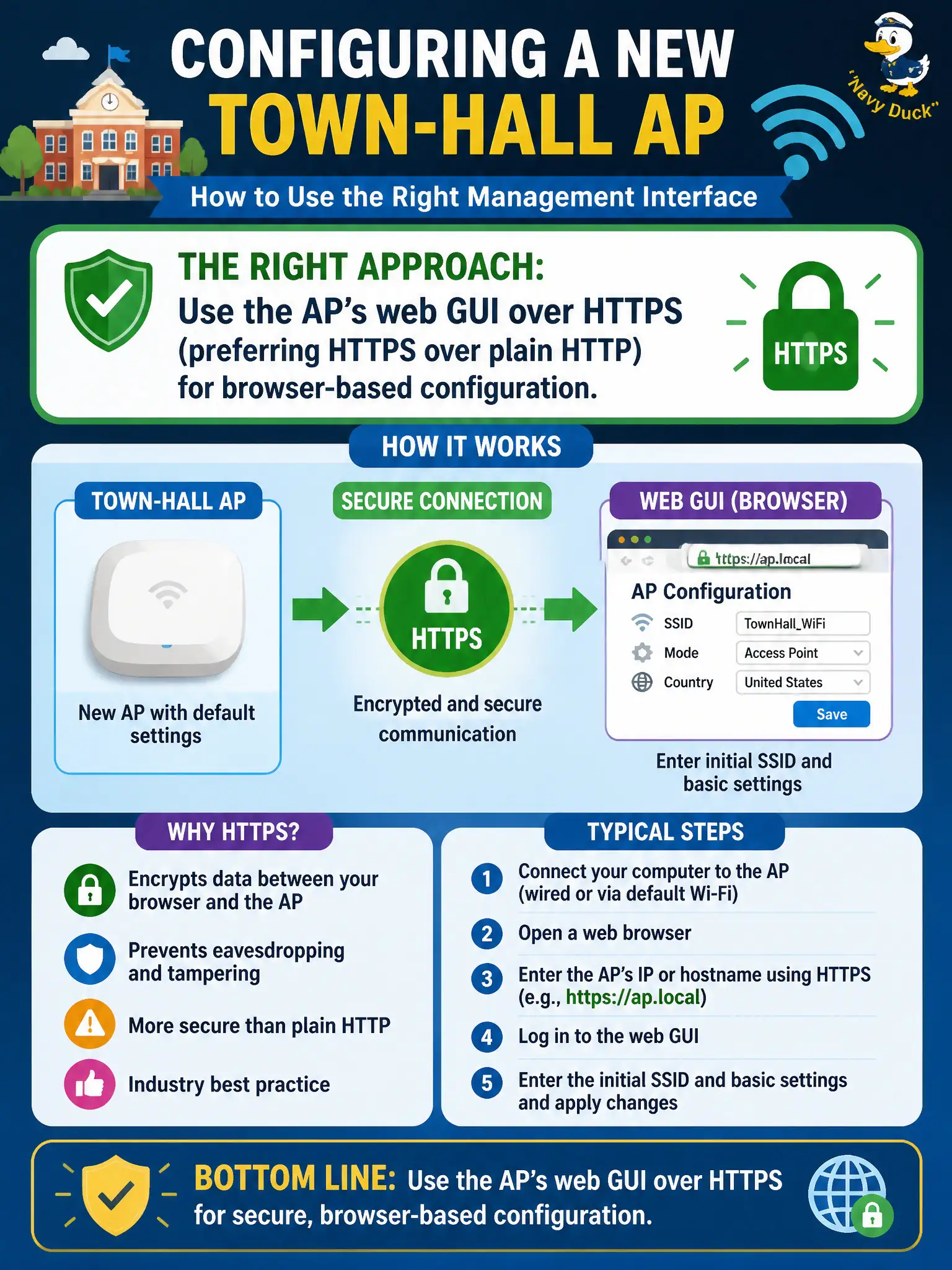
Entering initial SSID and basic settings on a new town-hall AP using a browser is appropriately done through the AP's web GUI over HTTPS, preferring HTTPS over plain HTTP for browser-based configuration. Encrypted management sessions protect admin credentials and configuration payloads on municipal networks. The web GUI is a standard first-configuration interface when serial access is inconvenient and IP management is available.
FTP anonymous upload of a plaintext config to port 21 only is not a secure or typical AP GUI workflow for initial SSIDs. Disabling all IP management and hoping the factory default SSID is acceptable forever leaves the AP unmanaged and insecure. Publishing the AP admin URL on the guest captive portal invites visitors to attack or alter civic infrastructure.
Exam caveat: browser management of APs should use HTTPS; treat plain HTTP admin as a temporary or deprecated path. Operational check: browse to the AP management address using HTTPS, authenticate, set SSIDs and security, save, and confirm the session remains on HTTPS rather than falling back permanently to cleartext HTTP. Bookmark the HTTPS management URL in the secure admin portal, not on public town-hall kiosks or guest browsers.