
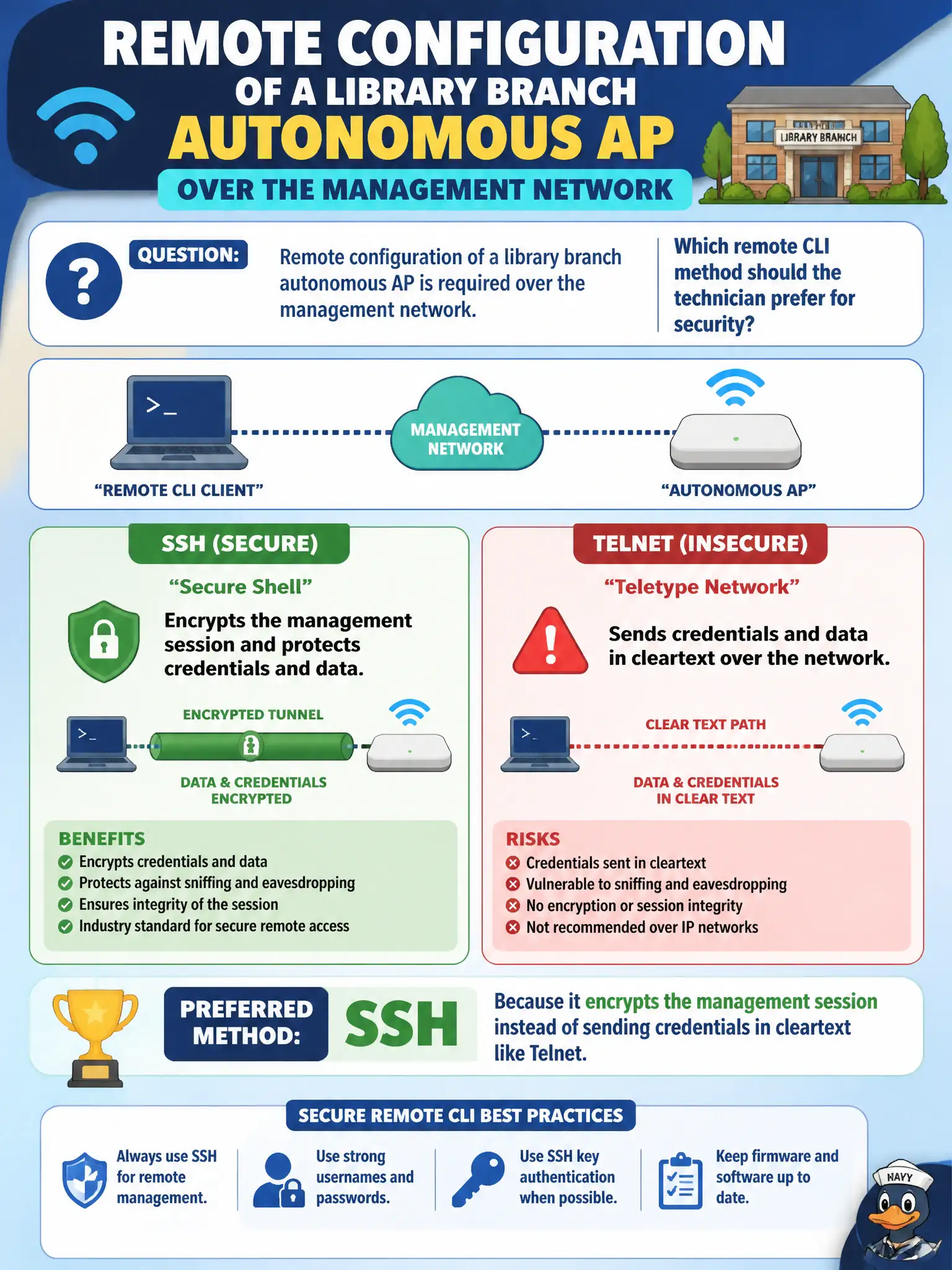
Remote configuration of a library branch autonomous AP is required over the management network. Which remote CLI method should the technician prefer for security?
Select an answer to reveal the explanation.
Short Explanation
Telnet is a postcard; SSH is a sealed envelope. When you type admin passwords over the wire, you want the envelope. Prefer SSH whenever the AP offers it.
Full Explanation
Remote configuration of a library branch autonomous AP over the management network should prefer SSH because it encrypts the management session instead of sending credentials in cleartext like Telnet. Municipal technicians protecting admin passwords and enable secrets must use encrypted remote CLI whenever the AP offers it. SSH provides confidentiality for configuration commands across the branch WAN or metro management path.
Preferring Telnet because cleartext is easier to capture with packet analyzers prioritizes attacker convenience over security. An open rlogin service with no authentication for speed is unacceptable on civic infrastructure. Posting the enable password on a public sticky note on the AP GUI login page defeats authentication entirely.
Exam caveat: when remote CLI is required, choose SSH over Telnet as the secure default on technician exams. Operational check: confirm SSH is enabled and reachable to the library AP management address, disable Telnet if present, authenticate with the vaulted credential or key, apply the change, and log out cleanly. Rotate branch AP admin credentials on a defined schedule and revoke old keys when staff leave the library IT group. Confirm success with a second client on the same civic SSID before closing the ticket.