
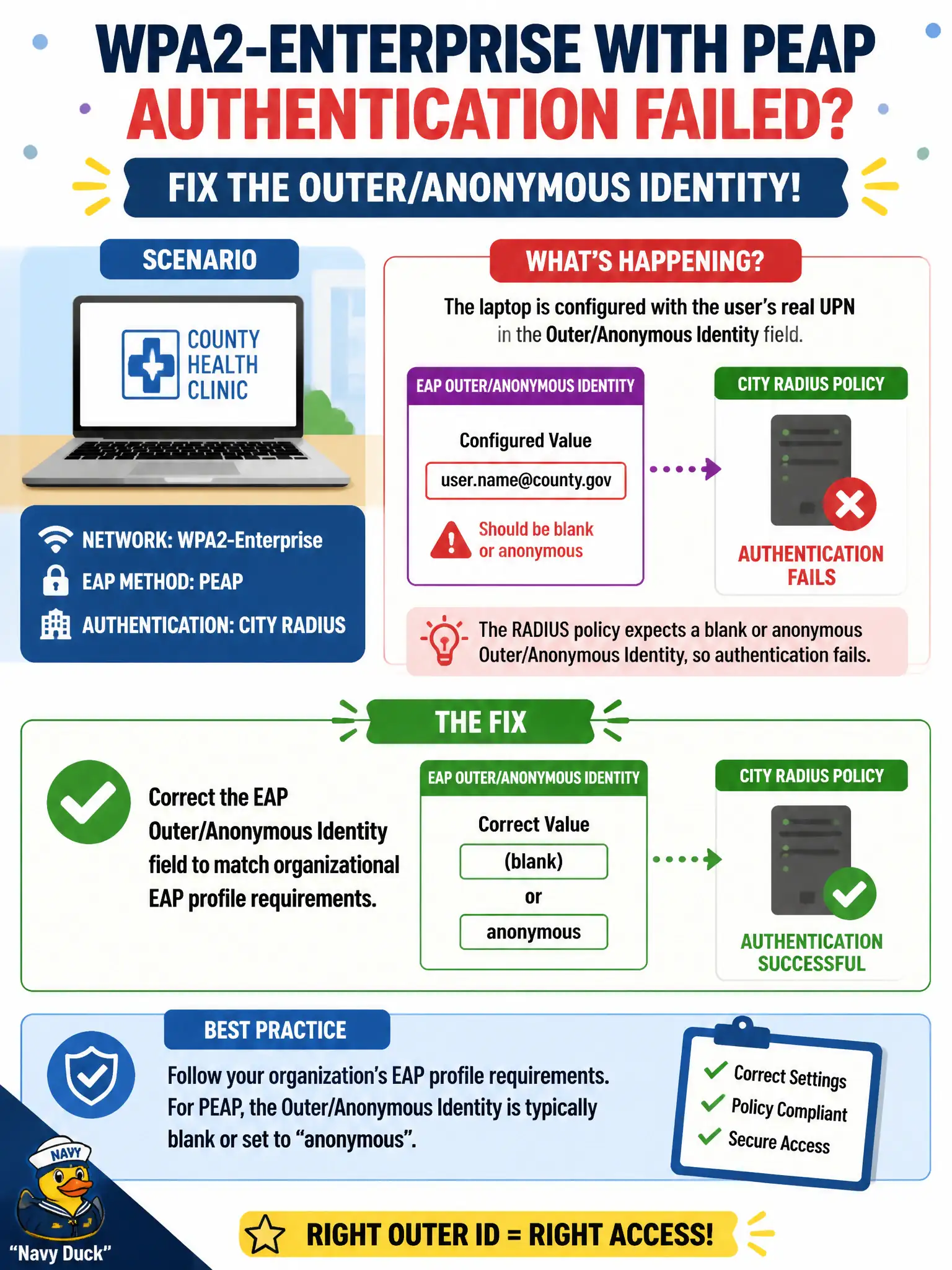
A county health clinic laptop uses WPA2-Enterprise with PEAP. Outer/anonymous identity is set to the user’s real UPN instead of the blank or anonymous value the design specifies, and authentication fails against the city RADIUS policy. What should the technician fix?
Select an answer to reveal the explanation.
Short Explanation
Outer identity is part of the EAP conversation—wrong anonymous ID can break policy checks even when the inner password is right. Set the outer/anonymous field the way the clinic’s design says. Don’t rip out Enterprise or blame the radio card first.
Full Explanation
A county health clinic laptop using WPA2-Enterprise with PEAP where the outer/anonymous identity is set to the user’s real UPN instead of the blank or anonymous value the design specifies—and authentication fails against city RADIUS policy—needs the EAP outer/anonymous identity field corrected to match organizational EAP profile requirements. Outer identity is part of the EAP conversation and may be constrained by RADIUS policy for privacy and routing. Design-specified anonymous outer ID is not optional ornamentation.
Removing Enterprise security and using an open guest SSID for all clinic clinical applications fails confidentiality and policy. Changing only the AP channel plan because outer identity strings never affect 802.1X outcomes fails by concept: outer identity can and does affect EAP/RADIUS handling. Replacing the laptop Wi-Fi adapter because anonymous identity mismatches always mean failed hardware fails: this is profile config, not a broken NIC.
Exam caveat: PEAP outer/anonymous identity misconfiguration is a real Enterprise failure mode at CWTS depth.
Operational check: set outer identity to the design value (often anonymous or blank); keep inner identity as the user UPN/credentials; retry auth; verify RADIUS accepts; update the clinic EAP template.