
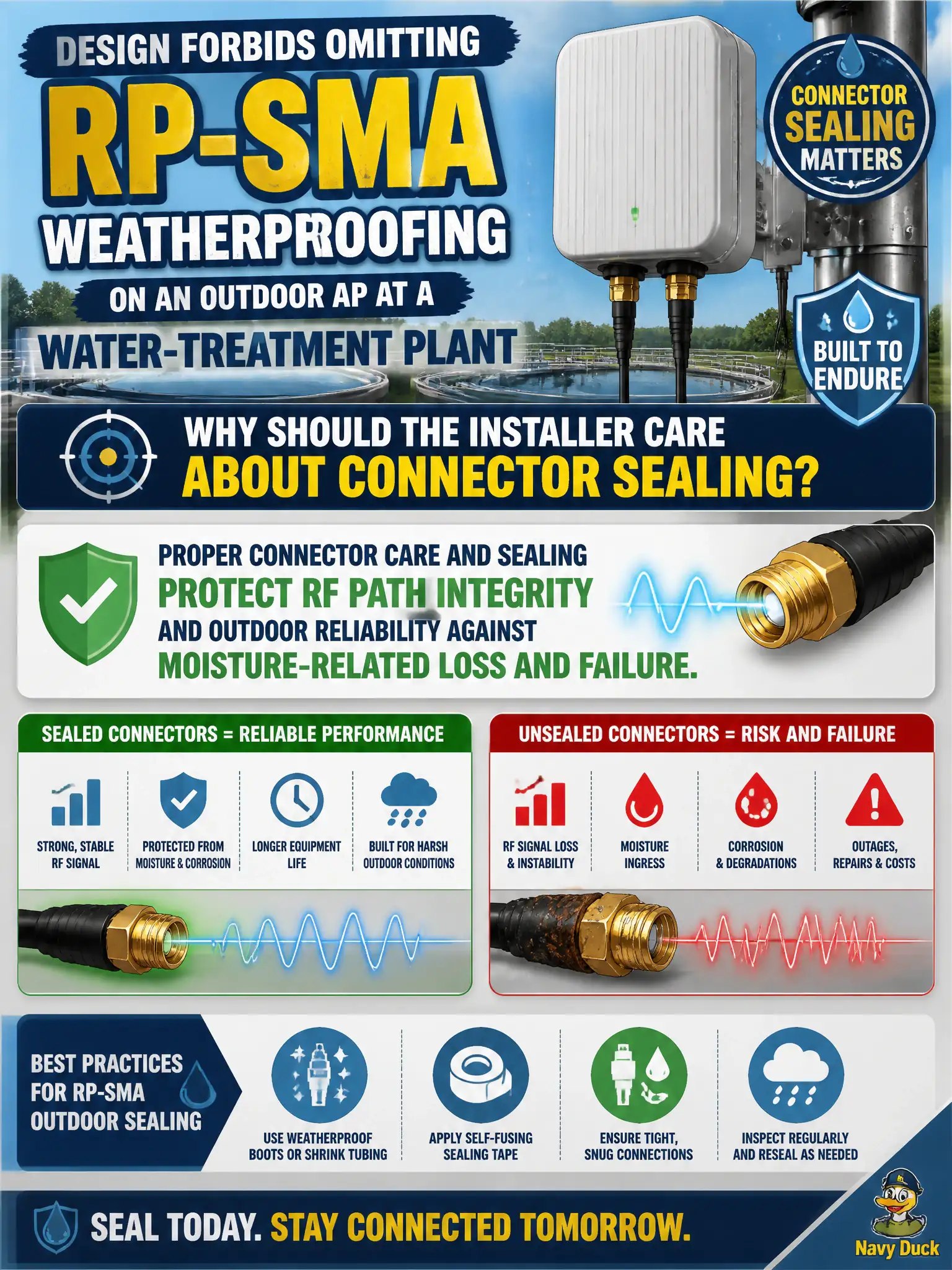
Design forbids omitting RP-SMA weatherproofing on an outdoor AP at a water-treatment plant. Why should the installer care about connector sealing?
Select an answer to reveal the explanation.
Short Explanation
Outdoor connectors without weather boots are an invitation for water to trash the RF path. Seal them like the design says — moisture loves to turn a good link into intermittent junk. Cosmetics they are not.
Full Explanation
Design that forbids omitting RP-SMA weatherproofing on an outdoor AP at a water-treatment plant exists because proper connector care and sealing protect RF path integrity and outdoor reliability against moisture-related loss and failure. Water ingress corrodes contacts, raises loss, and creates intermittent civic outages that look like mysterious RF fades. Weather boots, tape, or specified seals are part of the outdoor installation craft, not optional cosmetics. Installers who skip sealing violate the design and trade short install time for long-term plant WLAN instability.
Calling weatherproofing only cosmetic and claiming it never affects RF loss or uptime fails by concept: moisture on outdoor RF connectors is a documented reliability and loss failure mode. Claiming sealed connectors disable DFS so outdoor APs can ignore radar rules invents a regulatory fiction—DFS obligations are independent of connector boots. Saying RP-SMA weather boots replace the need for a correct antenna impedance match fails because sealing and impedance match are different requirements; boots do not fix a 50-ohm mismatch.
Exam caveat: when the design forbids omitting boots or tape, sealed connectors are mandatory on outdoor civic APs—not optional niceties.
Operational check: install weather boots or specified sealing on every outdoor RP-SMA joint at the plant AP; photograph or checklist the seals; inspect for water ingress during rounds; retest link quality after storms; reject handoff if any outdoor RF connector remains bare against design.