
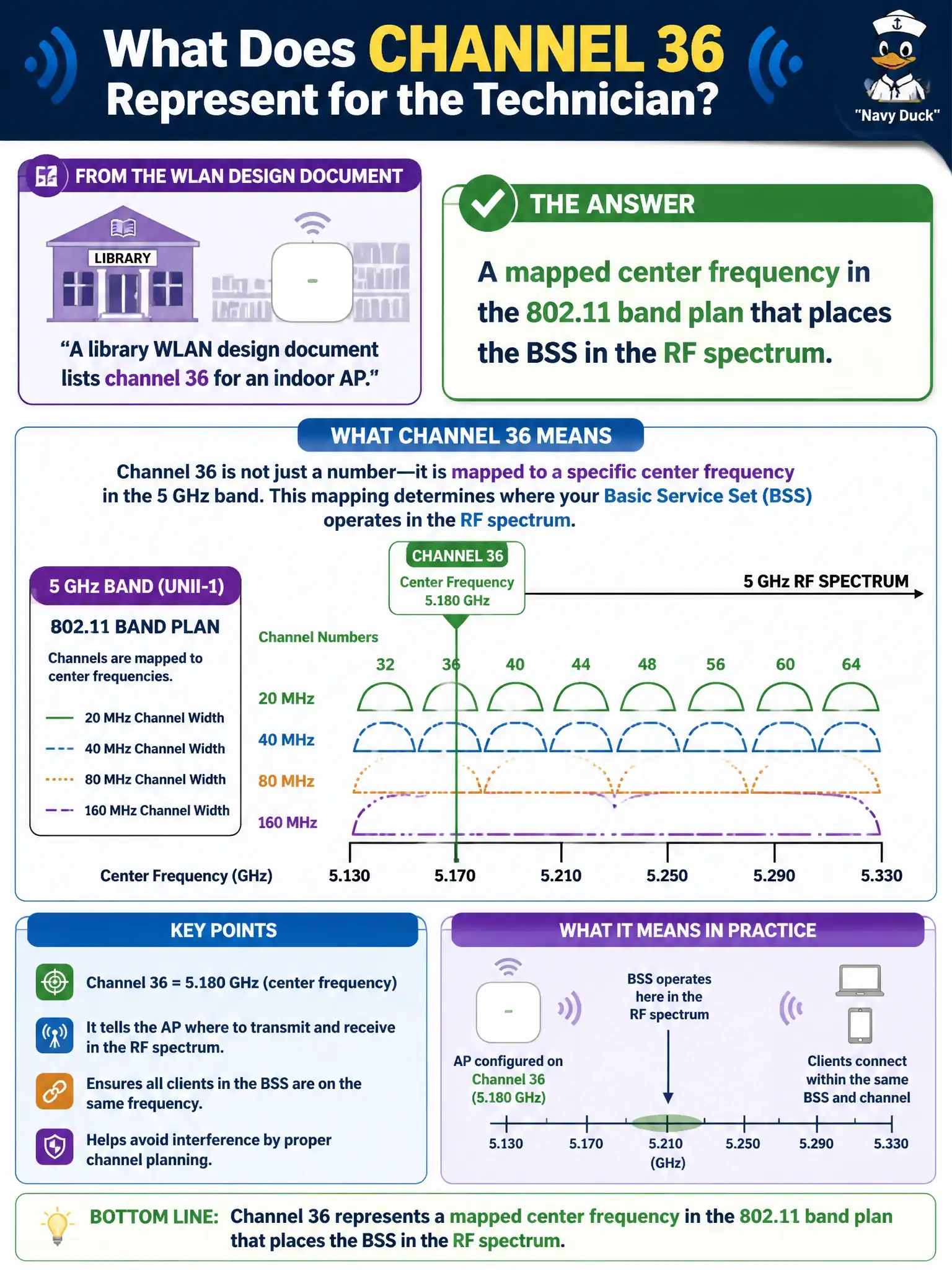
A library WLAN design document lists channel 36 for an indoor AP. What does that channel number represent for the technician?
Select an answer to reveal the explanation.
Short Explanation
Channel 36 is not a lucky jersey number — it pins the BSS to a real center frequency in the band plan. Design docs speak channels so installers land on the right slice of spectrum. Treat it as RF geography, not a decoration.
Full Explanation
A library WLAN design listing channel 36 means a mapped center frequency in the 802.11 band plan that places the BSS in the RF spectrum—not an arbitrary label with no frequency meaning, not the AP’s maximum client count, and not an airtime percentage allowance. Technicians use channel numbers as the operational alias for those center frequencies when installing from design. Exam caveat: regulatory domain and indoor/outdoor rules still constrain which channels are legal for that municipal site. Operational check: set the AP to channel 36 per design, verify the reported center frequency/band, scan for neighbors, and confirm clients associate on the intended channel. Document channel-to-frequency mapping in the library as-built so future moves stay plan-compliant. In municipal WLAN operations, record the rationale in the work order so future on-call staff know which concept applied and which failure modes the rejected options would create for city services. Re-validate after the next maintenance window that the same control still holds under the AP firmware and client mix used by the civic network team. Keep civic notes tied to the approved design document and absolute measurements where RF levels matter.