
A county WLAN standard requires documenting client signal in dBm rather than signal bars. Why is that requirement reasonable for a technician?
Select an answer to reveal the explanation.
Short Explanation
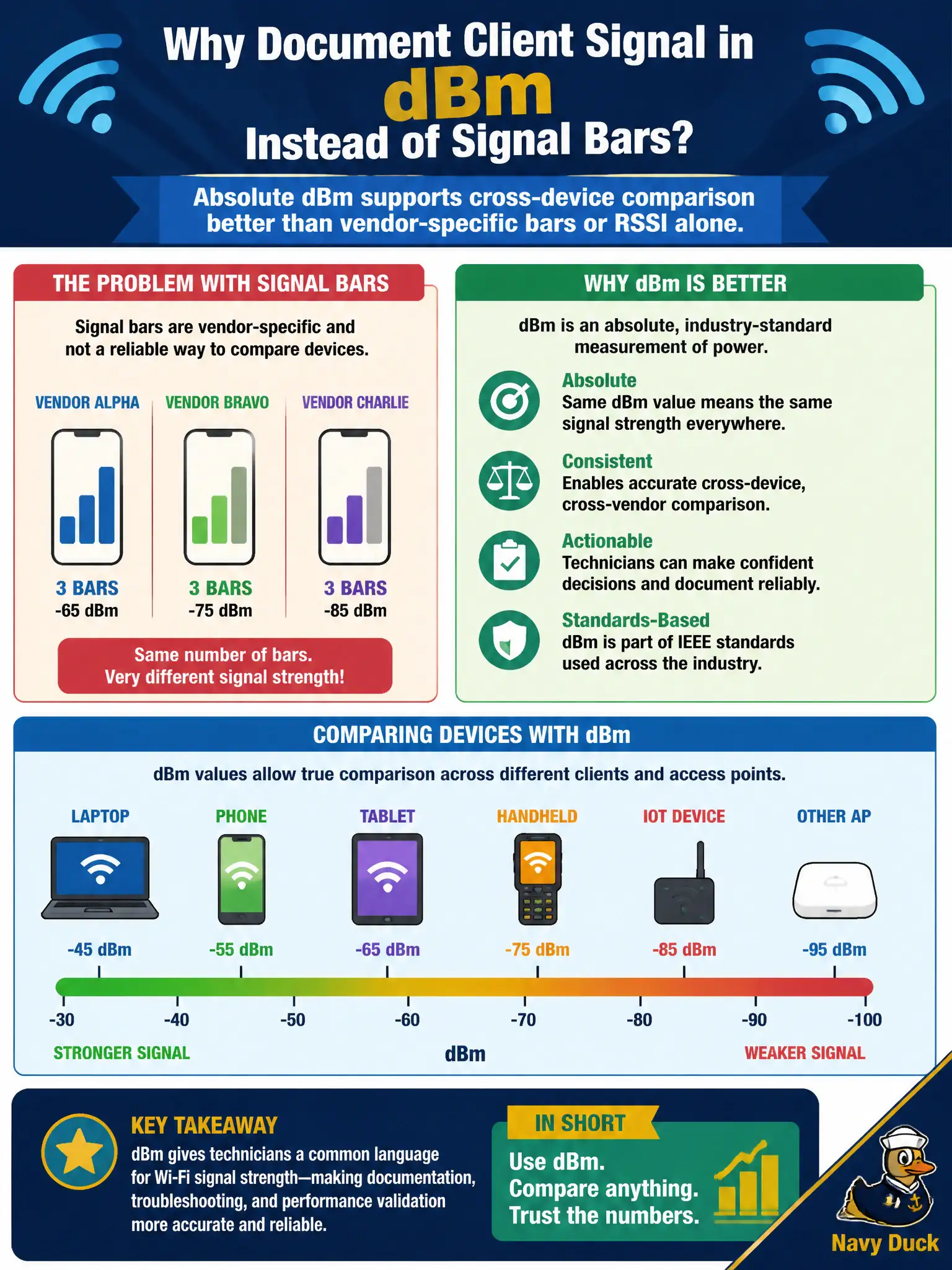
Bars are each gadget's emoji for "kinda okay," and they do not travel well between brands. County docs that demand dBm want numbers you can compare desk to desk. Same seat, same story — that is the point of absolute levels.
Full Explanation
A county WLAN standard that requires documenting client signal in dBm rather than signal bars is reasonable because absolute dBm supports cross-device comparison better than vendor-specific bars or RSSI alone. Bars are not an IEEE absolute unit matched across laptop brands. dBm is meaningful indoors and outdoors. Bars do not automatically include channel utilization, so they cannot replace absolute strength plus separate congestion metrics. Exam caveat: still capture noise/SNR and utilization for full performance stories—dBm alone is necessary but not always sufficient. Operational check: update civic ticket forms to require dBm fields, train clerks to use a survey profile that logs absolute levels, and reject bar-only screenshots as primary evidence in county WLAN incidents. In municipal WLAN operations, record the rationale in the work order so future on-call staff know which concept applied and which failure modes the rejected options would create for city services. Re-validate after the next maintenance window that the same control still holds under the AP firmware and client mix used by the civic network team. Keep civic notes tied to the approved design document and absolute measurements where RF levels matter.