
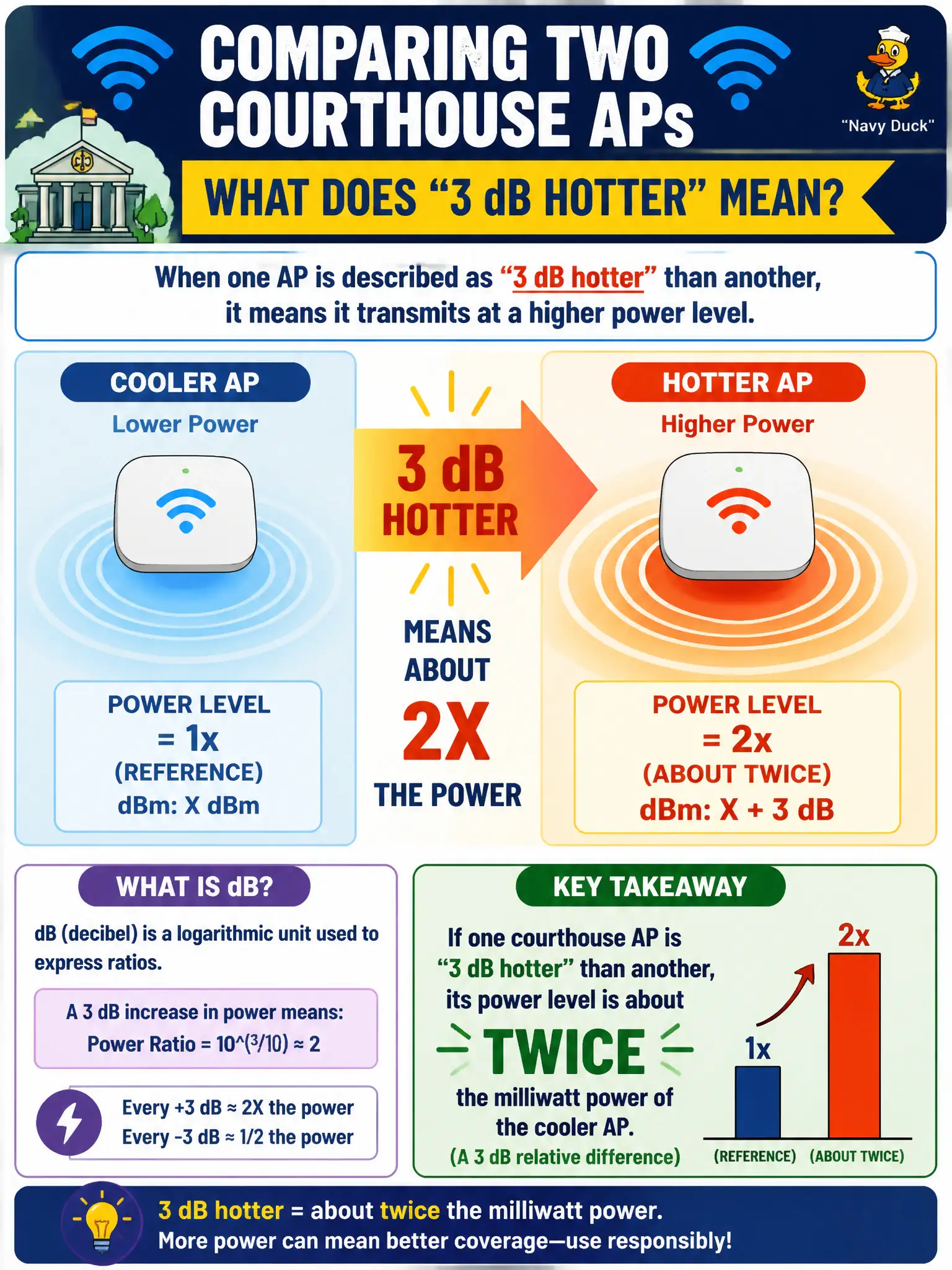
Comparing two courthouse APs, design notes say one is "3 dB hotter" than the other. What does that relative language mean?
Select an answer to reveal the explanation.
Short Explanation
Three dB between two levels is the classic 'about twice the power' handshake in RF talk. It compares one absolute reading to another; it is not three extra bars or three extra channels. Relative dB is the gap, not a new absolute unit.
Full Explanation
Saying one courthouse AP is “3 dB hotter” than another is relative language: about a factor-of-two difference in milliwatt power between those two absolute levels (the classic 3 dB rule of thumb). It is not three percentage points on every client’s bar meter, not three extra 20 MHz channels, and not “three times” the milliwatt power—that last error confuses 3 dB (≈2×) with a linear triple. Exam caveat: approximate doubling is the teaching anchor; exact factor depends on true log math, but CWTS-level answers expect the twice-power association for 3 dB. Operational check: read both APs’ absolute dBm or mW, confirm the hotter unit is roughly 3 dB above the cooler one per design intent, remeasure clerk areas, and adjust only within the municipal power plan. Record relative 3 dB comparisons alongside absolute values so future audits can reconstruct what “hotter” meant. In municipal WLAN operations, record the rationale in the work order so future on-call staff know which concept applied and which failure modes the rejected options would create for city services. Re-validate after the next maintenance window that the same control still holds under the AP firmware and client mix used by the civic network team.