
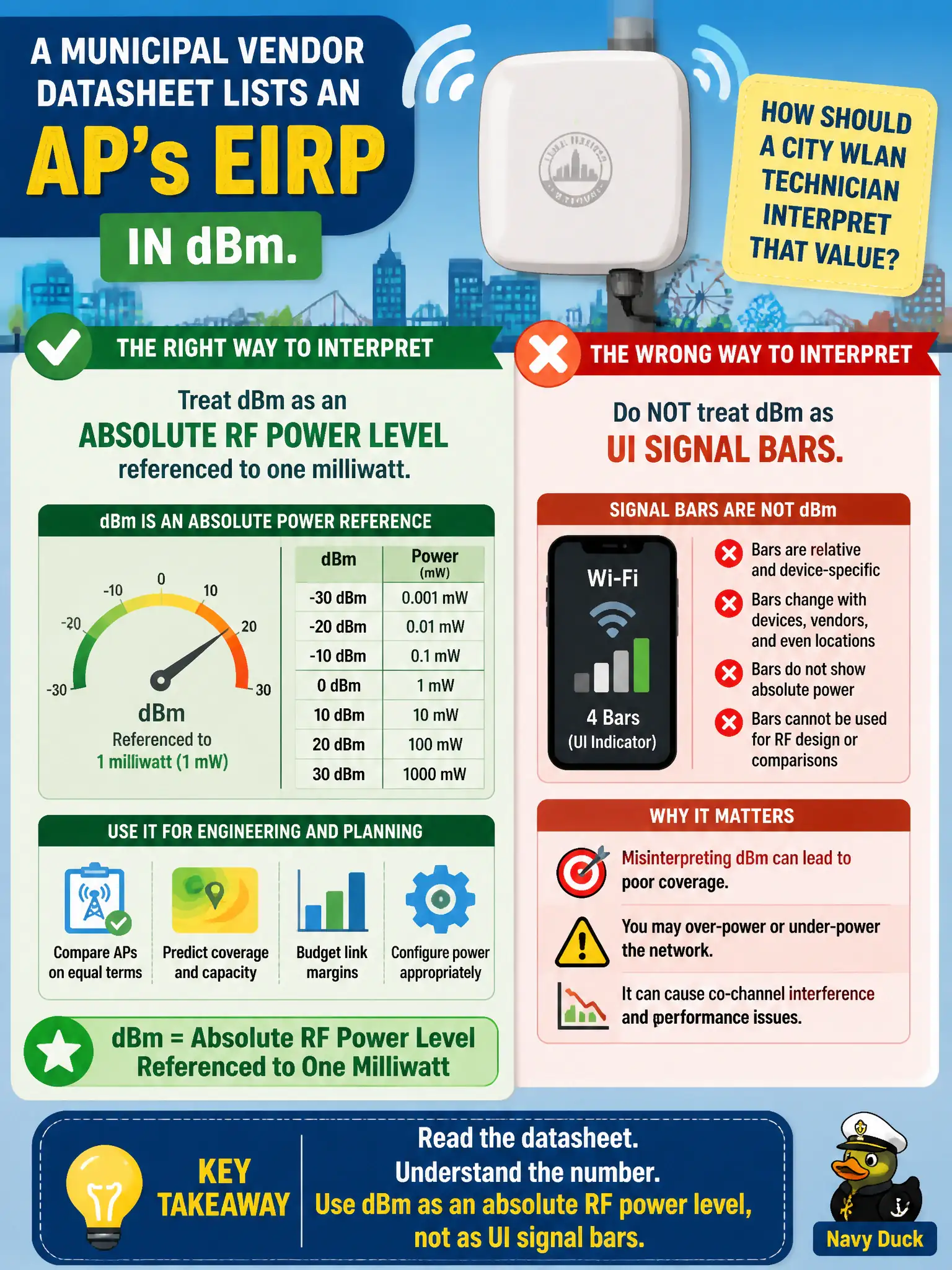
A municipal vendor datasheet lists an AP's EIRP in dBm. How should a city WLAN technician interpret that value?
Select an answer to reveal the explanation.
Short Explanation
dBm is the absolute 'how many milliwatts, in log clothes' number — not a cartoon bar meter. When the sheet says EIRP in dBm, compare power to power, not to somebody's percent widget. Bars are a story; dBm is a measurement.
Full Explanation
When a municipal vendor datasheet lists an AP’s EIRP in dBm, treat dBm as an absolute RF power level referenced to one milliwatt—not as proprietary UI signal bars, not as a relative SNR ratio that must be divided by noise before it means anything, and not as a channel-utilization percentage. Absolute dBm lets a city WLAN technician compare power to power against the design and regulatory sheet. Confusing EIRP dBm with laptop “full bars” breaks audits because bars are vendor cartoons. Treating dBm as if it were already SNR skips the separate noise measurement SNR requires. Utilization is airtime congestion, a different performance axis. Exam caveat: confirm whether the sheet’s dBm is conducted power or EIRP (antenna-inclusive); municipal compliance often cares about EIRP limits specifically. Operational check: match datasheet dBm to controller/configured power and antenna gain assumptions, convert to mW if the install crew uses milliwatts, and verify the live civic AP is not exceeding the approved EIRP. Document absolute power in dBm so parks and facilities reviews speak one language. In municipal WLAN operations, record the rationale in the work order so future on-call staff know which concept applied and which failure modes the rejected options would create for city services. Re-validate after the next maintenance window that the same control still holds under the AP firmware and client mix used by the civic network team.