
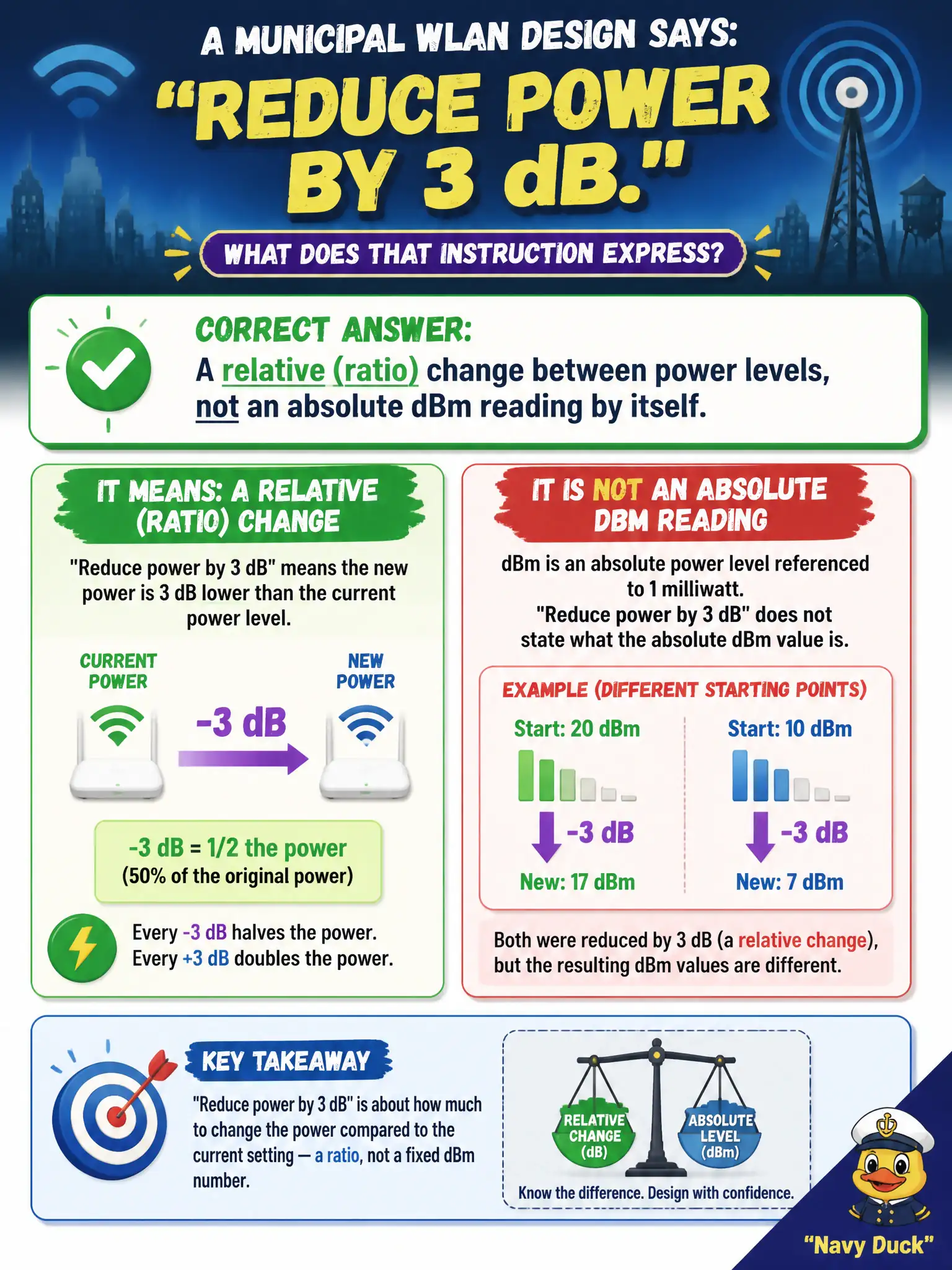
A municipal WLAN design says 'reduce power by 3 dB.' What does that instruction express?
Select an answer to reveal the explanation.
Short Explanation
When the design says 'down 3 dB,' it means cut relative to what you have now — a ratio change, like turning the volume knob a known step. It is not handing you a finished dBm number unless you already know the starting absolute level.
Full Explanation
A design instruction to “reduce power by 3 dB” expresses a relative (ratio) change between power levels—adjust from the current absolute setting by that logarithmic step—not an absolute reading of 3 dBm or 3 mW by itself. It is not a mandate to switch bands from 2.4 GHz to 5 GHz, and it is not a requirement to hide the SSID. Exam caveat: 3 dB is the classic approximate factor-of-two power step; applying it still requires knowing the starting absolute power and staying within regulatory and design caps for the municipal WLAN. Operational check: note the current dBm or mW, apply the −3 dB relative change per the design, remeasure client levels at complaint desks, and verify SNR and coverage still meet civic service targets. Document before/after absolute values so the relative 3 dB step is auditable. In municipal WLAN operations, record the rationale in the work order so future on-call staff know which RF concept applied and which failure modes the rejected options would create for city services. Re-validate after the next maintenance window that the same control still holds under the AP firmware and client mix used by the civic network team. Keep civic survey notes tied to absolute measurements and the approved design document.