
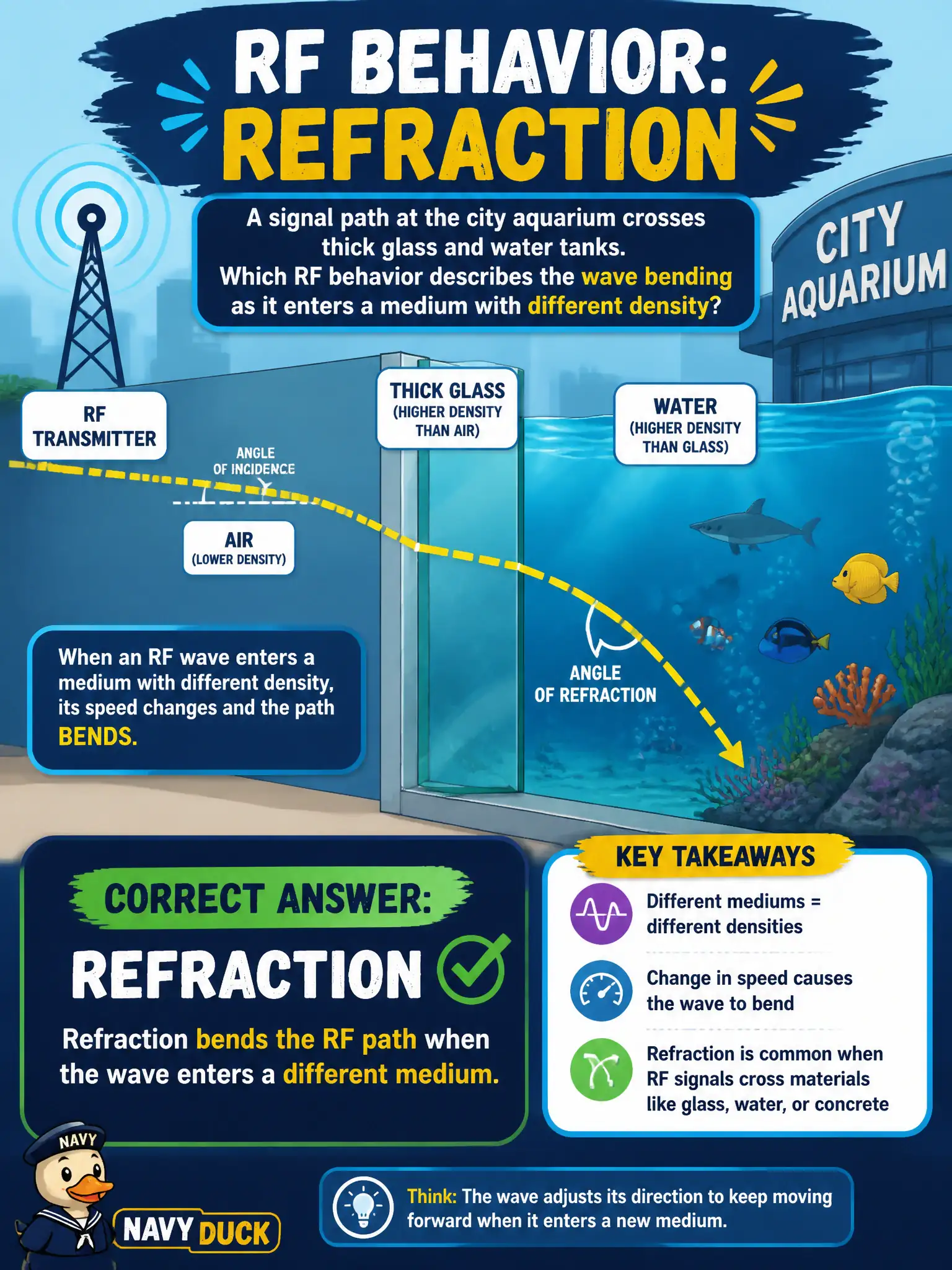
A signal path at the city aquarium crosses thick glass and water tanks. Which RF behavior describes the wave bending as it enters a medium with different density?
Select an answer to reveal the explanation.
Short Explanation
When light goes from air into water it kinks — RF can do a similar bend when the medium changes. That kink is refraction. Losing strength in the tanks is a different complaint (absorption); the bend itself is the refraction story.
Full Explanation
Refraction bends an RF path when the wave enters a medium with different density or propagation characteristics—air into thick aquarium glass and water tanks is a civic teaching case. Scattering from rough, irregular objects is a many-direction dispersal story, not the primary “bend into a new medium” definition. Reflection is bounce from a surface rather than transmission with bending through a changed medium. Absorption reduces energy without being the name for path bending. Exam caveat: real aquarium links may combine refraction, absorption, and reflection; exam items often isolate the bending definition. Operational check: when coverage skews oddly across tank rooms, identify medium transitions on the floor plan, measure both sides of the glass, and avoid “fixing” refraction by random channel changes. Keep municipal facility notes aligned with RF behavior vocabulary. In municipal WLAN operations, record the rationale in the work order so future on-call staff know which RF concept applied and which failure modes the rejected options would create for city services. Re-validate after the next maintenance window that the same control still holds under the AP firmware and client mix used by the civic network team.