
During a simple municipal mesh discussion, staff confuse wavelength with channel width. How should the technician define wavelength?
Select an answer to reveal the explanation.
Short Explanation
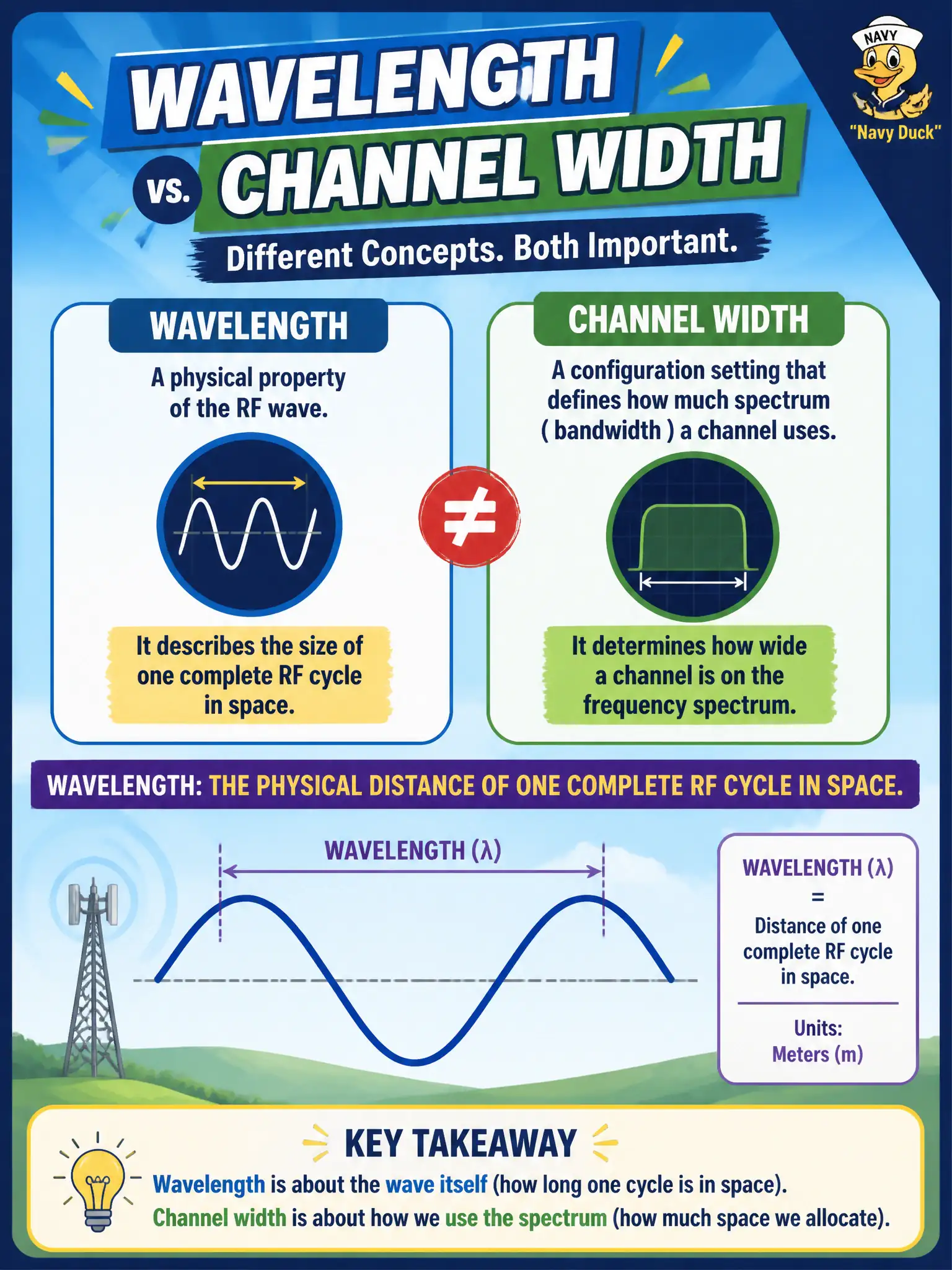
Wavelength is a measuring tape along the wave — how far you travel for one full up-and-down. Channel width is how fat a slice of spectrum the radio uses. Mixing them is like confusing the length of a guitar string with how wide the stage is.
Full Explanation
Wavelength is the physical distance of one complete RF cycle in space. Channel bandwidth (20/40/80 MHz and similar) is how wide a slice of spectrum the municipal AP occupies—a configuration and capacity choice, not the geometric length of the wave. Confusing wavelength with channel width leads mesh discussions into wrong remedies, as if changing width altered the carrier’s spatial period. Laptop Wi-Fi percentage bars are proprietary UI strength displays, not wavelength. PoE power class is an Ethernet power-delivery negotiation and has nothing to do with RF cycle length. Exam caveat: CWTS wants the inverse frequency–wavelength relationship retained even when staff casually say “wider wave” meaning wider channel. Operational check: in the municipal mesh design review, write wavelength next to band/frequency explanations and channel width next to capacity/interference tradeoffs; verify configured widths match the plan without renaming them as wavelength. In municipal WLAN operations, record the rationale in the work order so future on-call staff know which RF concept applied and which failure modes the rejected options would create for city services. Re-validate after the next maintenance window that the same control still holds under the AP firmware and client mix used by the civic network team.