
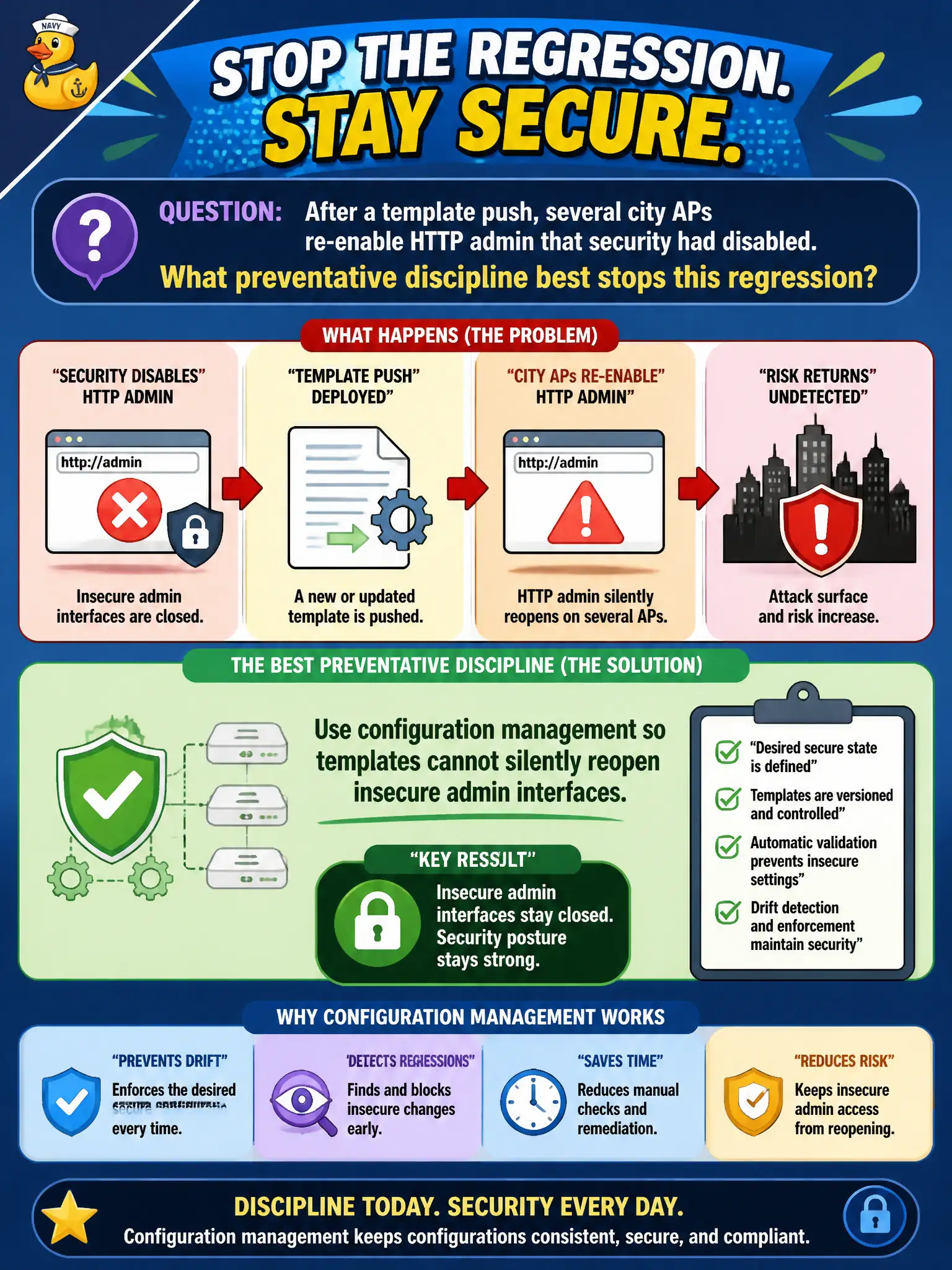
After a template push, several city APs re-enable HTTP admin that security had disabled. What preventative discipline best stops this regression?
Select an answer to reveal the explanation.
Short Explanation
Template drift is the city painting over the deadbolt then wondering why the door opens again. Configuration management keeps the golden ‘HTTPS only’ setting from being rolled back by a bad push.
Full Explanation
When city APs revert to enabling insecure HTTP admin access after a template push, the root cause is often uncontrolled configuration management. The best preventative discipline is to implement rigorous configuration management practices that enforce a golden baseline and prevent silent reintroduction of insecure settings. This includes version-controlled templates, automated compliance checks, and change control processes that detect and block insecure configurations before deployment. Disabling monitoring to avoid tickets is counterproductive because it removes visibility into security regressions, delaying detection and remediation. Allowing each site to hand-edit running configurations without a standardized baseline leads to configuration drift and inconsistent security postures. Banning HTTPS entirely is misguided; HTTPS provides encrypted management sessions and should be enforced rather than disabled. The scope limitation is that configuration management tools must be properly integrated and maintained to be effective. To operationally verify, the WLAN team should audit AP configurations post-template deployment to ensure HTTP is disabled and only secure management protocols like HTTPS or SSH are enabled, with deviations flagged immediately for correction.