
Staff laptops use 802.1X against city RADIUS. Which PKI-dependent client behavior best helps stop an evil-twin AP impersonating the enterprise SSID?
Select an answer to reveal the explanation.
Short Explanation
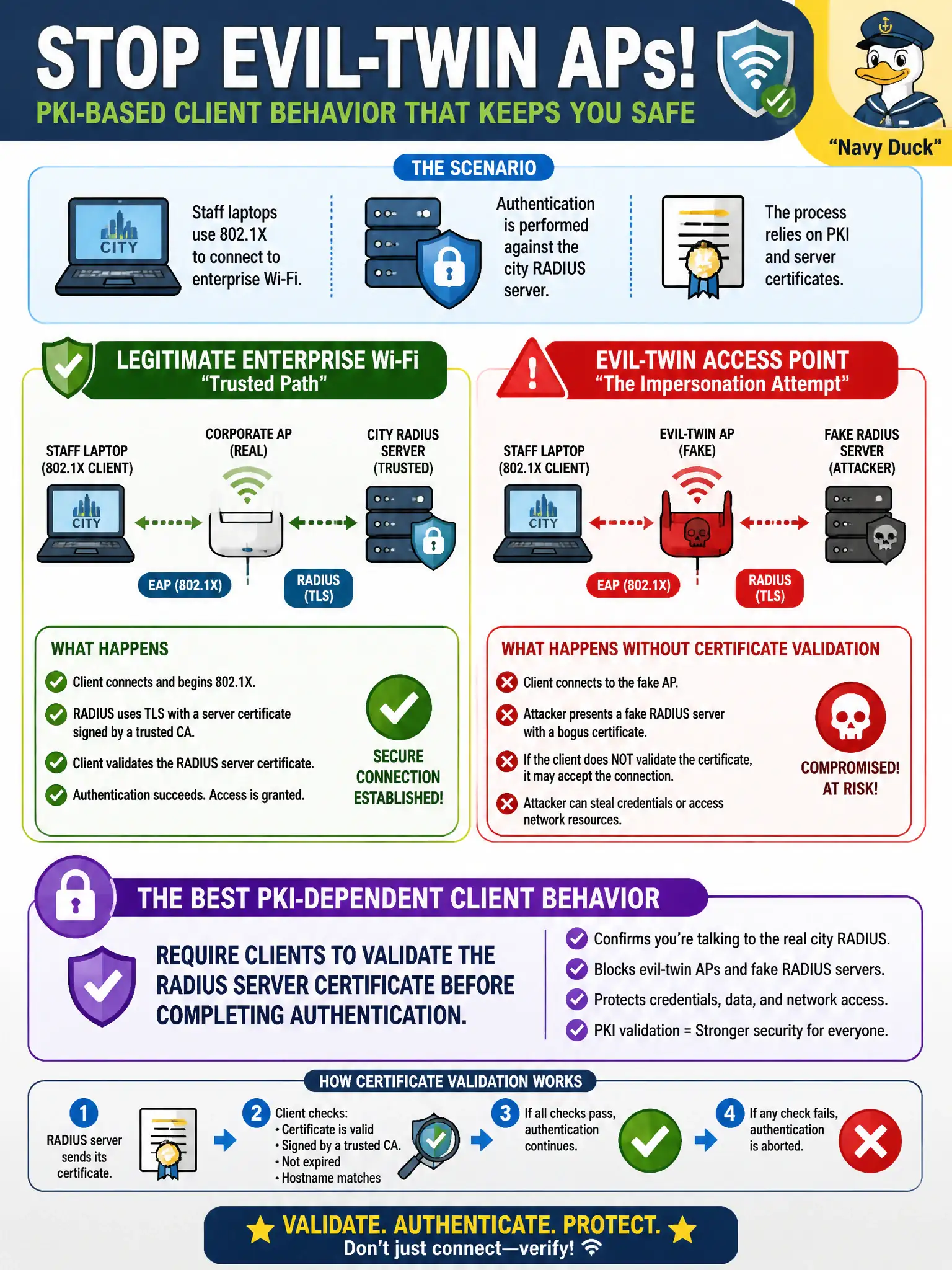
Evil twins love clients that shrug at server certificates. Make laptops validate the RADIUS server cert before finishing 802.1X. Blind trust is how impostors win.
Full Explanation
Staff laptops using 802.1X against city RADIUS best resist an evil-twin AP impersonating the enterprise SSID when clients are required to validate the RADIUS server certificate before completing authentication. Server certificate validation ensures the supplicant is talking to a trusted AAA endpoint, not a hostile access point that merely advertises the familiar SSID name in city hall or a depot. That PKI-dependent client behavior is a primary defense against credential theft and machine-authentication abuse on municipal campuses. Trusting any server certificate presented for the SSID name is exactly the behavior evil twins exploit against careless profiles. Disabling certificate stores to speed roaming removes the trust material needed for validation and trades a few milliseconds for a major authentication integrity failure. Preferring PEAP with blank server validation in all profiles recreates the same blind-trust failure mode under a different EAP method label. Exam caveat: user prompts that train staff to tap continue on unknown server certificates undo technical controls—combine strict validation settings with user education and MDM-enforced wireless profiles that users cannot casually weaken. Operational check: deploy a managed profile that pins or validates the city RADIUS server certificate, attempt association to a lab evil-twin advertising the same SSID with a different certificate, and confirm the client refuses to complete authentication.