
Estimating loss expectancy for a city council Wi-Fi breach should include which loss categories?
Select an answer to reveal the explanation.
Short Explanation
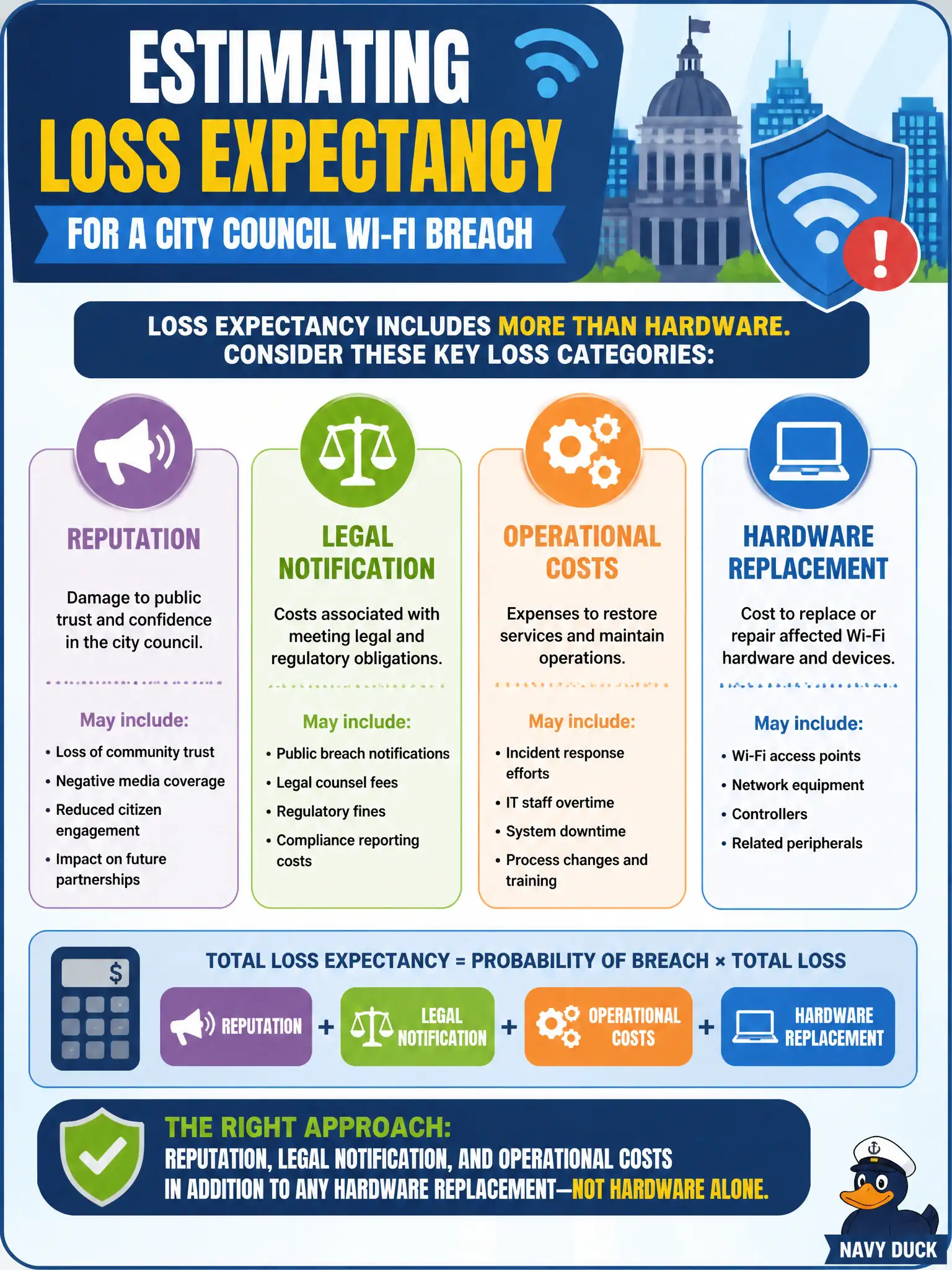
A council Wi-Fi breach is not just a new AP shell—it is headlines, lawyer letters, and disrupted meetings. Loss expectancy has to count reputation, legal notification, and ops pain too. Hardware-only math undercooks the civic bill.
Full Explanation
Estimating loss expectancy for a city council Wi-Fi breach should include reputation, legal notification, and operational costs in addition to any hardware replacement—not hardware alone. Limiting loss to one damaged AP enclosure, badge reprint overtime, or a guest password poster systematically understates civic breach impact. Comprehensive loss categories drive better funding for authentication, monitoring, and incident response. Exam caveat: loss expectancy is multi-category; exam distractors often offer only the cheapest tangible cost. Operational check: build a breach cost worksheet with notification, legal, forensics, downtime, and reputation line items for council WLAN scenarios; socialize it with counsel and communications; and use totals when prioritizing Enterprise auth and WIPS investments. Store the worksheet in the municipal risk library for reuse. In municipal WLAN operations, record the rationale in the change ticket so future on-call staff know which control was chosen and which failure modes the rejected options would create for city services. Re-validate after the next maintenance window that the same control still holds under the infrastructure versions and client fleets used by the civic environment.