
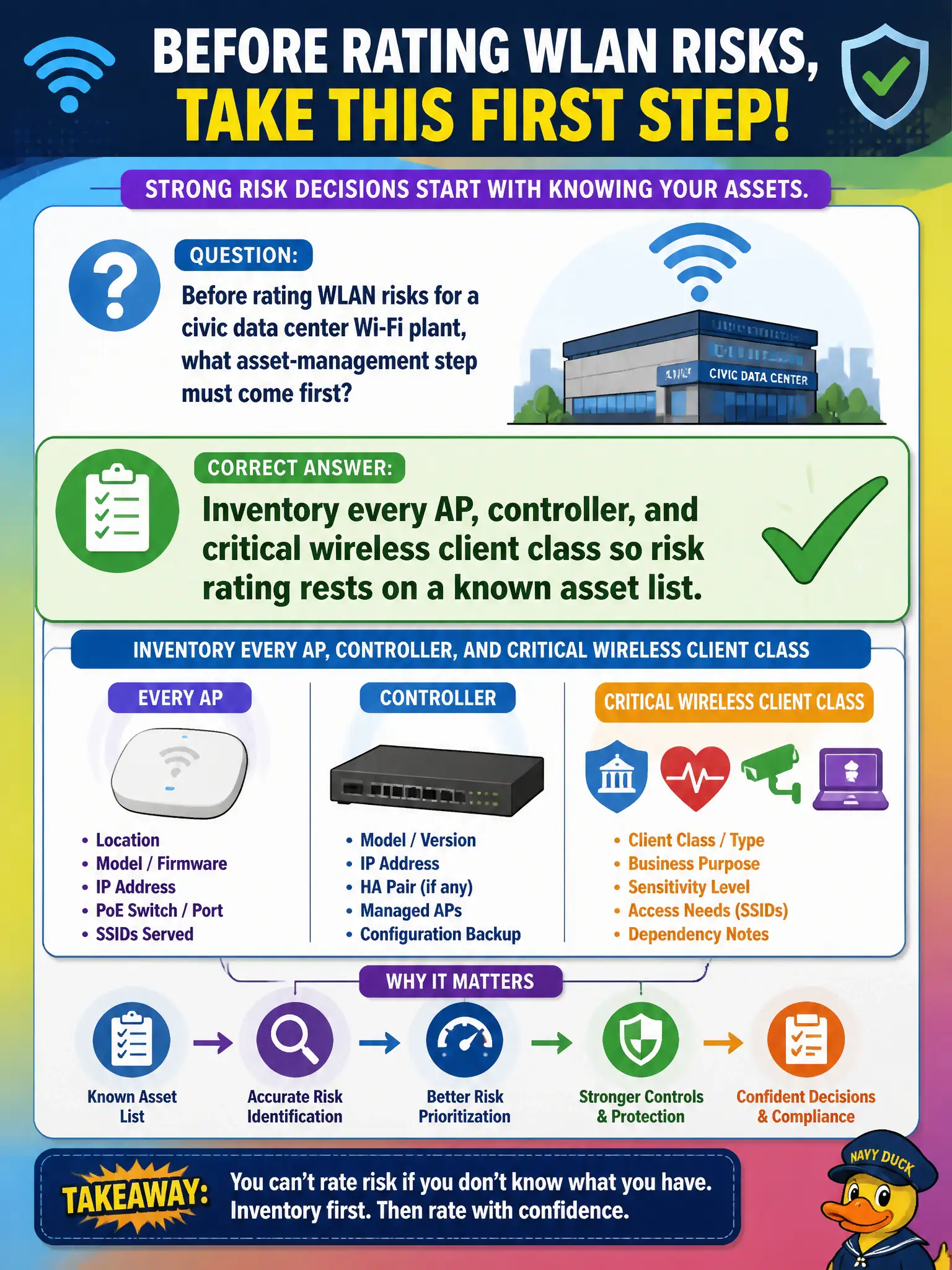
Before rating WLAN risks for a civic data center Wi-Fi plant, what asset-management step must come first?
Select an answer to reveal the explanation.
Short Explanation
You cannot price the risk on a warehouse you have not inventoried. List the APs, controllers, and important wireless client classes first, then rate what those assets face. Skipping the catalog is guessing with city money.
Full Explanation
Before rating WLAN risks for a civic data center Wi-Fi plant, asset management must inventory every AP, controller, and critical wireless client class so risk ratings rest on a known asset list. Publishing guest portal ads before listing access points skips the foundation of risk analysis. Assuming undocumented APs have zero risk because they are missing from the CMDB understates exposure—unknown assets are often highest risk. Rating only Ethernet switches while ignoring wireless infrastructure leaves the RF plant unassessed. Exam caveat: CWSP risk analysis begins with asset management; likelihood/impact math without an inventory is theater. Operational check: export controller inventories, reconcile with walk-through discovery, tag critical client classes, and freeze that asset baseline before scoring. File the inventory under the municipal CMDB wireless CI class and schedule periodic reconciliation so shadow APs cannot accumulate between risk workshops. In municipal WLAN operations, record the rationale in the change ticket so future on-call staff know which control was chosen and which failure modes the rejected options would create for city services. Re-validate after the next maintenance window that the same control still holds under the infrastructure versions and client fleets used by the civic environment.