
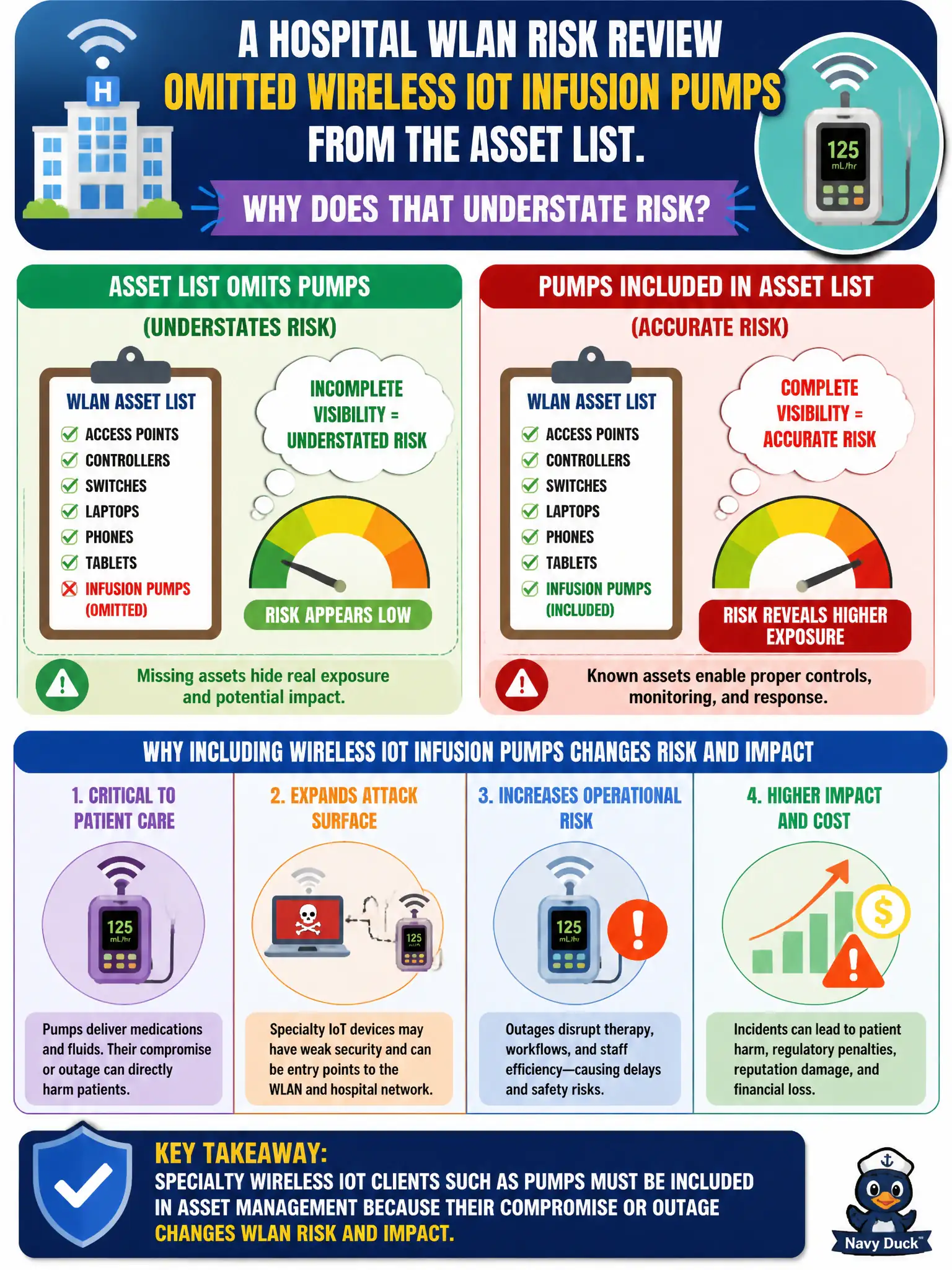
A hospital WLAN risk review omitted wireless IoT infusion pumps from the asset list. Why does that understate risk?
Select an answer to reveal the explanation.
Short Explanation
Leaving pumps off the list is like ignoring the fire trucks when you inventory the fleet—the biggest impact gear vanishes from the math. Specialty IoT WLAN clients belong in asset management so risk and impact are honest. Guest phones alone do not tell the clinical story.
Full Explanation
Omitting wireless IoT infusion pumps from a hospital WLAN asset list understates risk because specialty clinical clients change both likelihood and impact if compromised or taken offline. IoT medical devices frequently join SSIDs and must be inventoried. Asset lists should not include only guest smartphones while ignoring clinical devices. Waiting to rate pumps only after re-enabling WEP for compatibility invents a dangerous dependency and does not justify omission. Exam caveat: asset management for WLAN risk includes nontraditional clients—scanners, pumps, sensors—not just user laptops; exam stems often hide risk in forgotten IoT classes. Operational check: pull DHCP/AAA associations for clinical SSIDs, add pump models to the asset register with clinical owners, and re-score risk with patient-safety impact included. Coordinate with biomedical engineering so municipal/hospital change windows account for device WLAN dependencies. In municipal WLAN operations, record the rationale in the change ticket so future on-call staff know which control was chosen and which failure modes the rejected options would create for city services. Re-validate after the next maintenance window that the same control still holds under the infrastructure versions and client fleets used by the civic environment.