
A transit agency already runs overlay WIPS. How should RF security events become actionable operations tickets with identity and network context?
Select an answer to reveal the explanation.
Short Explanation
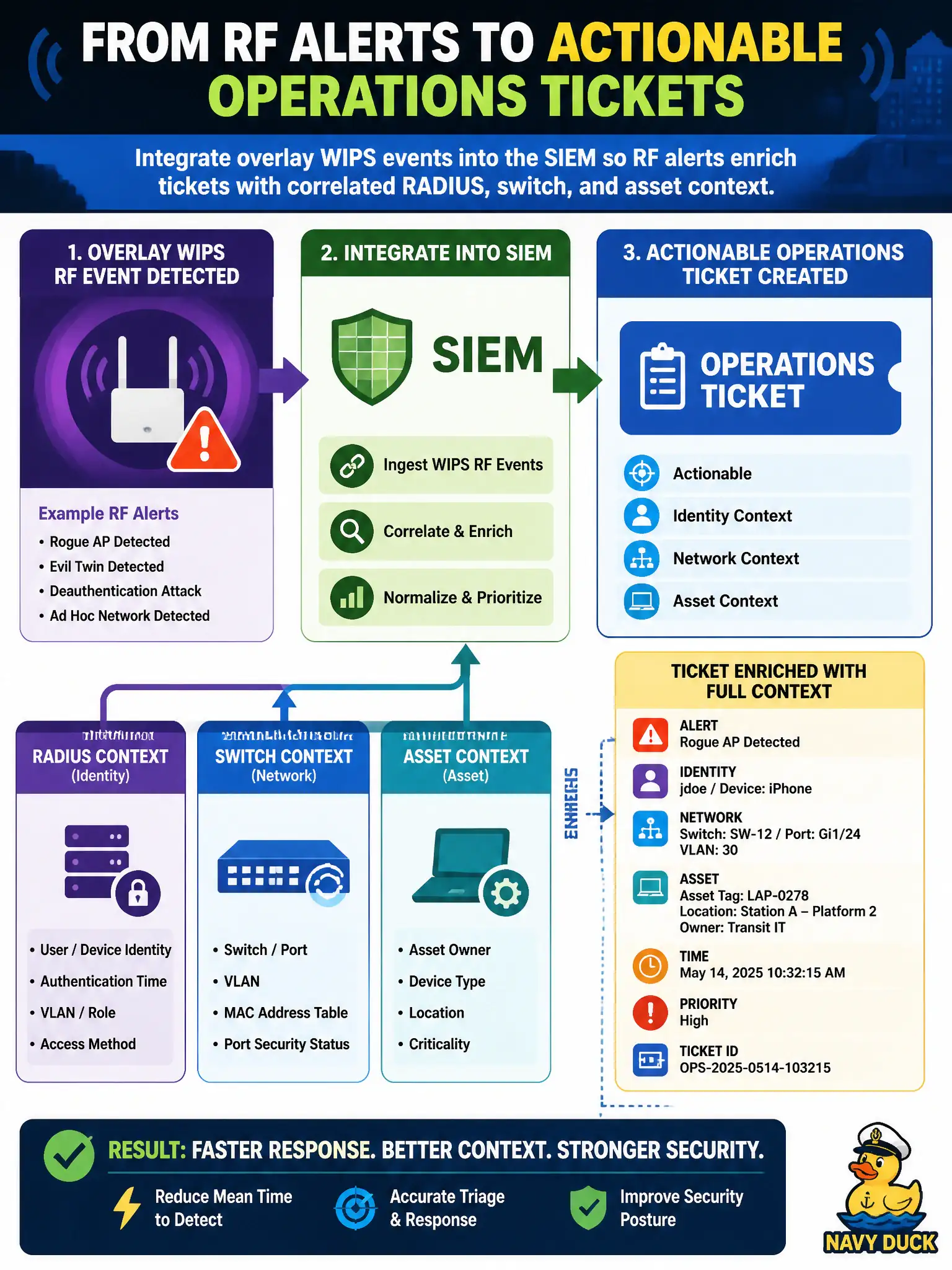
WIPS alone shouts “something weird in the air”; SIEM turns that shout into a ticket with who, where, and what else twitched. Glue the overlay events into SIEM so ops gets context, not a firehose of raw captures. Drawers and five-minute deletes bury the evidence.
Full Explanation
A transit agency already running overlay WIPS should integrate those RF security events into the SIEM so alerts become actionable operations tickets enriched with correlated RADIUS, switch, and asset context. Emailing raw sensor PCAP files to every bus driver without triage creates noise and may leak sensitive captures. Storing alerts only on a USB stick in a desk drawer prevents timely response. Deleting WIPS events after five minutes to keep the SIEM empty destroys forensic and operational value. Exam caveat: monitoring value is realized when RF events enter the same incident workflow as identity and network events—integration is the exam-relevant step beyond merely owning sensors. Operational check: configure overlay WIPS → SIEM forwarding, create a ticket auto-open for high-severity rogues, verify a test alert includes site, BSSID, and correlated switchport if available, and measure mean time to acknowledge. Document the integration in the transit security operations playbook for municipal on-call staff. In municipal WLAN operations, record the rationale in the change ticket so future on-call staff know which control was chosen and which failure modes the rejected options would create for city services. Re-validate after the next maintenance window that the same control still holds under the infrastructure versions and client fleets used by the civic environment.