
During a library WLAN redesign, staff confuse WIDS with WIPS. Which statement correctly separates the roles?
Select an answer to reveal the explanation.
Short Explanation
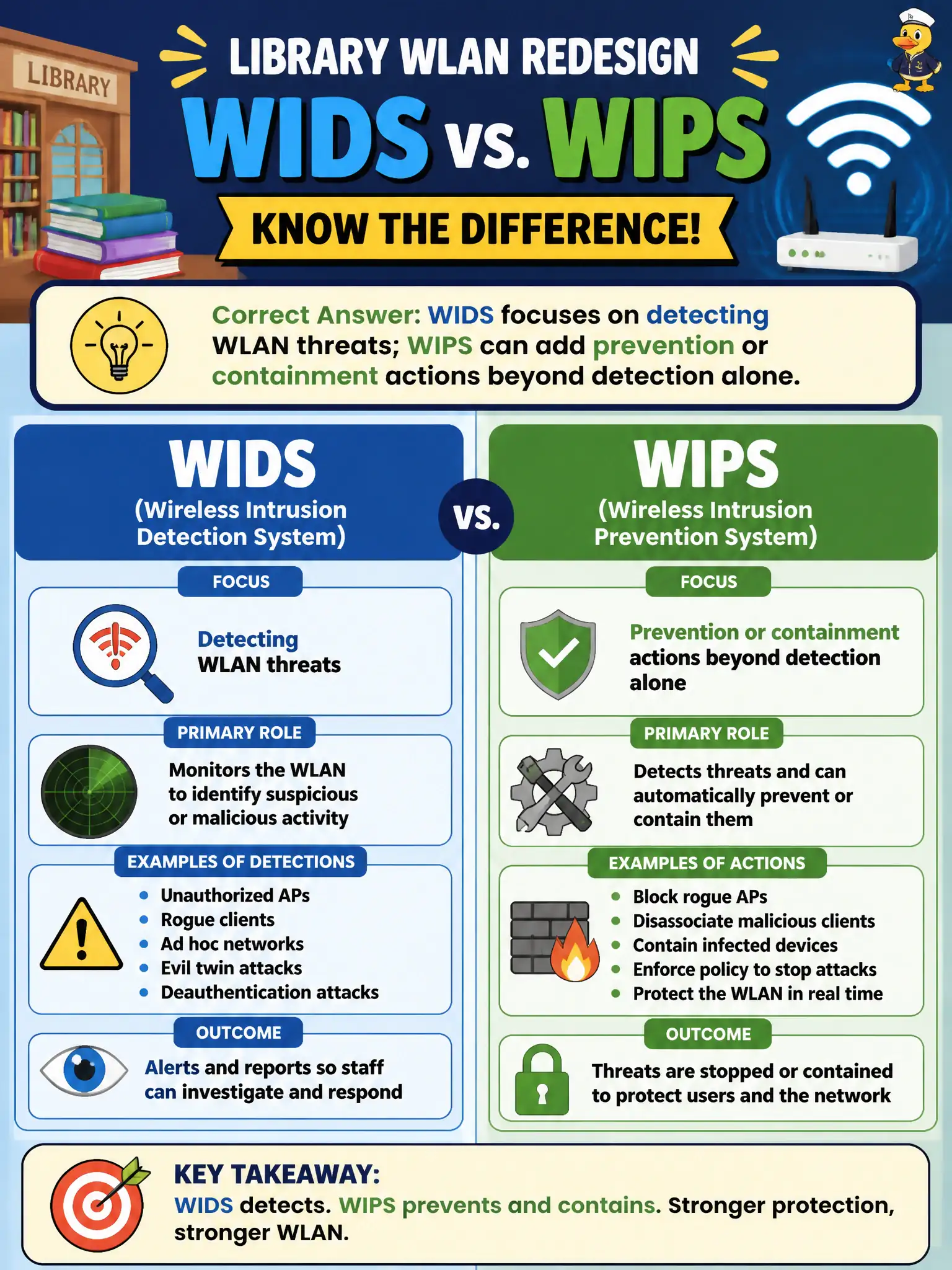
Think smoke alarm versus sprinkler: WIDS is the alarm that spots trouble; WIPS can also try to put the fire out or contain it. Mixing the labels makes libraries buy detection when they needed containment—or the reverse. Call detection detection, and prevention prevention.
Full Explanation
During a library WLAN redesign, staff must separate detection from prevention: WIDS focuses on detecting WLAN threats, while WIPS can add prevention or containment actions beyond detection alone. They are not identical marketing names with no functional difference. WIPS is not limited to printing PDF reports without containment capability. Neither WIDS nor WIPS replaces RADIUS or VLAN tagging; those are authentication and segmentation controls in a different layer of the design. Exam caveat: many products brand “WIPS” even when used mainly for detection—read the stem for whether containment/prevention is in scope; definitionally, IPS implies prevention beyond IDS. Operational check: review the library platform’s licensed features, enable detection signatures citywide, enable containment only where policy authorizes it, and document which sites are IDS-only versus full IPS. Train helpdesk to escalate WIPS containment events to the municipal security team rather than disabling sensors ad hoc. In municipal WLAN operations, record the rationale in the change ticket so future on-call staff know which control was chosen and which failure modes the rejected options would create for city services. Re-validate after the next maintenance window that the same control still holds under the infrastructure versions and client fleets used by the civic environment.