
When are Kali Linux wireless toolkits appropriate in a city WLAN security program?
Select an answer to reveal the explanation.
Short Explanation
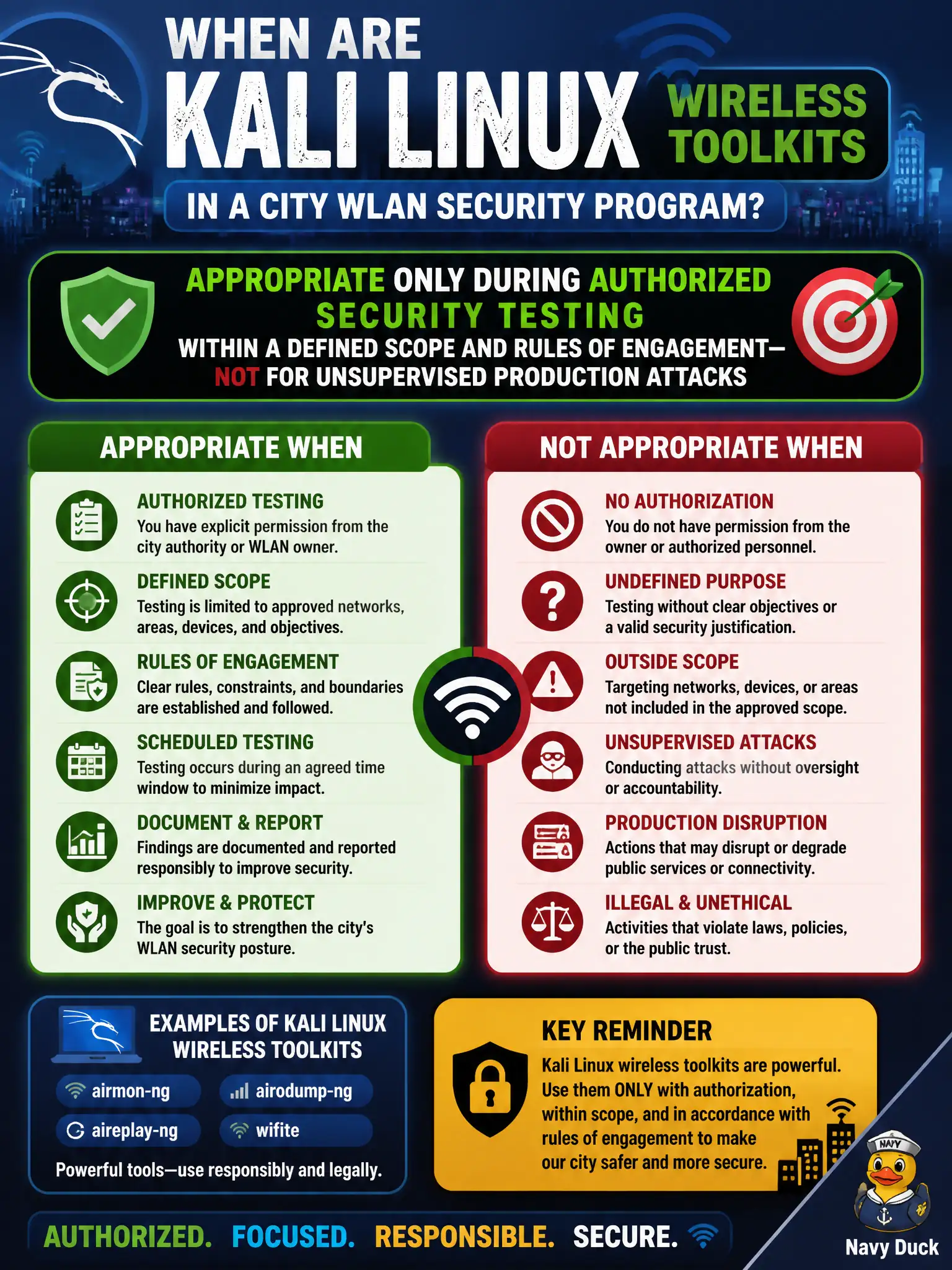
Kali’s wireless toys are power tools—awesome inside a signed work order, reckless as hallway hobbies. Authorized test? Use them. Bored Friday afternoon on the live city SSID? That is not a test.
Full Explanation
Kali Linux wireless toolkits are appropriate in a city WLAN security program during authorized security testing within a defined scope and rules of engagement—not for unsupervised production attacks, curiosity scans, or as a substitute for change management. Anytime-an-employee-is-curious use without tickets violates acceptable use and may be unlawful. Permanently jamming public library channels during tax season is destructive and typically out of scope. Using Kali tooling instead of change control when pushing AP firmware confuses offensive assessment tools with infrastructure maintenance process. Exam caveat: CWSP recognizes Kali and related WLAN audit tools as legitimate in the testing toolkit when authorization exists; the differentiator on exam items is almost always approval and scope, not the brand of distro. Operational check: issue a time-bounded authorization ticket naming allowed SSIDs and techniques, ensure testers use city-approved images, log commands and targets, and disable or return the toolkit access when the engagement closes. Brief the NOC so WIPS alerts during the window are correlated to the municipal test, not treated as unexplained attacks. In municipal WLAN operations, record the rationale in the change ticket so future on-call staff know which control was chosen and which failure modes the rejected options would create for city services. Re-validate after the next maintenance window that the same control still holds under the infrastructure versions and client fleets used by the civic environment.