
After WLAN security testing at a county clinic, what documentation practice is required?
Select an answer to reveal the explanation.
Short Explanation
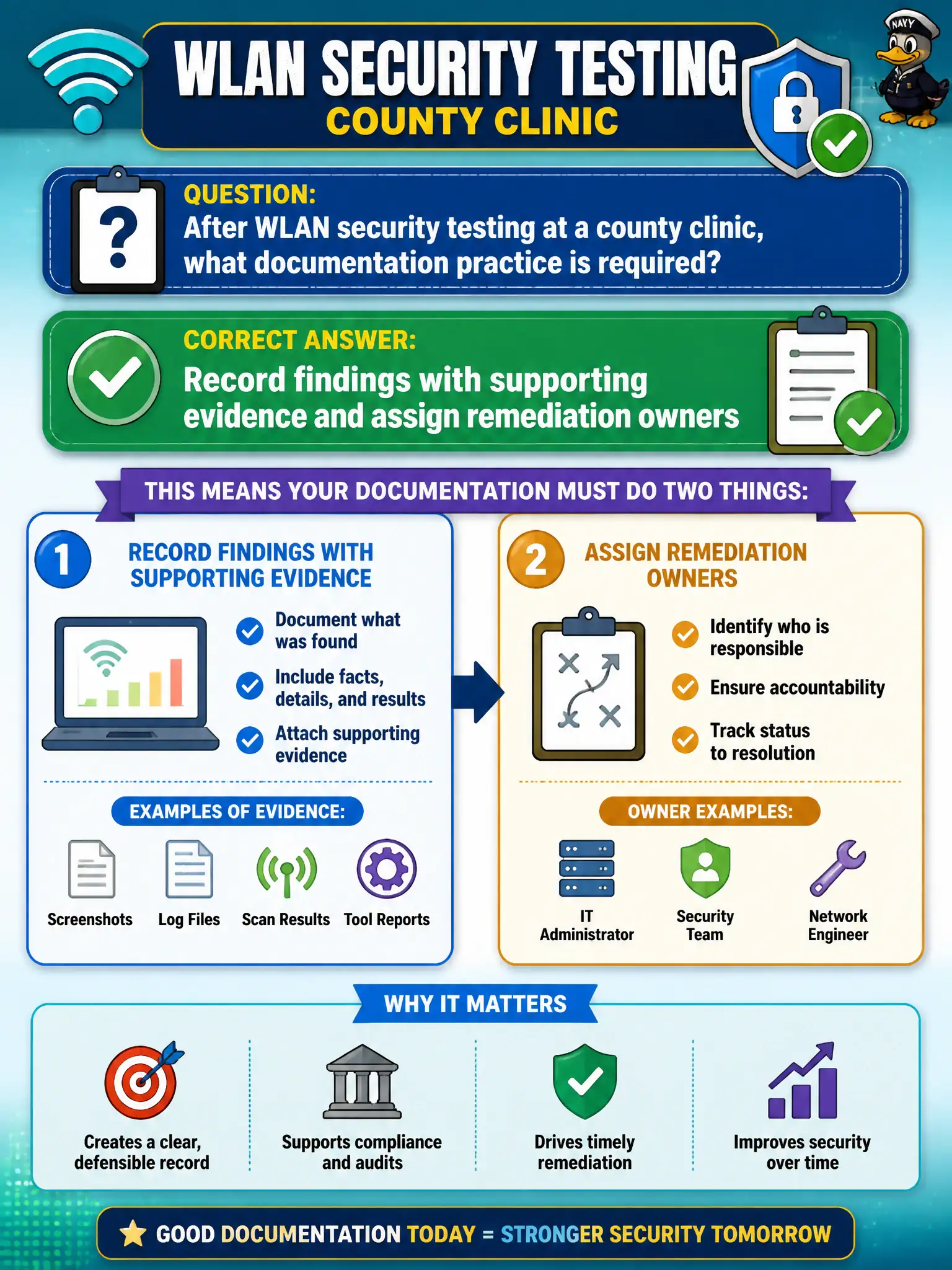
If it is not written down with proof and a name on the fix, it is a campfire story. Capture the finding, attach the evidence, and make someone own the remediation.
Full Explanation
After WLAN security testing at a county clinic, professional practice requires recording findings with supporting evidence and assigning remediation owners so clinical and IT stakeholders can close gaps. Deleting all notes to keep them out of a recycle bin destroys the engagement record and blocks remediation. Sharing raw cracked staff PSKs on a public forum is itself a credential exposure incident. Documenting only the lunch order while omitting technical results fails the documentation phase entirely. Exam caveat: documentation is a named phase in CWSP security-testing process—evidence, severity, and owners matter as much as the exploit demonstration; sensitive secrets belong in controlled channels, not public dumps. Operational check: deliver a report with BSSID-level evidence, severity, and named remediators; store cracked material in the clinic's secure vault or encrypted ticket system; schedule a readout with privacy/security leads; and track closure to due dates. Retain the report per municipal retention policy so subsequent audits can verify that wireless findings were actually fixed. In municipal WLAN operations, record the rationale in the change ticket so future on-call staff know which control was chosen and which failure modes the rejected options would create for city services. Re-validate after the next maintenance window that the same control still holds under the infrastructure versions and client fleets used by the civic environment.