
During the attack phase of a school-district WLAN test, which practice is correct?
Select an answer to reveal the explanation.
Short Explanation
The attack phase is a guided lab, not an all-you-can-crack buffet. If the school district papers do not list it, you do not smash it—even if the signal is juicy from the parking lot.
Full Explanation
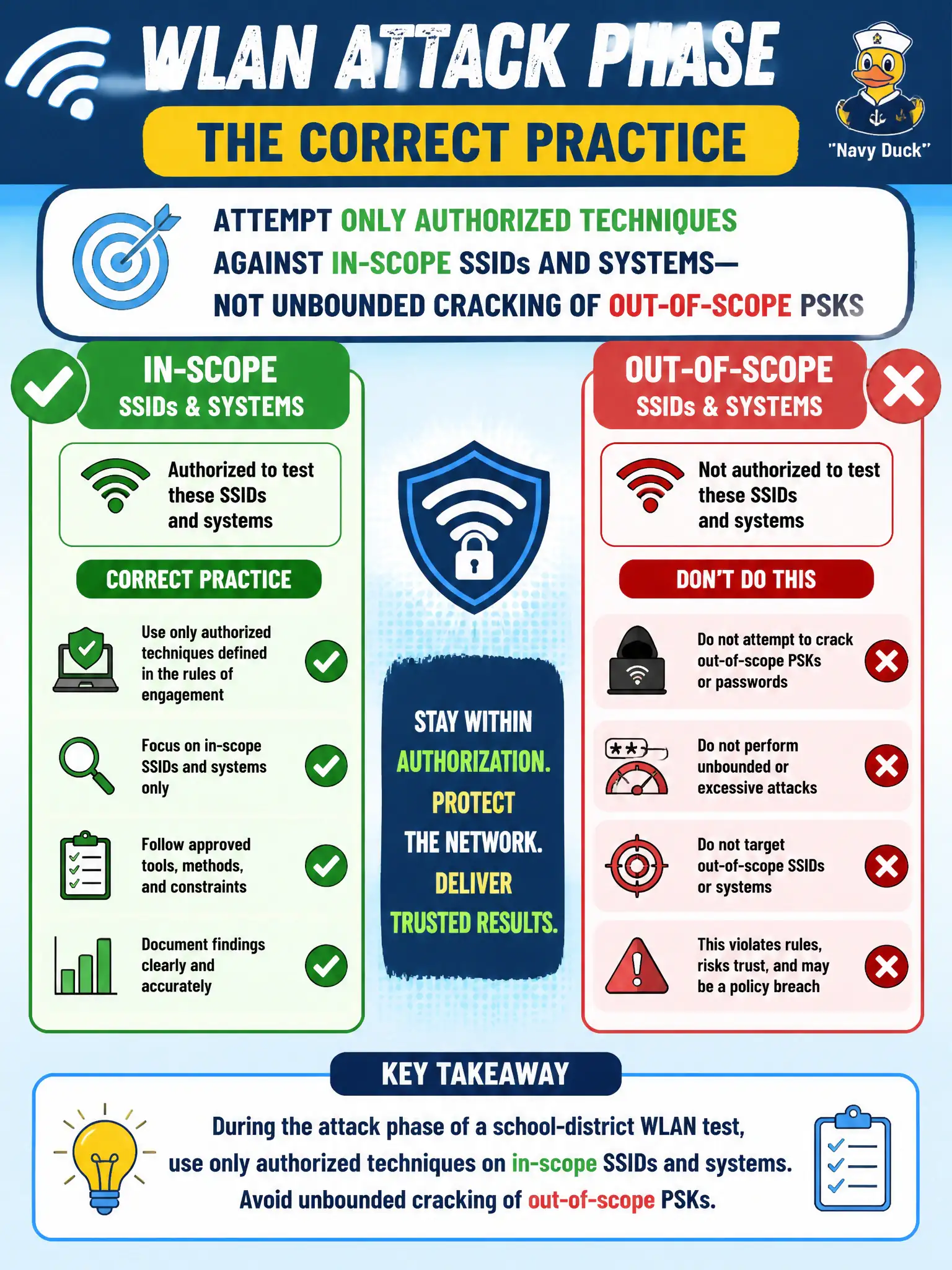
During the attack phase of a school-district WLAN test, testers may attempt only authorized techniques against in-scope SSIDs and systems. Scope documents remain binding even after the first handshake is captured; success does not expand authority. Cracking every residential PSK heard from the parking lot regardless of paperwork attacks out-of-scope third parties. Expanding into neighboring clinics without updating the engagement letter likewise violates authorization. Treating scope as optional once interesting frames appear is a professional ethics and legal failure. Exam caveat: the attack phase is still process-bound—tools and techniques must match the written rules of engagement; CWSP expects judgment about authorization, not maximum exploit creativity. Operational check: before any cracking or exploitation attempt, re-check the target BSSID against the signed in-scope list, pause if a residential or clinic network appears in captures, and document every attack technique used with start/stop times for the district security office. Escalate scope-change requests in writing rather than improvising mid-test. In municipal WLAN operations, record the rationale in the change ticket so future on-call staff know which control was chosen and which failure modes the rejected options would create for city services. Re-validate after the next maintenance window that the same control still holds under the infrastructure versions and client fleets used by the civic environment.