
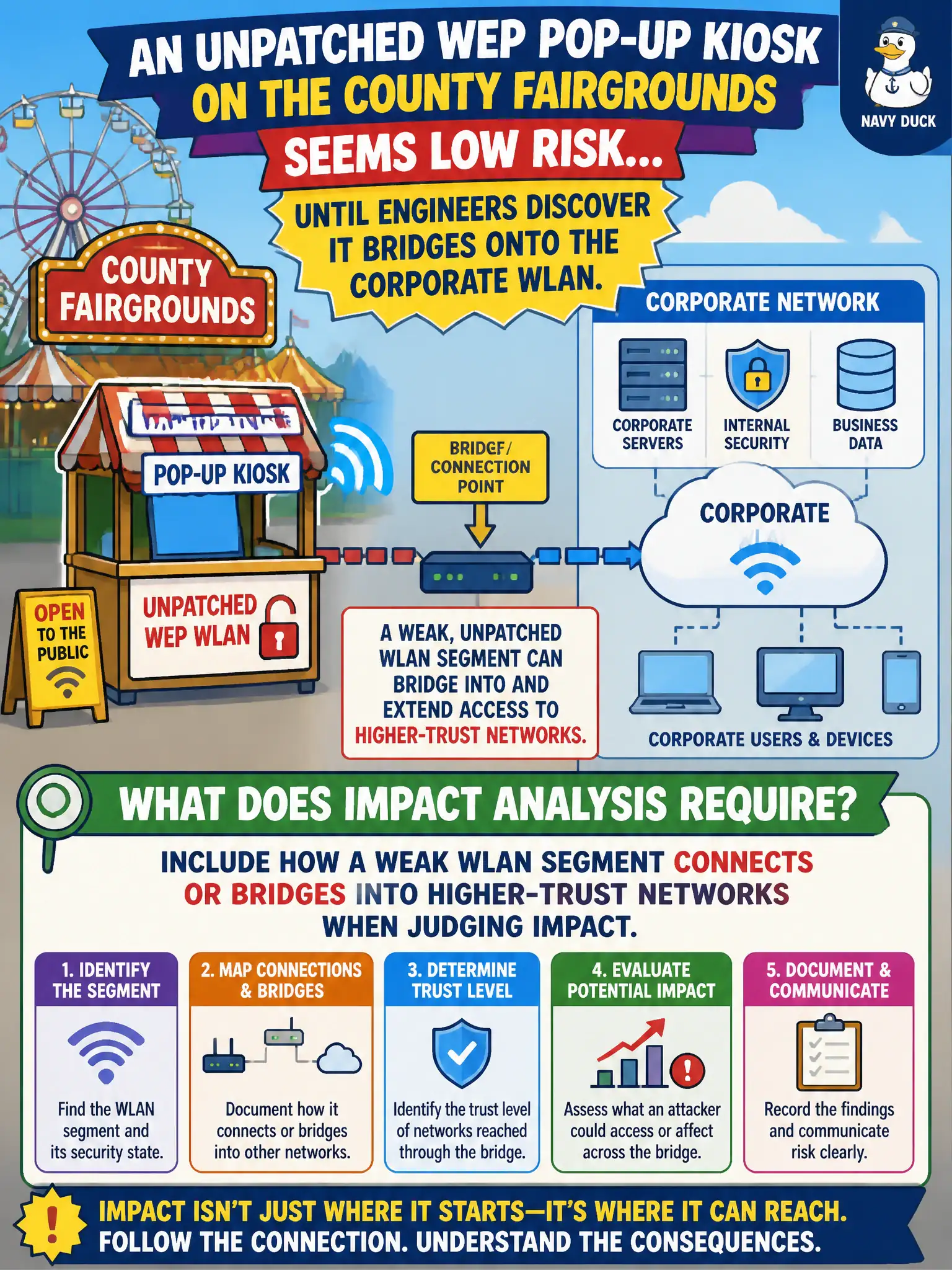
An unpatched WEP pop-up kiosk on the county fairgrounds seems low risk until engineers discover it bridges onto the corporate WLAN. What does impact analysis require?
Select an answer to reveal the explanation.
Short Explanation
A 'tiny' WEP kiosk is a Trojan horse if it bridges into county corporate Wi-Fi. Impact math has to follow the wire and the air into the higher-trust side—not stop at 'it's just a kiosk.'
Full Explanation
An unpatched WEP pop-up kiosk on the county fairgrounds that seems low risk until engineers discover it bridges onto the corporate WLAN requires impact analysis that includes how a weak WLAN segment connects or bridges into higher-trust networks. Weak cryptography on an isolated novelty SSID has limited blast radius; the same cryptography on a device that bridges into corporate VLANs becomes a pivot path for eavesdropping and lateral movement during a busy public event. Assessing only the kiosk's plastic enclosure quality and ignoring Layer-2 connectivity misses the decisive risk factor. Assuming bridging always fails so weak crypto on the kiosk cannot matter is wishful and unverified. Rating impact solely by how many stickers decorate the kiosk is non-technical theater. Fairground and event networks are classic civic sources of temporary bridges, consumer routers, and exhibit gear that accidentally extend staff trust boundaries when rushed into service. Exam caveat: impact is a function of vulnerability severity plus connectivity context; bridging into higher-trust networks multiplies organizational impact. Operational check: trace the kiosk's wired and wireless uplinks, remove any bridge into corporate WLAN, place event networks on isolated switching with monitoring, retire WEP, and update event playbooks so temporary kiosks cannot trunk onto staff VLANs without a completed security review.