
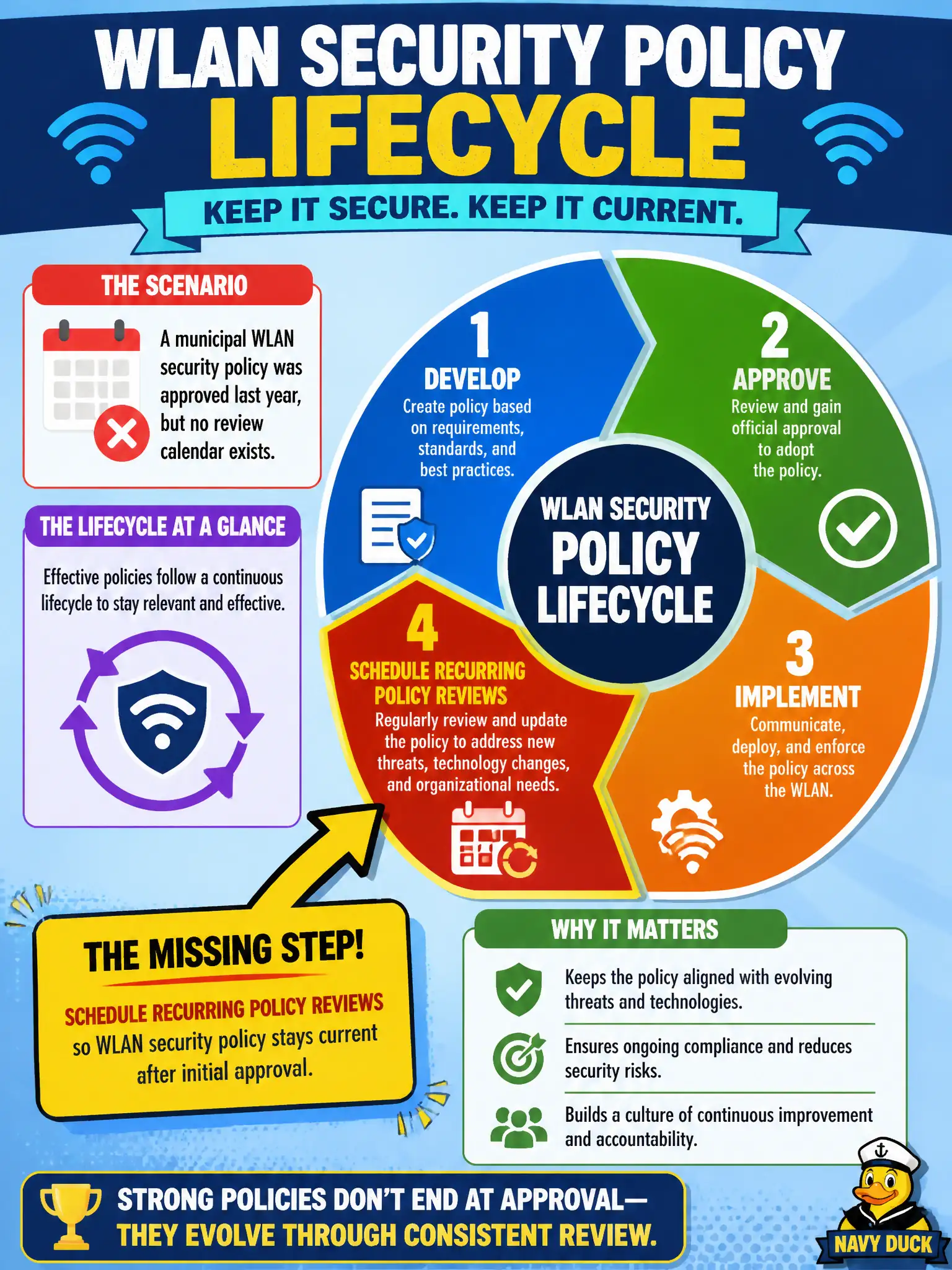
A municipal WLAN security policy was approved last year, but no review calendar exists. What lifecycle step is missing?
Select an answer to reveal the explanation.
Short Explanation
Year-one approval is not a lifetime membership card. Put WLAN security policy on a calendar—annual reviews at least—so city Wi-Fi rules keep up with gear, threats, and regulations.
Full Explanation
A municipal WLAN security policy approved last year with no review calendar is missing the lifecycle step of scheduling recurring policy reviews so the document stays current after initial approval. Threats, firmware capabilities, authentication methods, and organizational structure change; without a calendar, the approved text silently diverges from the live estate. Freezing the policy forever so auditors see that nothing changed since year one mistakes stasis for control maturity. Replacing policy review with a monthly AP reboot ritual confuses availability maintenance with governance lifecycle. Waiting until a breach occurs and then rewriting every WLAN policy overnight is reactive crisis management, not lifecycle management. Recurring reviews should have owners, agendas that compare policy to current architecture, and a path to approve revisions. Exam caveat: lifecycle includes scheduled reviews plus event-driven updates after major changes; the missing element called out here is the recurring review schedule itself. Operational check: place the WLAN policy on a quarterly or annual review calendar with a named owner, distribute a checklist comparing policy clauses to controller settings and threat changes, and file either a no-change attestation or a revised approved version after each cycle.