
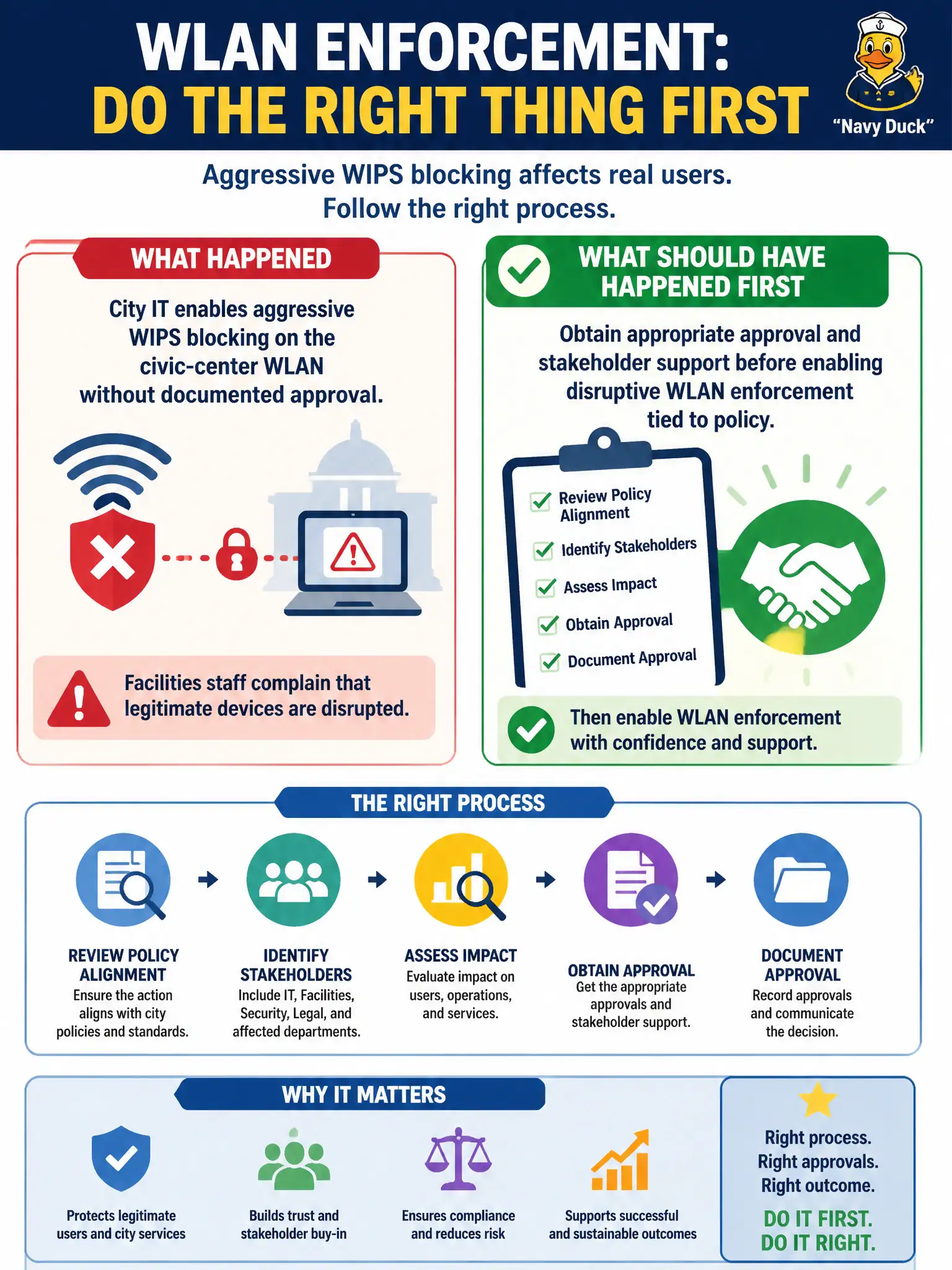
City IT enables aggressive WIPS blocking on the civic-center WLAN without documented approval, and facilities staff complain that legitimate devices are disrupted. What should have happened first?
Select an answer to reveal the explanation.
Short Explanation
WIPS that auto-blocks can feel like flipping breakers in someone else's building. Get documented buy-in from the people who own the space and the risk before you turn enforcement loose on city Wi-Fi.
Full Explanation
Enabling aggressive WIPS blocking on the civic-center WLAN without documented approval, then disrupting legitimate devices used by facilities staff, skips obtaining appropriate approval and stakeholder support before enabling disruptive WLAN enforcement tied to policy. Containment and auto-blocking can protect the RF environment, but they are operationally invasive and can deny service to misclassified but legitimate transmitters; Domain 1 expects sponsorship and stakeholder alignment before such enforcement goes live. Increasing transmit power on all APs so WIPS alerts become irrelevant does not authorize containment and may worsen interference. Disabling all logging so facilities cannot prove which devices were blocked destroys evidence and accountability. Publishing the WIPS block list only on a public blog after the fact is neither approval nor responsible disclosure to stakeholders. Approval packages should describe detection criteria, auto versus manual containment, rollback, and who is on-call when facilities systems are affected. Exam caveat: technical capability to contain does not equal authorization to contain; exam answers favor governance before disruptive enforcement. Operational check: draft a WIPS enforcement charter with facilities and security stakeholders, obtain documented approval, stage in alert-only mode to tune false positives, then enable blocking with clear rollback and an operations contact path for civic-center device owners.