
New contractors arrive on a city plant floor with no briefing on how to report suspected rogue APs. What should WLAN security awareness cover for these stakeholders?
Select an answer to reveal the explanation.
Short Explanation
New boots on the plant floor should know what a shady AP looks like and who to call—not how to hide a travel router. Awareness is the cheap sensor that feeds your WIPS ticket queue.
Full Explanation
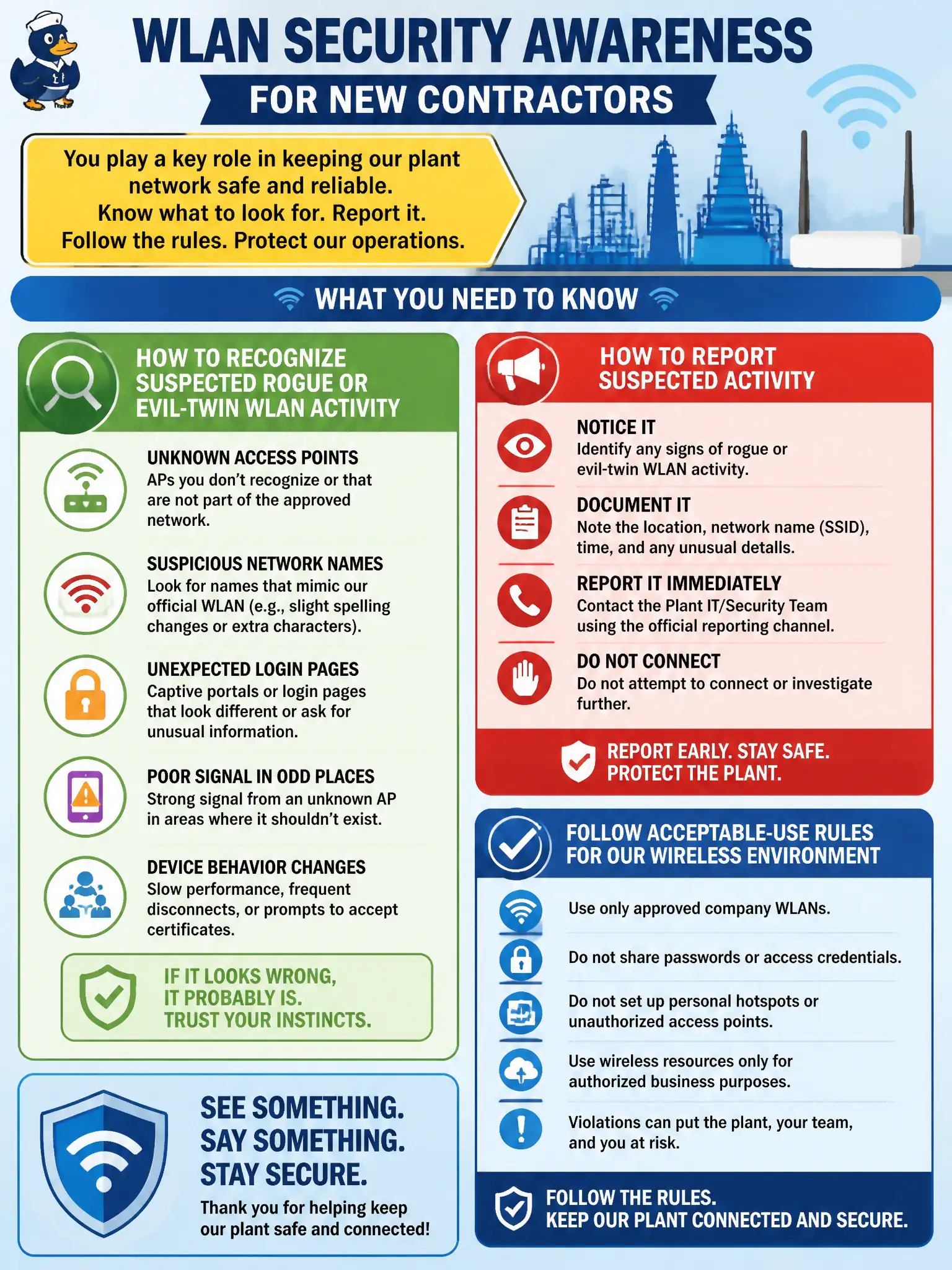
New contractors arriving on a city plant floor with no briefing on how to report suspected rogue APs need WLAN security awareness that covers recognizing and reporting suspected rogue or evil-twin activity and following acceptable-use rules for the plant wireless environment. Contractors often bring personal hotspots or may notice unfamiliar SSIDs; without a reporting path, rogue infrastructure persists beside industrial systems. Teaching how to run OffSec exploit labs against production PLCs for "practice" is dangerous and outside awareness scope. Teaching how to hide personal travel routers under conveyor belts encourages policy violations. Teaching how to disable WIPS permanently for convenience undermines detection. Effective awareness for this audience is concise: approved SSIDs, prohibited personal infrastructure, how evil twins appear, and whom to call. Exam caveat: awareness content should be role-appropriate—contractors need reporting paths and clear prohibitions more than deep 802.11 protocol theory. Operational check: include rogue and evil-twin recognition plus reporting contacts in contractor onboarding, post plant-floor reporting instructions, verify helpdesk or SOC queues accept those reports, and periodically test that a reported unknown BSSID triggers investigation.