
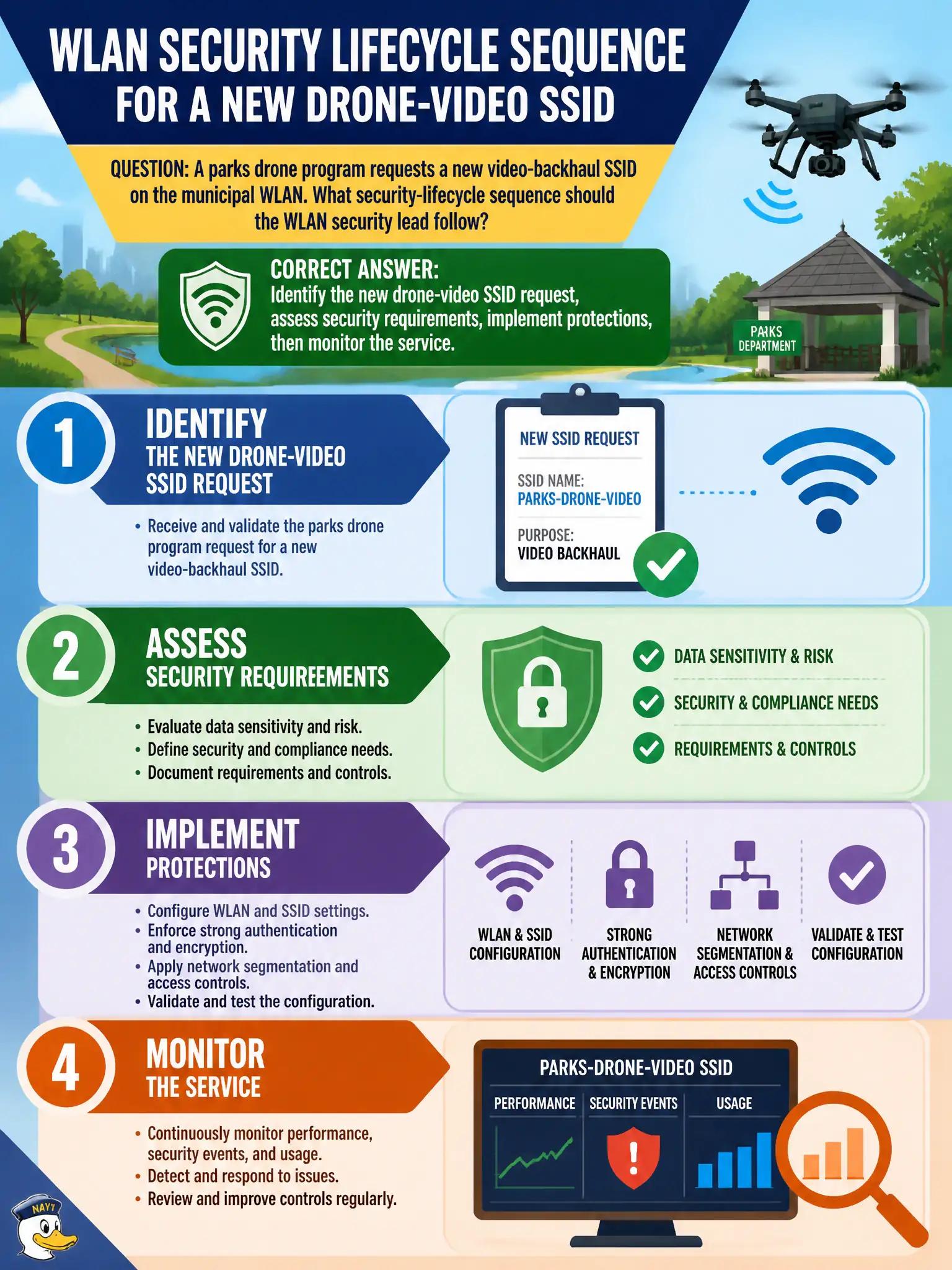
A parks drone program requests a new video-backhaul SSID on the municipal WLAN. What security-lifecycle sequence should the WLAN security lead follow?
Select an answer to reveal the explanation.
Short Explanation
New drone video on Wi-Fi is a full lap of the lifecycle track: spot it, size the risk, lock it down, then keep watching. Jumping straight to “turn it on open” skips the race entirely.
Full Explanation
When a municipal parks drone program requests a new video-backhaul SSID on the WLAN, the security lifecycle sequence begins with identifying the request and assessing security requirements. This includes understanding data sensitivity, bandwidth needs, and potential threats. Next, implementing protections such as strong encryption, access controls, and network segmentation ensures the SSID is secured against unauthorized access and data interception. Continuous monitoring follows to detect anomalies, performance issues, or security incidents related to the new service. Enabling the SSID immediately with open authentication and deferring security assessment risks exposure to attacks and data breaches. Monitoring for months without enabling the SSID or assessing requirements ignores the operational need and leaves security gaps unaddressed. Protecting only with encryption but skipping identification and monitoring neglects comprehensive risk management, as encryption alone cannot prevent all threats or detect misuse. The process must be thorough and proactive to maintain WLAN integrity. Operationally, the WLAN security lead should document the SSID request, perform a risk assessment, configure security settings before activation, and establish ongoing monitoring with alerts for unusual activity.