
After a city WLAN audit, findings must reach leadership for action. What reporting practice best supports remediation?
Select an answer to reveal the explanation.
Short Explanation
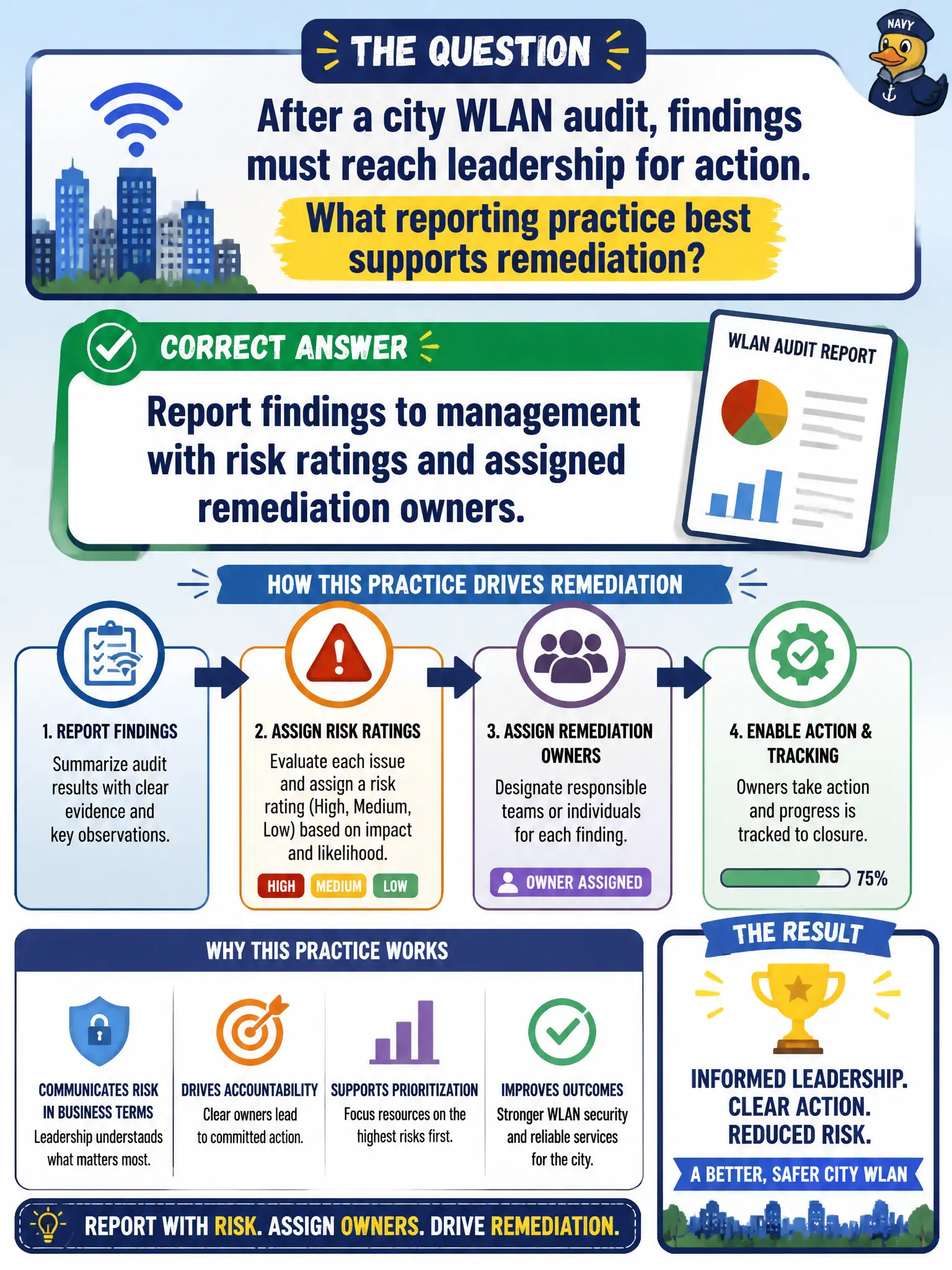
Leadership needs a scorecard, not a scrap heap of raw scans. Rate the risks and name who owns the fix. Audits without owners are museum exhibits, not action plans.
Full Explanation
Effective remediation of WLAN audit findings in a municipal context depends on reporting results to management with clear risk ratings and assigned remediation owners. Risk ratings prioritize issues based on impact and likelihood, guiding leadership to allocate resources efficiently. Assigning owners ensures accountability for addressing specific vulnerabilities or misconfigurations, facilitating follow-through and tracking progress. Simply filing raw scanner CSV data without interpretation or ownership leaves findings inaccessible and unactionable, stalling remediation efforts. Sharing findings informally in chats without formal management briefings risks miscommunication and lack of executive awareness, reducing the priority of WLAN security issues. Omitting remediation owners creates ambiguity about responsibility, often resulting in critical vulnerabilities remaining unaddressed. The audit report should be structured, highlighting key risks, recommended actions, and responsible parties. Operationally, the audit team prepares a formal report summarizing findings, categorizes risks (e.g., high, medium, low), assigns remediation tasks to specific departments or individuals, and schedules follow-up reviews to verify fixes.